Why the performance drop occurs after about 90 minutes
The performance drop after 90 minutes while running is biochemistry. After about an hour and a half of intense training, your energy stores are depleted. Without replenishment, performance drops.
This phenomenon occurs in many runners - marathon runners know it as "bonking", triathletes experience it on the run course, long-distance cyclists after 90 to 120 minutes. The causes are always similar:
Empty glycogen stores in muscles and liver
Falling blood sugar levels
Fluid deficiency and dehydration
Those who understand these mechanisms can prevent the drop.
Empty glycogen stores as the main cause
Your muscles store energy as glycogen. These stores are limited. During intense running, your body consumes about 1 to 1.5 grams of glycogen per minute.
When the glycogen is depleted, your body must switch to other energy sources - this is slower. Performance drops. Your legs feel like lead. The pace becomes harder to maintain.
Falling blood sugar levels and bonking
The bonk while running is more than just hunger. It is a state in which your blood sugar level drops too quickly. Your brain needs glucose. When this is missing, symptoms such as sudden fatigue, lack of concentration, headaches, and the feeling that your legs are "heavy as lead" occur.
Bonking occurs when your body consumes more glucose than you supply. After about 90 minutes without carbohydrate intake, this is almost certainly the case.
Fluid deficiency and dehydration
Fluid deficiency dramatically increases the performance drop. If you do not drink enough, your blood volume drops. Your heart has to pump faster. Temperature regulation becomes weaker. Dehydration and empty glycogen stores reinforce each other and lead to a sudden performance drop.
Bonking while running: Recognizing and distinguishing
The bonk while running has clear warning signs. But not every performance drop after 90 minutes is a bonk. The correct diagnosis determines which immediate measure helps.
Symptoms and warning signs
The symptoms often occur suddenly - sometimes within minutes. Pay attention to: extremely rapid fatigue, lack of concentration or confusion, headaches, dizziness, stomach cramps or nausea, legs feeling "dead", pace involuntarily slowing down, strong feeling of hunger.
If several of these symptoms occur at the same time, it is probably a bonk. The solution is quick carbohydrate intake.
Distinguishing dehydration, overheating, and overtraining - with immediate measures
Not every performance drop after 90 minutes is a bonk. It could also be dehydration, overheating, or overtraining. The differences are biologically and practically important - because the wrong immediate measure worsens the condition.
Bonk (low blood sugar level):
Onset: sudden, within 5-15 minutes
Warning signs: headaches, dizziness, concentration problems, legs feeling heavy, strong feeling of hunger
Immediate measure: 20-30 g of fast carbohydrates (gel, sports drink, glucose). Effect noticeable after 10-15 minutes.
Dehydration (fluid deficiency):
Onset: gradual over 60-90 minutes
Warning signs: thirst, dry mouth, dark urine, headaches, dizziness when standing up
Immediate measure: drink 200-300 ml of water or an electrolyte-containing drink. Reduce pace. Effect after 15-20 minutes.
Overheating (core body temperature over 39 °C):
Onset: gradual, especially at high outdoor temperatures
Warning signs: headaches, dizziness, confusion, nausea, skin feeling hot, no more sweating (critical sign!)
Immediate measure: drastically reduce pace or stop. Go into the shade. Drink cold water or pour over head/neck. If confusion persists: call medical help.
Overtraining (chronic fatigue):
Onset: develops over days or weeks, not suddenly
Warning signs: persistent fatigue even at rest, increased resting heart rate (5-10 beats above normal), sleep problems, irritability
Immediate measure: In the acute run: reduce pace, end earlier. Long-term: 3-7 days of light activity or complete rest.
Quick differentiation aid during the run:
Condition
Onset
Sweat
Thirst
Hunger
Immediate measure
Bonk
sudden
normal
mild
strong
Carbohydrates
Dehydration
gradual
less
strong
mild
Water
Overheating
gradual
depleted
mild
no
Cooling + Stop
Overtraining
over days
normal
normal
no
Rest
AttentionIf symptoms such as severe dizziness, confusion, nausea, lack of sweating in the heat, or chest pain occur, stop your training immediately. Seek medical help if the symptoms do not quickly improve.
Practical self-diagnosis: Keeping a running log
To understand what happens to you personally after 90 minutes, a simple running log helps. After every long run, note: pace and heart rate, nutrition (what, when, how much), symptoms (which ones, in what order), environment (temperature, humidity, sun), sleep and diet the day before. After 4-5 long runs, patterns emerge that show you what works for you personally.
Carbohydrates while running: Correct dosage and timing
Carbohydrates are the key to avoiding the performance drop after 90 minutes. It is about the right amount at the right time.
Calculating individual carbohydrate intake
The optimal amount of carbohydrates depends on your body weight, training intensity, duration, training status, and stomach sensitivity.
A commonly recommended rule of thumb: 30 to 60 grams of carbohydrates per hour for training sessions of 60 to 90 minutes. For longer sessions (over 2.5 hours), it can be up to 90 grams per hour.
For you personally, this means:
Light runner (under 60 kg): rather 30-45 g per hour
Medium runner (60-80 kg): 45-60 g per hour
Heavy runner (over 80 kg): 60-90 g per hour
Pro tipTest your carbohydrate amount in training, not in competition. This way you find out what your stomach tolerates and what your performance really needs.
When and how much carbohydrates to consume
The timing is crucial. Start with carbohydrate intake before the bonk sets in.
Practical rhythm:
After 45 minutes: first carbohydrate intake (20-30 g)
After 75 minutes: second intake (20-30 g)
After 105 minutes: third intake (20-30 g)
This distributes the carbohydrates evenly. Your body gets constant energy. The blood sugar level remains stable. Liquid (drinks, gels) allows quick absorption, solid (bars, bananas) works longer satiating.
Nutrition during the long run: Practical nutrition and drinking plan
A concrete plan is better than general advice. Here is a proven scheme for runs over 90 minutes.
Runner during a long training with a water bottle and energy gel in hand, natural outdoor environment, active movement
Nutrition plan for runs over 90 minutes
Time
Fluid
Carbohydrates
Amount
0-45 Min
Water or electrolyte-containing drink
none
150-200 ml every 20 Min
45-90 Min
Sports drink or water
20-30 g
Gel or drink
90-135 Min
Sports drink
30-40 g
Gel + drink or mix
135+ Min
Sports drink
30-40 g
repeat every 30-45 Min
For runs under 90 minutes, you generally do not need additional carbohydrates. Water is enough. For runs over 90 minutes, energy intake becomes important.
Specific nutrition options:
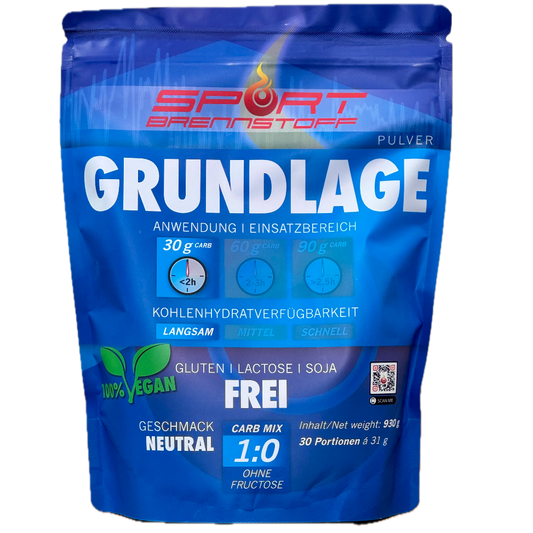
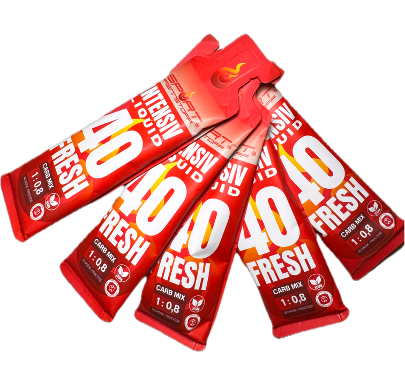
SportBrennstoff INTENSIV: Liquid energy gel with 40 g of carbohydrates per serving. Ideal for on the go, no chewing required.
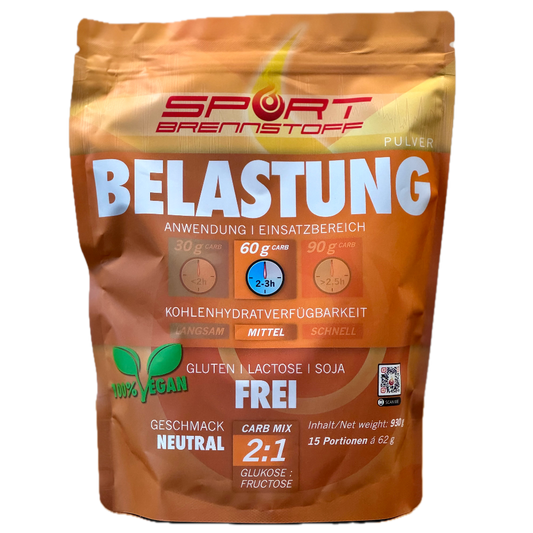
SportBrennstoff BELASTUNG: Sports drink powder with 60 g of carbohydrates per standard serving. Perfect for longer moderate-intensity training sessions.
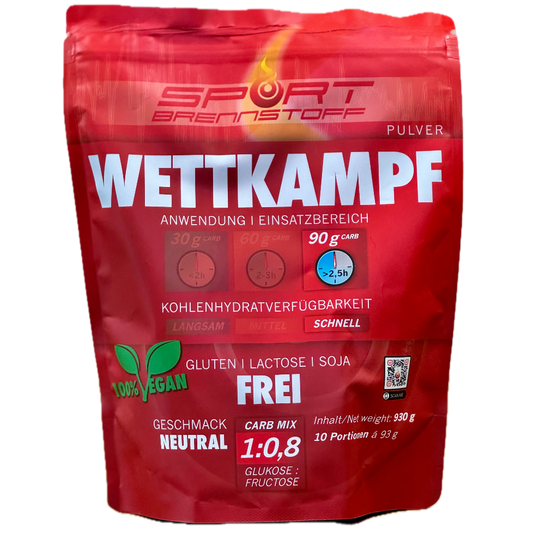
SportBrennstoff WETTKAMPF: High-dose sports drink with 90 g of carbohydrates. For demanding race days and long endurance efforts.
Important: test it in training beforehand.
SportBrennstoff INTENSIV – Energy Liquid with 40 g of Carbohydrates
Test and adjust stomach-friendly nutrition
The stomach is the limiting factor. Even the best energy supply won't help if your stomach gets cramps.
This is how you test it properly:
Choose a nutrition option
Use it in 2-3 training runs
Pay attention to tolerance
Common problems and solutions:
Stomach cramps: Reduce the amount per serving. Drink more water with it.
Nausea: Choose less concentrated drinks. Eat smaller portions.
Diarrhea: Avoid fats and fiber before and during the run.
SportBrennstoff products are specially formulated to be gentle on the stomach. Many runners report better tolerance compared to standard sports drinks.
No strength in the legs while running: Training management and pacing
Sometimes the performance drop after 90 minutes is not just a nutrition issue. It can also be due to your training plan and starting pace. Starting too fast, too much load during the week, too little recovery - the result is always the same: The legs get heavy after 90 minutes.
How a wrong starting pace leads to a performance drop after 90 minutes
The pace in the first 20 minutes determines your performance after 90 minutes. At 85-90 % of your maximum heart rate, you consume about 1.5-2 grams of glycogen per minute. If you run at a high pace for the first 45 minutes, your glycogen stores are already 60-70 % depleted.
Too fast: 5:30 min/km (approx. 85 % of maximum heart rate) → After 90 min: 90 % of glycogen stores depleted
Moderate: 6:15 min/km (approx. 72 % of maximum heart rate) → After 90 min: 70 % depleted
The difference: only 45 seconds per kilometer. But after 90 minutes you clearly notice the difference.
Pacing strategy to avoid the performance drop
The proven strategy is called negative splits or conservative starting pace: The second half of the run is faster than the first - or at least not slower.
The 3-phase model:
Phase 1 (0-45 min): Start conservatively
Target intensity: 70-75 % of maximum heart rate
Feeling: You could run faster, but you don't
Glycogen consumption: approx. 40-50 % of stores
Phase 2 (45-90 min): Increase slightly
Target intensity: 75-80 % of maximum heart rate
Feeling: You are getting warmer, but not breathless
Glycogen consumption: approx. 30-40 % of remaining stores
Phase 3 (90+ min): Use energy intake
Target intensity: 75-80 % of maximum heart rate (with carbohydrate intake)
Feeling: With energy intake, performance remains stable
Practical example for a 120-minute run:
Time
Pace
Heart rate
Feeling
Carbohydrates
0-45 min
6:15 min/km
70-75 %
Easy, could be faster
none
45-90 min
6:00 min/km
75-80 %
Warm, but controlled
20-30 g at min 45 + 75
90-120 min
5:45 min/km
75-80 %
Stable through energy intake
20-30 g at min 105
You run the last 30 minutes faster than the first, although your body was stressed for 120 minutes.
Training volume and training intensity: The context for pacing
Your pacing plan only works if your training volume and training intensity are right for the week.
Training volume (kilometers per week):
Your long run should not make up more than 25-30 % of your weekly volume.
Training intensity (hard sessions per week):
No more than 2 intensive sessions per week (intervals, tempo runs, races).
Warning signs of overtraining:
Resting heart rate is 5-10 beats higher than normal
You need longer to recover from training sessions
Performance drop occurs after 60-70 minutes
If several of these signs occur: Reduce your training volume by 20-30 % for 1-2 weeks.
Recovery between long runs
The day after a long run is just as important as the run itself.
What you should do:
Active recovery: An easy 20-30-minute run or walk the next day
Sleep: 7-9 hours per night. During sleep, your body rebuilds glycogen and repairs muscles
Nutrition: In the 30 minutes after the run: Carbohydrates + protein. In the next 24 hours: eat carbohydrate-rich
Better: Sunday long run, Monday easy or rest, Tuesday first intensive session.
Important insightThe performance drop after 90 minutes is often avoidable. With a conservative starting pace, the right training volume, and sufficient recovery, you run longer and stronger. The pace comes naturally - if your body has the energy.
When medical clarification is useful
Not every performance drop after 90 minutes is normal. Sometimes there is more behind it.
Seek medical help if the performance drop persists despite proper nutrition and pacing, you regularly experience dizziness or confusion, headaches are very intense and last a long time, you don't come to yourself for hours after the run, the symptoms do not improve quickly, or you feel chest pain or shortness of breath.
Conclusion: Avoid performance drop after 90 minutes
The performance drop after 90 minutes while running is a solvable problem. It needs three things:
1. Proper nutrition: Start with carbohydrates before performance drops. 30-60 grams per hour, individually adjusted.
2. Sufficient fluids: Drink regularly. Dehydration dramatically increases the bonk.
3. Intelligent training: Pacing, recovery, and training adjustment are just as important as nutrition.
Who brings these factors together runs longer and faster. Performance remains stable.
SportBrennstoff offers products that were developed exactly for this situation.
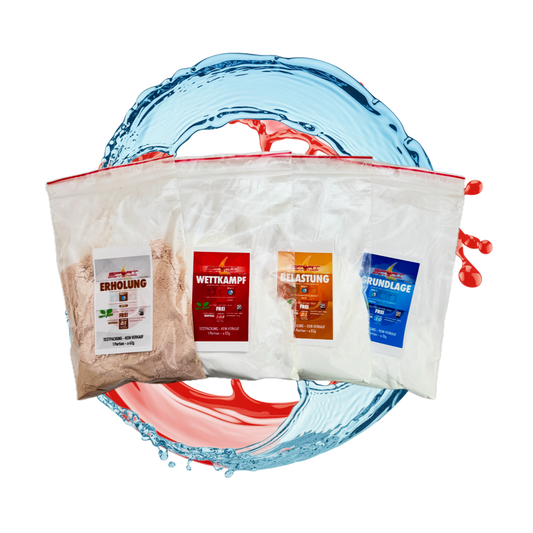
Start with our Sample Pack.
Further resources:
Unsure which product is right for you?
Frequently asked questions
Why does my performance drop after 90 minutes of running?
After about 90 minutes of intense exertion, your glycogen stores in the muscles and liver are largely depleted. Without sufficient carbohydrate intake during the run, your blood sugar level drops, which leads to fatigue, lack of strength in the legs, and reduced pace. In addition, fluid deficiency amplifies this effect. Through targeted energy supply during the run, this performance drop can be significantly reduced.
How many carbohydrates should I consume on long runs?
Individual carbohydrate intake depends on your body weight, training intensity, and tolerance. Generally, it is recommended to consume 30-60 g of carbohydrates per hour for runs up to 90 minutes, and up to 90 g per hour for longer sessions. Start with 30-40 g and increase gradually. Products like SportBrennstoff BELASTUNG (60 g of carbohydrates per serving) or INTENSIV (40 g per serving) enable flexible dosing depending on need and tolerance.
What is the difference between the bonk, dehydration, and overtraining?
The bonk is shown by sudden weakness, concentration problems, and muscle tremors - signs of empty energy stores. Dehydration manifests itself through headaches, dizziness, and reduced performance despite sufficient carbohydrates. Overtraining develops gradually over days or weeks with chronic fatigue and declining performance. The bonk can be remedied by quick carbohydrate intake, dehydration by fluid. Overtraining requires recovery and training adjustment.
How do I safely test my nutrition before a race?
Test your planned nutrition multiple times in training sessions with similar intensity and duration to your race. Start with smaller amounts to check tolerance. Pay attention to timing: Consume carbohydrates after 45-60 minutes, not only when exhausted. Drink regularly in small amounts, not waiting until thirsty. Stomach-friendly products like SportBrennstoff WETTKAMPF or INTENSIV minimize digestive problems under exertion. Note what works, and repeat it before the race.
Hat einen angenehmen neutralen Geschmack und geht direkt in die Beine! Nutze es in fast jedem Training für meinen Ironman 👍
Hallo Melanie, vielen Dank für deine tolle Rückmeldung! Schön, dass dir der neutrale Geschmack gefällt und dich unser Sportgetränk bei deinen Ironman-Trainings unterstützt. Wir wünschen dir weiterhin viel Erfolg und starke Beine! :-)
Das Wettkampf-Sportgetränk hat meine Erwartungen voll erfüllt
Das Wettkampf-Sportgetränk hat meine Erwartungen voll erfüllt. Über die gesamte Zeit des Radfahrens (Langdistanz) konnte ich das Getränk zuführen und kam ohne spürbares Energiedefizit in T2 an.
Angenehmer, nicht aufdringlicher oder vordergründiger Geschmack.
Hallo Jens, vielen Dank für deine tolle Rückmeldung! Schön, dass dich das Sportgetränk auf deiner Langdistanz zuverlässig versorgt hat und dir der angenehme, dezente Geschmack gefällt. Wir wünschen dir weiterhin viel Erfolg bei deinen Wettkämpfen! Ingolf
Mit diesen beiden Produkten kommt man wirklich in der Aufbauphase sehr gut klar
Mit diesen beiden Produkten kommt man wirklich in der Aufbauphase sehr gut klar.
Hallo Daniel, danke für dein tolles Feedback! Es freut uns sehr, dass das Basispaket dir in der Aufbauphase so gut hilft. Viel Erfolg weiterhin beim Training!
Tatsächlich ist das 6 Tage in der Woche beim Frühstück dabei
Tatsächlich ist das 6 Tage in der Woche beim Frühstück dabei. Innerhalb von einer halben Stunde ist meine Energie geladen und kann direkt ins Training einsteigen. Noch nie Probleme beide Verdauung
Hallo Daniel, vielen Dank für deine tolle Rückmeldung! Es freut uns sehr, dass das Sportgetränk dich so zuverlässig beim Frühstück und beim Start ins Training unterstützt – und du es gut verträgst. Weiterhin viel Freude beim Training! Ingolf
Super Preis Leistungsverhältnis, wir setzen es zum Muskelaufbau und zur Regeneration ein . Wir sind seit vier Monaten sehr erfolgreich mit diesem Produkten.
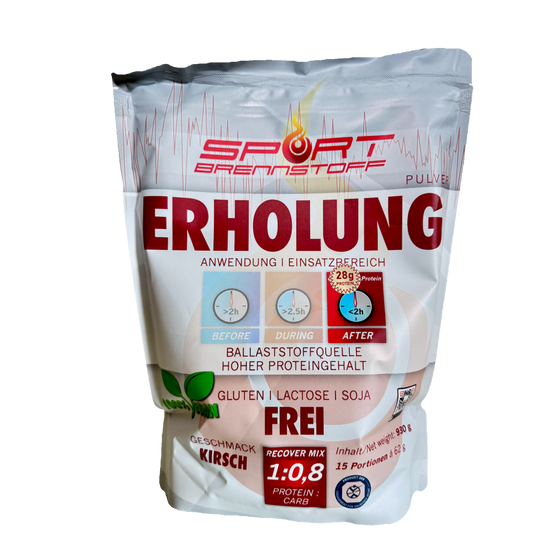
Hallo Daniel, vielen Dank für deine positive Rückmeldung! Es freut uns sehr zu hören, dass du mit unserem Recovery Shake so erfolgreich bist. Viel Erfolg weiterhin beim Muskelaufbau und der Regeneration! Dein Team von Sportbrennstoff