Why an Energy Shortfall Occurs After 90 Minutes of Exercise
An energy shortfall after 90 minutes of exercise is the sudden drop in performance that occurs when glycogen stores run low and blood sugar can no longer be kept stable. The cause is rarely just one factor.
Your body stores carbohydrates as glycogen in your muscles and liver. During sustained, intense exercise, these stores usually last for 60 to 90 minutes. After that, you need to replenish your energy through food. If you don't, your performance measurably declines.
Glycogen Stores, Blood Sugar and When Performance Drops
The timing isn't random. It follows a clear sequence:
First 30 to 60 minutes: Glycogen meets your needs and blood sugar remains stable.
After 60 minutes: The liver releases less glucose and blood sugar gradually drops.
After 90 minutes: Stores are largely depleted and performance drops sharply.
This explains why an energy slump feels so sudden. It builds over the course of an hour and only becomes apparent near the end.
Key TakeawayA drop in performance after 90 minutes isn't a sign of weakness but a fueling problem. Taking in carbohydrates in good time can delay it.
Distinguishing the Causes: Carbohydrate Deficiency, Dehydration, Overtraining or Too Fast a Pace
Not every energy slump is caused by a lack of carbohydrates. Before you try to fix it, you need to know the cause. Otherwise, you may address the wrong problem—and potentially make it worse, since extra carbohydrates won't help with overtraining or dehydration.
Four causes are common. You can distinguish between them by considering three things: What did you eat and drink beforehand? How did your pace compare with your usual effort? What does the slump feel like?
Symptoms and Their Causes
What You Notice
Likely Cause
First Step
Performance gradually declines, legs feel heavy, no dizziness
Carbohydrate deficiency
30 to 40 g of fast-acting carbohydrates in liquid form
Dry mouth, dark urine before training, headache
Dehydration
150 to 250 ml of a sodium-containing drink, then keep drinking
Elevated resting heart rate in the morning, heavy legs for days, poor sleep
Overtraining
Stop the session and prioritize recovery
Performance drops early in the session, breathing too fast, heart rate above target zone
Too fast a pace
Slow down, monitor your heart rate, then reassess
Shaking, cold sweat, confusion
Severe energy deficiency
Stop immediately, take in carbohydrates and seek medical advice
Carbohydrate Deficiency: The Most Common Cause at 90 Minutes
If you ate normally before training and didn't take in anything during your session, carbohydrate deficiency is almost always the cause. During sustained, intense exercise, glycogen stores last for 60 to 90 minutes. After that, you need a steady supply.
Typical signs: The slump comes on gradually and your legs feel heavy, but your circulation and head stay clear. A liquid energy source containing 30 to 40 g of carbohydrates can bring noticeable improvement within 10 to 15 minutes.
Dehydration: Underestimated and Quickly Resolved
A fluid loss of just around two percent of your body weight can measurably reduce endurance performance. For a person weighing 75 kg, that's about 1.5 liters—a realistic loss over 90 minutes in warm weather.
Check your urine before training: pale yellow is normal; dark yellow is a warning sign. As a general guide, drink 400 to 800 ml per hour during exercise, depending on temperature, intensity and sweat rate. Sodium-containing drinks help your body retain fluid better than plain water.
Overtraining: When the Slump Didn't Start Today
An energy slump after 90 minutes can be a problem that's been building up. Signs include an elevated resting heart rate for several mornings in a row, heavy legs even during your warm-up, and restless sleep. Extra energy won't help here; less training will.
Too Fast a Pace: The Carbohydrate Burner
If you start too fast, you burn a disproportionate amount of carbohydrates. When exercising above your personal Zone 2, your metabolism shifts markedly toward burning carbohydrates, your stores empty faster, and the slump comes sooner than 90 minutes.
This explains why some athletes hit a wall after just 60 minutes even though they've eaten enough. The solution isn't another gel; it's a more controlled start.
Key TakeawayThe right response depends on the cause. Carbohydrates help with carbohydrate deficiency, water and sodium with dehydration, rest breaks with overtraining, and pace control when you've started too fast. Misidentifying the cause wastes time and sometimes the entire session.
Warning Signs You Should Take Seriously
Some signs are harmless, others aren't. Watch out for these warning signs:
Dizziness or cold sweats
Racing heart despite maintaining the same effort
Nausea that doesn't subside
Muscle weakness or shaking
Confusion or difficulty concentrating
These signs may indicate a severe energy deficiency. If symptoms recur, consult a doctor.
Carbohydrates During Exercise: Amounts, Timing and Tolerance
The right amount depends on the duration of your effort, not on how you feel. Experts recommend a steady intake for sessions lasting more than 60 to 90 minutes.
As a general guide:
Up to 60 minutes: No additional intake needed.
60 to 90 minutes: Small amounts, about 30 g per hour.
Over 90 minutes: 60 to 90 g per hour, or more for well-trained athletes.
Two things matter more than the amount alone: timing and tolerance.
Start early, not when your performance begins to drop. Your stomach needs time. And test every amount during training, never for the first time in a competition.
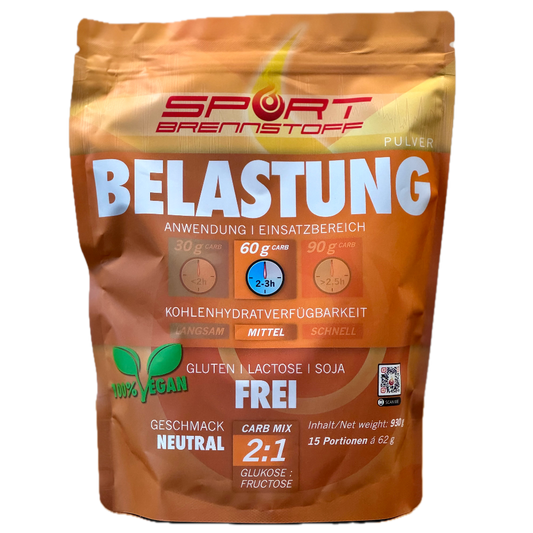
Pro TipA 2:1 glucose-to-fructose ratio uses two absorption pathways in the gut. This helps your stomach tolerate larger amounts without feeling uncomfortable. This exact ratio is found in our [SportBrennstoff BELASTUNG sports drink](https://www.sportbrennstoff.com/products/sportbrennstoff-belastung), with 60 g of carbs per standard serving.
Eating Before Endurance Training: Meals and a Fueling Plan for Prevention
The best immediate fix is prevention. Eating properly before training means you start with full stores.
3 to 4 hours beforehand: A carbohydrate-rich meal that's easy to digest and low in fiber.
1 to 2 hours beforehand: A small serving, such as an energy bar or a banana.
30 minutes beforehand: Optionally, a sports drink with slow-release carbohydrates.
A fueling plan for your session is just as important. Plan what you'll drink and eat each hour. If you improvise, you'll reach for fuel too late.
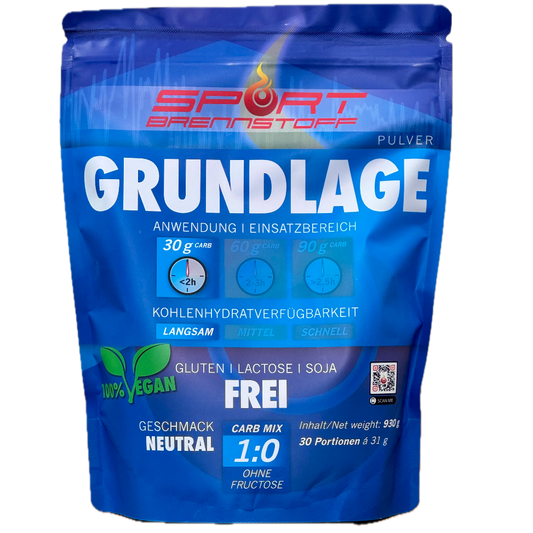
For long sessions, a drink with slow-release carbohydrates, such as SportBrennstoff GRUNDLAGE, made with isomaltulose, is a good choice. It keeps blood sugar stable without insulin spikes.
SportBrennstoff GRUNDLAGE * 30g Carbs Drink Mix
Energy Gels for Running: What Really Helps After 60 to 90 Minutes
An energy gel is convenient for running, but it isn't automatically the best choice. Taking in carbohydrates is more difficult when running than when cycling. Your stomach works more slowly while you're moving.
In practice, this means:
A maximum of 80 to 90 g of carbohydrates per hour is realistic when running.
Liquid energy is often easier to tolerate than solid bars.
Small, frequent servings are better than one large dose.
Situation
Recommendation
Why
Under 60 minutes
Water only
Stores are sufficient
60 to 90 minutes
30 g of carbs per hour
Keeps blood sugar stable
Over 90 minutes
60 to 90 g of carbs per hour
Replenishes depleted stores
Sensitive stomach
Liquid energy
Easier to digest
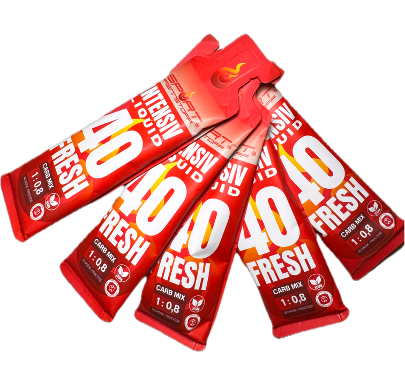
A liquid product like SportBrennstoff INTENSIV delivers 40 g of fast-acting carbohydrates and 400 mg of sodium per serving, without chewing.
SportBrennstoff INTENSIV * Race Liquid without gel
Relative energy availability in sports: When the energy slump becomes chronic
Relative energy availability in sports describes the ratio of energy consumed to energy expended. If it is persistently too low, a short-term energy slump becomes a chronic problem.
Signs of this include:
Constant fatigue even outside of training
Lack of performance improvement despite hard training
Frequent infections
Sleep problems and irritability
Chronically elevated cortisol levels may also be a possible companion. The stress hormone cortisol rises during persistent energy deficiency and slows down recovery and muscle building.
Anyone who recognizes these signs in themselves should honestly assess their own energy intake. If symptoms persist, the right step is to see a doctor.
Immediate plan for an energy slump after 90 minutes: The first 15 minutes
An energy slump after 90 minutes requires a clear immediate plan. No experiments, no discussion. Act in this order, and adapt the quantities to your sport.
The first 15 minutes: Step by step
Slow down (minute 0 to 2): Reduce the intensity to a light level, monitor your heart rate. Goal: get below 75 percent of your maximum heart rate so that blood flow to the stomach increases again.
Drink (minute 2 to 5): 150 to 250 ml of a sodium-containing sports drink in small sips. Not all at once, the stomach is slow under exertion.
Provide fast energy (minute 5 to 10): 30 to 40 g of fast-acting carbohydrates, liquid or as a gel with water. With solid food, add 100 to 150 ml of water, otherwise absorption will be delayed.
Keep drinking (minute 10 to 15): Small sips, no more than 500 ml in total during this window. Too much liquid at once pushes and stops absorption.
Reassess: After 15 minutes, check if performance returns. Heart rate, legs, head, all three must have improved.
Adaptation by sport
The same logic, but different implementation:
Running: Liquid energy is almost always easier to tolerate than bars. The stomach works slower during running. Small, frequent portions beat a large dose.
Cycling: Higher quantities are possible here because the upper body is more stable. 60 to 90 g of carbohydrates per hour is realistic, also as bars or a banana.
Swimming: Energy intake only on land or during breaks. Plan the nutrition in advance at fixed points, not spontaneously.
Team and interval sports: Use short breaks, prefer liquid energy because there is no time for solid food.
Stopping criteria: When you end the session
If performance does not return after 15 minutes, stop the session. Forcing yourself to keep going brings no training effect and increases the risk of injury. Specific stopping signals:
Heart rate remains more than 10 beats above the expected value for the reduced pace.
Dizziness, cold sweats, or nausea persist.
The legs remain heavy, even though you have slowed down and provided energy.
Confusion or loss of concentration, stop immediately and have it checked by a doctor.
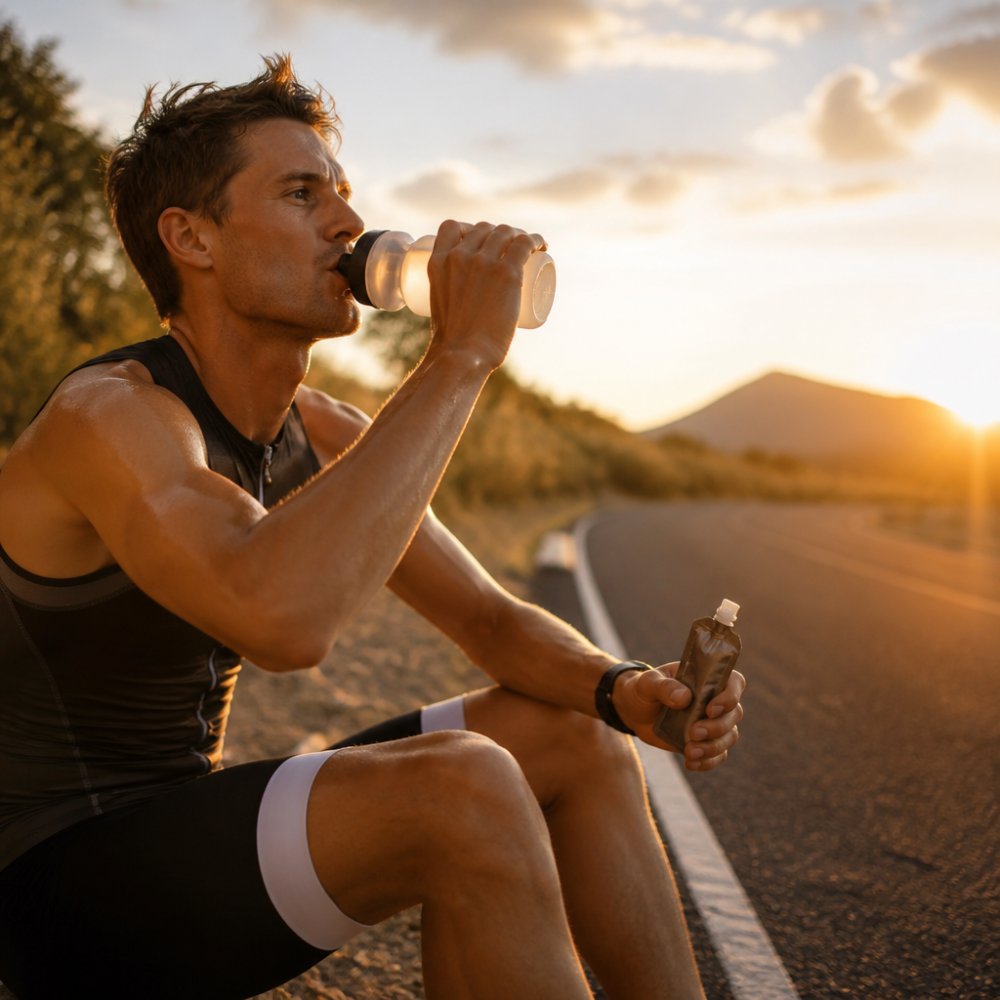
An endurance athlete sits on the side of a running track, drinks from a sports bottle, and holds an energy pouch in their hand. The sun is low, the scene looks exhausted but determined.
AttentionThe most common mistake: only reacting when there is a severe drop in performance. By then, the stomach is already overloaded and absorbs energy slowly. Intake must start early, not only at the low point. Those who learn to implement the plan in 15 minutes during training can call it up in a competition.
After the session: The first 60 minutes
The immediate plan does not end with the finish line. After exertion, the body needs carbohydrates and fluids to refill the stores. As a guideline, 1 to 1.2 g of carbohydrates per kilogram of body weight apply in the first 60 minutes after training, combined with 500 to 750 ml of fluid. Those who regularly neglect this start the next session with half-empty stores, and the slump after 90 minutes comes earlier.
Conclusion: No energy deficiency after 90 minutes of sports with the right strategy
An energy deficiency after 90 minutes of sports can be avoided if intake, timing, and tolerance match. Those who eat before training, provide carbohydrates early during exertion, and know the causes postpone the performance slump far back.
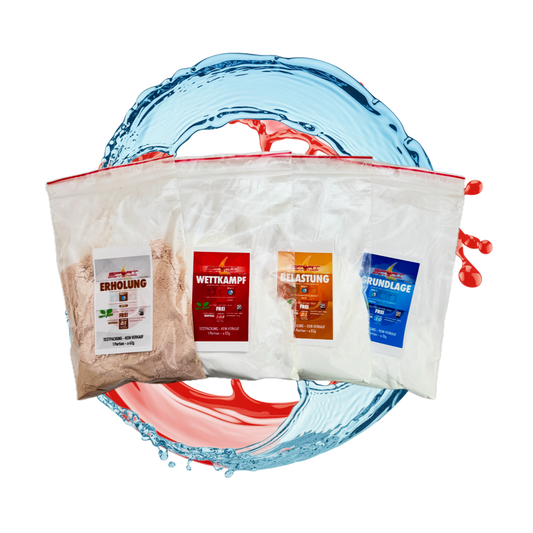
This is exactly why we develop our products at SportBrennstoff: vegan, gentle on the stomach, Kölner Liste® certified, and tailored to every phase of exertion. From the base session to the competition, you get a nutrition strategy that suits your training. Start with our trial package for 5 € and test the energy supply in training before it counts in competition.
Frequently Asked Questions
Why do I get an energy deficiency after 90 minutes of sports?
During exertion lasting over 60 to 90 minutes, the glycogen stores in the muscles and liver increasingly empty. Blood sugar drops, the energy supply from outside is no longer sufficient, and performance drops noticeably. Those who do not provide carbohydrates then experience the typical energy slump. The solution lies in timely carbohydrate intake during sports, ideally 30 to 60 grams per hour, tailored to the duration and intensity of exertion.
What should I eat during a sports session of more than 90 minutes?
For sessions over 90 minutes, you need fast-acting carbohydrates that the stomach tolerates well. Sports drinks with 60 to 90 grams of carbohydrates per hour, gels, or liquid energy pouches have proven themselves. SportBrennstoff BELASTUNG delivers 60 grams of carbs per serving and is scalable to 90 grams per hour. It is important to test the quantity in training so that the stomach is accustomed to the absorption. Solid food is often harder to digest at high intensity.
How do a short-term performance slump and relative energy deficiency in sports differ?
A short-term performance slump occurs acutely during a session, usually due to a lack of carbohydrate or fluid intake, and can often be quickly remedied with immediate energy intake. Relative energy availability in sports, on the other hand, describes a longer-term condition in which too little energy is available for exertion over days or weeks. The consequences are persistent fatigue, poorer recovery, and performance decline over several sessions. Both conditions require different countermeasures.
What helps you get your strength back after a long training session?
After exertion, carbohydrates and protein count to refill the glycogen stores and support recovery. Drink enough water to compensate for fluid losses. A meal with carbohydrates and high-quality protein within the first hour after training accelerates recovery. Also make sure you get enough sleep and plan easier sessions so that your body can fully recover.
Hat einen angenehmen neutralen Geschmack und geht direkt in die Beine! Nutze es in fast jedem Training für meinen Ironman 👍
Hallo Melanie, vielen Dank für deine tolle Rückmeldung! Schön, dass dir der neutrale Geschmack gefällt und dich unser Sportgetränk bei deinen Ironman-Trainings unterstützt. Wir wünschen dir weiterhin viel Erfolg und starke Beine! :-)
Das Wettkampf-Sportgetränk hat meine Erwartungen voll erfüllt
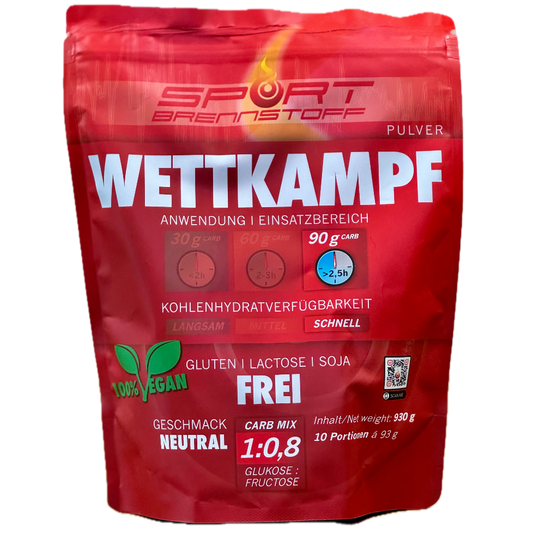
Das Wettkampf-Sportgetränk hat meine Erwartungen voll erfüllt. Über die gesamte Zeit des Radfahrens (Langdistanz) konnte ich das Getränk zuführen und kam ohne spürbares Energiedefizit in T2 an.
Angenehmer, nicht aufdringlicher oder vordergründiger Geschmack.
Hallo Jens, vielen Dank für deine tolle Rückmeldung! Schön, dass dich das Sportgetränk auf deiner Langdistanz zuverlässig versorgt hat und dir der angenehme, dezente Geschmack gefällt. Wir wünschen dir weiterhin viel Erfolg bei deinen Wettkämpfen! Ingolf
Mit diesen beiden Produkten kommt man wirklich in der Aufbauphase sehr gut klar
Mit diesen beiden Produkten kommt man wirklich in der Aufbauphase sehr gut klar.
Hallo Daniel, danke für dein tolles Feedback! Es freut uns sehr, dass das Basispaket dir in der Aufbauphase so gut hilft. Viel Erfolg weiterhin beim Training!
Tatsächlich ist das 6 Tage in der Woche beim Frühstück dabei
Tatsächlich ist das 6 Tage in der Woche beim Frühstück dabei. Innerhalb von einer halben Stunde ist meine Energie geladen und kann direkt ins Training einsteigen. Noch nie Probleme beide Verdauung
Hallo Daniel, vielen Dank für deine tolle Rückmeldung! Es freut uns sehr, dass das Sportgetränk dich so zuverlässig beim Frühstück und beim Start ins Training unterstützt – und du es gut verträgst. Weiterhin viel Freude beim Training! Ingolf
Super Preis Leistungsverhältnis, wir setzen es zum Muskelaufbau und zur Regeneration ein . Wir sind seit vier Monaten sehr erfolgreich mit diesem Produkten.
Hallo Daniel, vielen Dank für deine positive Rückmeldung! Es freut uns sehr zu hören, dass du mit unserem Recovery Shake so erfolgreich bist. Viel Erfolg weiterhin beim Muskelaufbau und der Regeneration! Dein Team von Sportbrennstoff