



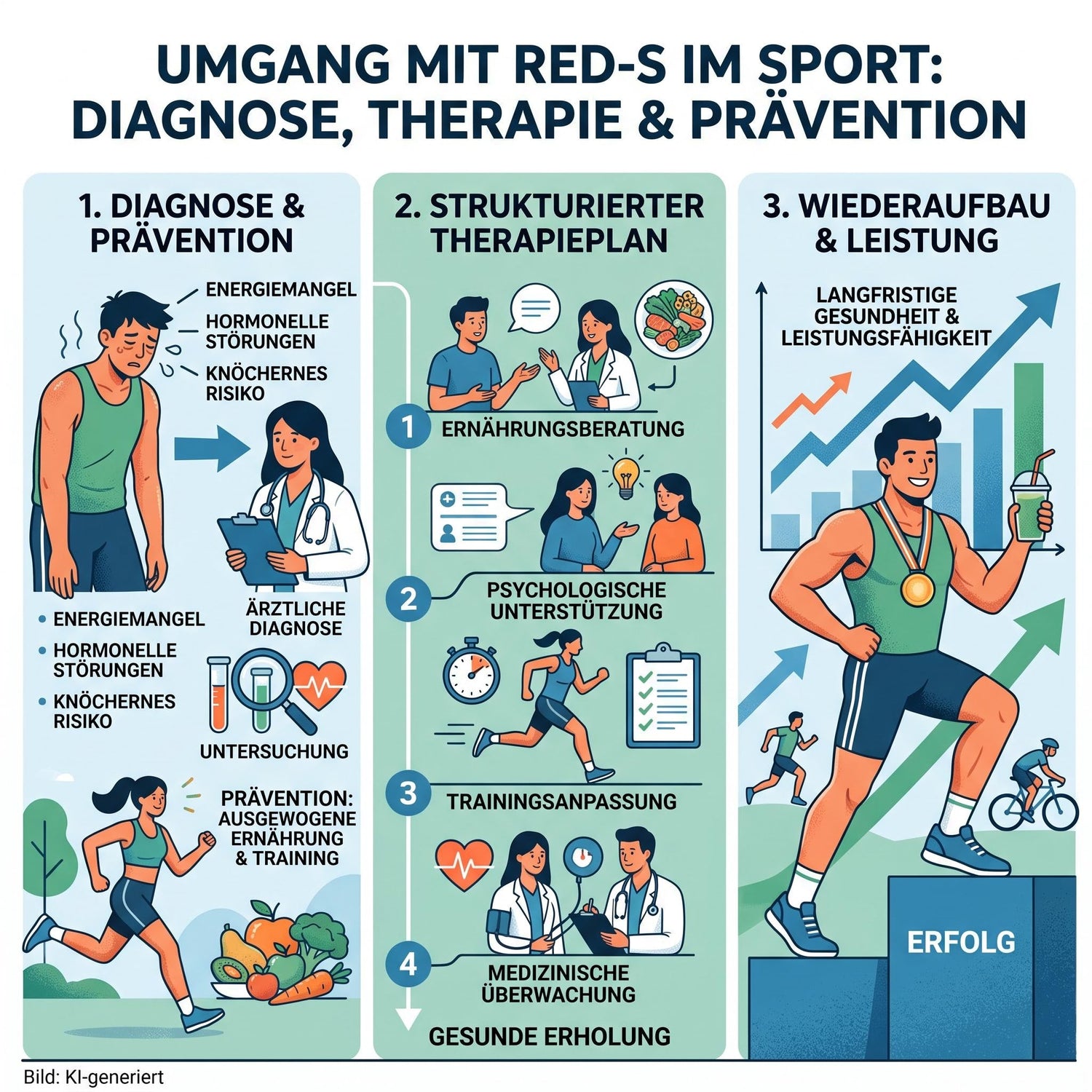
The syndrome of relative energy deficiency in sports (RED-S) requires not only a clear diagnosis but, above all, a well-structured therapy and rehabilitation plan. Prevention is just as important as targeted treatment to avoid long-term health and performance consequences. In this article, we show you how to effectively prevent RED-S and regain your health and performance after a period of energy deficiency.
***
#### Training adjustment: Less is more
A key element of recovery is reducing training volume, intensity, and frequency. The body needs time to replenish energy reserves and reduce mental stress. Gentle forms of exercise such as yoga, stretching, or technique training help keep the circulatory system active without compromising recovery. Cycle-based training can be particularly helpful for women, taking advantage of hormonal fluctuations and avoiding overtraining [4][1].
***
#### Adjust your diet and increase energy availability
Increasing calorie intake, ideally by 300–600 kcal per day, is essential, with a focus on balanced macro- and micronutrients. A diet rich in protein, complex carbohydrates, and healthy fats supports muscle growth and hormone synthesis. Additionally, nutrient deficiencies such as vitamin D, calcium, iron, and magnesium should be addressed [1][5].
***
#### Psychological support and behavior change
For many affected individuals, the psychological component is crucial. RED-S is often accompanied by anxiety, eating disorders, or high performance pressure. Behavioral therapy or psychological support helps to break negative thought patterns and rebuild motivation. Open communication with coaches and family can also have a stabilizing effect [1][2].
***
#### Long-term support and monitoring
Treatment is a long-term process. Regular monitoring of bone density, hormone levels, and nutrient supply is essential. Even after initial improvements, it can take months for all bodily functions to return to normal – for example, menstruation often does not resume for up to 12 months in women. Patience and consistent follow-up care are therefore crucial [1][5].
***
**Conclusion:**
Less training, more energy, and mental balance are key elements in managing RED-S. With the right support, a sustainable recovery is possible – for long-term health and athletic success [1][4][5].
Sources
[1] RED-S syndrome - Menstrual disorders in female athletes https://sportsandmedicine.com/de/2024/02/red-s-syndrom-menstruationstoerungen-bei-sportlerinnen/
[2] Young, sporty – and sick https://www.doccheck.com/de/detail/articles/43323-jung-sportlich-und-krank
[3] RED-S: Relative energy deficiency in sports due to too much ... https://oped.de/blog/red-s-im-sport-zu-viel-training-und-zu-wenig-kalorien
[4] RED-S Syndrome: A Guide to Relative Energy Deficit ... https://blackroll.com/de/artikel/red-s-syndrom
[5] RED-S syndrome in runners: causes and treatment https://www.runnersworld.de/verletzungen-vorbeugung/red-s-syndrom-bei-laeufern-ursachen-und-behandlung/
[6] RED-S https://sportaerztezeitung.com/rubriken/ernaehrung/13482/red-s/
[7] RED-S consultation | University Hospital Tübingen https://www.medizin.uni-tuebingen.de/de/das-klinikum/einrichtungen/kliniken/medizinische-klinik/sportmedizin/sprechstunde-red-s
[8] RED-S https://sportaerztezeitung.com/rubriken/ernaehrung/14698/red-s-2/









Leave a comment
All comments are moderated before being published.
This site is protected by hCaptcha and the hCaptcha Privacy Policy and Terms of Service apply.