What are energy gels and why are they important for endurance athletes?
Vegan energy gels for sensitive stomachs are concentrated carbohydrate sources that endurance athletes consume during intense exercise to replenish their glycogen stores and maintain performance. They provide quickly available energy in a compact form, ideal for race situations where regular meals are impractical.
During exercise sessions lasting over 90 minutes, the body's glycogen stores begin to deplete. Without external carbohydrate intake, your performance drops significantly. Energy gels prevent this drop in performance by delivering glucose directly into the bloodstream. The key lies in the right formulation: The glucose-fructose ratio determines how efficiently your digestive tract absorbs and processes the carbohydrates.
Pro tipMany endurance athletes only test their gels on race day, a common mistake. The stomach must be trained to handle high carbohydrate intakes, especially during exercise lasting over 2.5 hours. Start with smaller amounts during training and increase gradually.
Why vegan energy gels are a better choice for sensitive stomachs
Vegan energy gels for sensitive stomachs not only avoid animal ingredients, but are often specifically formulated for FODMAP tolerance - a scientific criterion that most standard tests ignore. FODMAP stands for fermentable oligosaccharides, disaccharides, monosaccharides, and polyols. These carbohydrates and sugar alcohols are poorly absorbed by some people and can ferment in the small intestine, leading to bloating, cramps, and nausea - especially problematic under exercise.
The difference lies in the precise formulation. Many conventional gels contain highly concentrated sugar alcohols such as sorbitol or xylitol, which are high in FODMAPs, or an unfavorable fructose-to-glucose ratio that leads to fructose malabsorption. Vegan formulas instead rely on low-FODMAP carbohydrate sources such as glucose monohydrate, maltodextrin, and isomaltulose, which your gastrointestinal system can efficiently process even under exercise.
FODMAP tolerance in practice:
An optimal glucose-fructose ratio (ideally 1:0.8 or 2:1) is important not only for the absorption rate, but also for FODMAP tolerance. If fructose is present in too high a concentration, it exceeds the absorption capacity of the GLUT5 transporter in the small intestine, and unabsorbed fructose ferments. A 2:1 ratio (e.g., 40 g glucose + 20 g fructose per serving) significantly minimizes this risk.
Additionally, low-FODMAP gels should be free of highly concentrated fiber, inulin, and fructooligosaccharides - ingredients that are often hidden in "natural" gels. Many athletes report discomfort with vegan energy gels despite having a sensitive stomach, although the carbohydrate amount is correct; the reason is often a FODMAP-rich ingredient list, not the total amount.
Hydrogel technology vs. classic gels:
Another advantage of vegan formulas lies in the hydrogel technology that some modern products use. Classic gels are highly concentrated suspensions that create a high osmotic load in the stomach - the stomach has to draw in a lot of fluid to dilute the gel, which leads to discomfort and delayed gastric emptying.
Hydrogel-based gels are already partially hydrated and create a lower osmotic load. This means: They leave the stomach faster, put less strain on it, and enable a more even carbohydrate absorption. For athletes with a sensitive stomach, this physical difference is significant - the gastric residence time can be 20-30% shorter.
Electrolytes and stomach-friendliness:
Sodium is not only essential for fluid intake, but also for gastric emptying itself. Sodium stimulates active transport mechanisms in the small intestine and reduces the osmotic load of the gel. At least 300-400 mg of sodium per serving is the standard; vegan gels with this concentration additionally protect your stomach.
Important insightVegan energy gels for sensitive stomachs offer you three advantages: FODMAP tolerance (less fermentation and cramps), hydrogel technology (faster gastric emptying), and optimized electrolyte profiles (better absorption). This combination is rarely considered in standard tests, but makes the difference between training comfort and gastrointestinal problems. Additionally, many vegan gels are certified by the Cologne List®, an important standard for ambitious competitive athletes.
Comparison table: The best vegan energy gels at a glance
Isomaltulose-based, fructose-free, for Zone-2 training
€36.00
SportBrennstoff WETTKAMPF Package
Bundle
40-90 g
Powder + Liquid combined, flexible energy supply
€60.00
Avoiding gastrointestinal problems while running: Critical ingredients
Gastrointestinal discomfort while running is often caused by three factors: too high a concentration of carbohydrates, unfavorable sugar ratios, and lack of electrolytes. Choosing the right ingredients can almost completely avoid these problems.
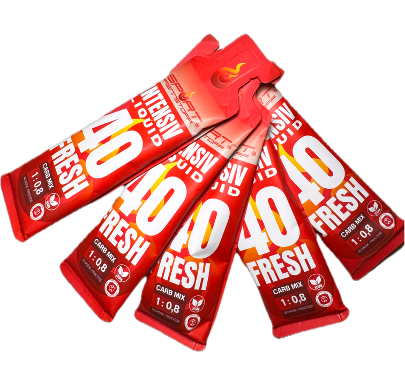
SportBrennstoff INTENSIV * Race Liquid without gel
Critical ingredients to watch out for:
The glucose-fructose ratio is crucial. Glucose is absorbed via SGLT1 transporters, fructose via GLUT5 transporters, two different pathways. A ratio of 1:0.8 or 2:1 enables a maximum absorption rate of up to 90 grams per hour while running. Gels with pure glucose or unbalanced ratios lead to gastric emptying problems.
Electrolytes such as sodium are not a luxury ingredient, they are essential. Sodium improves fluid intake and prevents hyponatremia during long exercise. At least 300-400 mg of sodium per serving is the standard for professional sports nutrition.
Avoid sugar alcohols such as sorbitol or xylitol if you have a sensitive stomach. These are often marketed as "natural", but can trigger gastrointestinal discomfort. Equally problematic: artificial sweeteners and highly concentrated fiber that your digestive tract cannot efficiently process under exercise.
CautionA common mistake: Too high a concentration in too short a time. Many athletes consume several gels in a row without drinking enough water. This leads to gastrointestinal blockages. The rule: For each gel, you should consume at least 200-300 ml of water and wait 15-20 minutes between servings.
Stomach-friendly sports nutrition: How to choose the right carbohydrate source
The choice of carbohydrate source determines not only the absorption rate, but also how your stomach processes the energy. Not all carbohydrates are the same - some enable maximum absorption rates, others are particularly stomach-friendly, and some can lead to digestive problems under exercise.
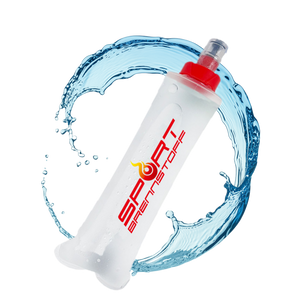
Endurance athlete during intense training, consuming a liquid energy gel from a single-serving pouch, with a water bottle and training equipment in the background
Glucose is absorbed in the small intestine via the SGLT1 transporter (Sodium-Glucose Linked Transporter 1). This active transporter is saturable - that is, it has a maximum absorption rate of about 60 grams of glucose per hour. Above this limit, unabsorbed glucose is transported into the large intestine, where it ferments and leads to bloating, cramps, and diarrhea.
However, pure glucose is not ideal for sensitive stomachs because it is quickly resorbed and creates a high osmotic load in the stomach. This means: The stomach has to draw in a lot of fluid to dilute the gel, which leads to discomfort and delayed gastric emptying. That is why glucose-based gels are better combined with other carbohydrate sources.
Fructose and the GLUT5 transporter system:
Fructose is absorbed via a separate transporter (GLUT5), with a maximum rate of about 30-40 grams per hour. This is the key to understanding: If you combine glucose and fructose, you use two different absorption pathways at the same time and can increase the total absorption rate to up to 90 grams per hour.
But this is also where the danger lies for sensitive stomachs. If the fructose-to-glucose ratio is unfavorable (e.g., more fructose than glucose), the fructose exceeds the absorption capacity of the GLUT5 transporter. Unabsorbed fructose ferments in the large intestine and leads to bloating, nausea, and diarrhea - especially under exercise, when the blood flow to the intestines is reduced.
The optimal ratio for sensitive stomachs is 2:1 (glucose:fructose) or 1:0.8. A 2:1 ratio is more conservative and significantly reduces the risk of fructose malabsorption.
Maltodextrin - The standard carbohydrate source:
Maltodextrin is a polysaccharide made of starch chains and is quickly broken down into glucose.
Low osmotic load: Maltodextrin creates a lower osmotic load than monosaccharides, which means that the stomach has to draw in less fluid and the gel is transported faster into the small intestine.
Quick availability: It is quickly broken down into glucose and absorbed via the SGLT1 transporter.
Stomach-friendly: Many athletes with a sensitive stomach tolerate maltodextrin better than pure glucose or fructose.
Isomaltulose (Palatinose™) - The slow-carb alternative:
For sensitive stomachs, isomaltulose is advantageous because:
It creates a lower osmotic load than fast carbohydrates
It does not accelerate gastric emptying, but slows it down - ideal for moderate intensities
It causes less fermentation in the large intestine because it is absorbed more slowly
Practical selection by training intensity:
CautionA common mistake: Athletes choose carbohydrate sources by taste or price, not by stomach tolerance. If you have a sensitive stomach, test different carbohydrate sources during training, not on race day. Your digestive tract needs 2-3 weeks to adapt to a new carbohydrate source.
Dosage and intake recommendations for a reliable energy supply
The right dosage is the difference between optimal performance and gastrointestinal problems. Endurance athletes can consume between 60 and 120 grams of carbohydrates per hour, depending on training intensity, stomach preparation, and fluid intake.
Intake intervals:
Every 45 minutes: for training sessions up to 3 hours
Every 30-45 minutes: for intense competition efforts over 3 hours
Always combine with at least 200 ml of water
Do not consume more than 2 gels in a row without a break
Pro TipMany athletes underestimate the importance of "stomach training". Your digestive tract can be trained to process higher amounts of carbohydrates. Start with lower doses (60 g/h) during training and gradually increase to 90-120 g/h over several weeks. This is the safest way to ensure optimal energy supply during competition.
Frequently Asked Questions
Why do energy gels cause stomach problems during running?
Many energy gels contain highly concentrated sugar mixtures and artificial gelling agents that slow down gastric emptying and cause gastrointestinal discomfort. The glucose-fructose ratio is crucial: An optimal ratio of 1:0.8 allows for faster absorption and better tolerance. In addition, sugar alcohols and high fructose content can cause cramps in sensitive stomachs. SportBrennstoff INTENSIV uses a balanced ratio and avoids unnecessary additives.
Which ingredients in gels should be avoided for a sensitive stomach?
You should avoid sugar alcohols (sorbitol, xylitol), excessive fructose without a glucose balance, artificial gelling agents, and preservatives. Low-FODMAP ingredients are ideal for sensitive digestive tracts. Natural carbohydrate sources such as maltodextrin and isomaltulose (palatinose) are significantly easier to tolerate. SportBrennstoff products are free from artificial additives and optimized for digestibility.
How do I test the tolerance of sports nutrition before a competition?
Train your digestive system systematically: Start with small amounts during easy base training sessions, then gradually increase the doses during moderate intensity workouts (60-80% VO2max). Only use your final strategy at competition intensity (over 80% VO2max). Document which products and dosages work well. SportBrennstoff offers a 5 € sample pack so you can test tolerance cost-effectively.
How much water should I drink with an energy gel?
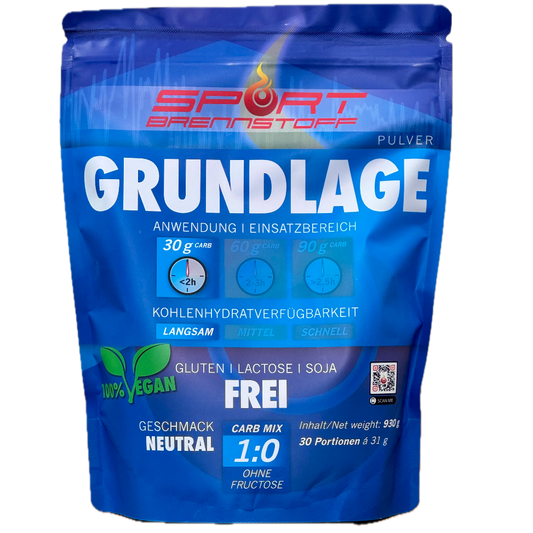
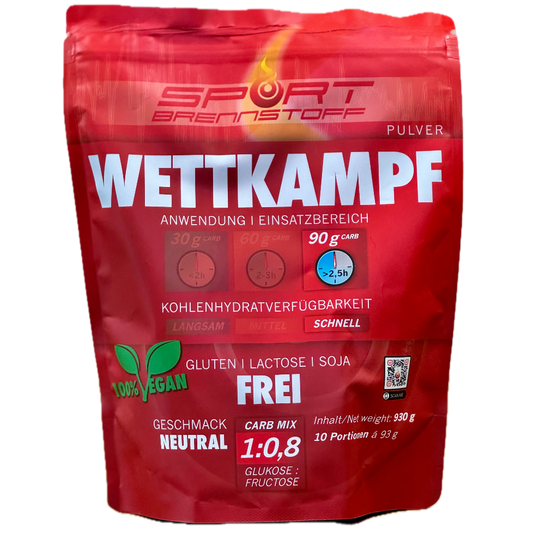
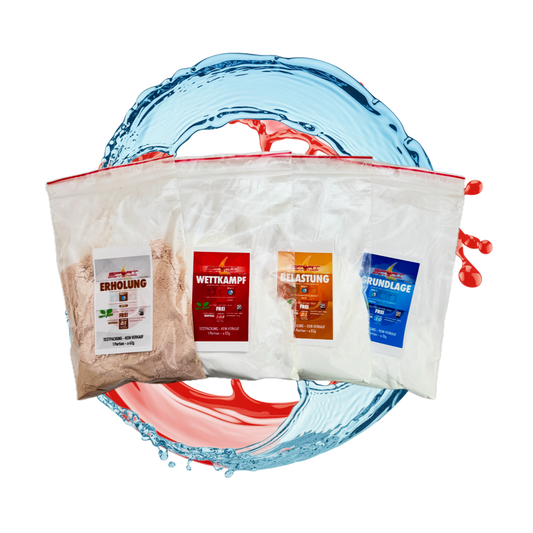
Liquid gels like SportBrennstoff INTENSIV require less water than powder - often only 100-150 ml to wash down. Powder products like WETTKAMPF are dissolved in 750 ml of water. Your fluid intake should compensate for your sweat rate: 400-800 ml per hour is common during intense training sessions. Isotonic drinks (like GRUNDLAGE) are absorbed better by the body than highly concentrated solutions.
Are vegan energy gels generally easier to tolerate?
Vegan gels are not automatically easier to tolerate, but they typically do not contain animal fats or lactose, which can cause gastrointestinal discomfort. The carbohydrate source and the glucose-fructose ratio are crucial. SportBrennstoff vegan energy gels combine plant-based ingredients with a scientifically optimized ratio (1:0.8) and electrolytes - making them particularly suitable for sensitive stomachs.
Hat einen angenehmen neutralen Geschmack und geht direkt in die Beine! Nutze es in fast jedem Training für meinen Ironman 👍
Hallo Melanie, vielen Dank für deine tolle Rückmeldung! Schön, dass dir der neutrale Geschmack gefällt und dich unser Sportgetränk bei deinen Ironman-Trainings unterstützt. Wir wünschen dir weiterhin viel Erfolg und starke Beine! :-)
Das Wettkampf-Sportgetränk hat meine Erwartungen voll erfüllt
Das Wettkampf-Sportgetränk hat meine Erwartungen voll erfüllt. Über die gesamte Zeit des Radfahrens (Langdistanz) konnte ich das Getränk zuführen und kam ohne spürbares Energiedefizit in T2 an.
Angenehmer, nicht aufdringlicher oder vordergründiger Geschmack.
Hallo Jens, vielen Dank für deine tolle Rückmeldung! Schön, dass dich das Sportgetränk auf deiner Langdistanz zuverlässig versorgt hat und dir der angenehme, dezente Geschmack gefällt. Wir wünschen dir weiterhin viel Erfolg bei deinen Wettkämpfen! Ingolf
Mit diesen beiden Produkten kommt man wirklich in der Aufbauphase sehr gut klar
Mit diesen beiden Produkten kommt man wirklich in der Aufbauphase sehr gut klar.
Hallo Daniel, danke für dein tolles Feedback! Es freut uns sehr, dass das Basispaket dir in der Aufbauphase so gut hilft. Viel Erfolg weiterhin beim Training!
Tatsächlich ist das 6 Tage in der Woche beim Frühstück dabei
Tatsächlich ist das 6 Tage in der Woche beim Frühstück dabei. Innerhalb von einer halben Stunde ist meine Energie geladen und kann direkt ins Training einsteigen. Noch nie Probleme beide Verdauung
Hallo Daniel, vielen Dank für deine tolle Rückmeldung! Es freut uns sehr, dass das Sportgetränk dich so zuverlässig beim Frühstück und beim Start ins Training unterstützt – und du es gut verträgst. Weiterhin viel Freude beim Training! Ingolf
Super Preis Leistungsverhältnis, wir setzen es zum Muskelaufbau und zur Regeneration ein . Wir sind seit vier Monaten sehr erfolgreich mit diesem Produkten.
Hallo Daniel, vielen Dank für deine positive Rückmeldung! Es freut uns sehr zu hören, dass du mit unserem Recovery Shake so erfolgreich bist. Viel Erfolg weiterhin beim Muskelaufbau und der Regeneration! Dein Team von Sportbrennstoff