Natural Sports Nutrition: What Sets It Apart from Conventional Products
Natural sports nutrition differs from conventional products in its composition, origin, and processing. Standard sports drinks often contain artificial sweeteners, colorings, and preservatives—natural alternatives deliberately avoid them, using real carbohydrate sources, natural flavors, and transparent ingredient lists instead of hidden additives.
The difference becomes apparent during training: Many athletes report better digestibility with natural sports nutrition. Stomach discomfort often subsides because the body processes natural ingredients more easily—providing a steadier supply of energy.
For endurance athletes, this is crucial: Stomach cramps during a marathon, long-distance cycling, or triathlon can ruin a workout or race. Natural sports nutrition provides the necessary energy without these side effects. SportBrennstoff focuses precisely on this approach—scientifically sound, stomach-friendly products without artificial additives.
Another difference lies in quality control: Products with natural ingredients are often more rigorously tested because their target audience values transparency. Laboratory testing is standard here—especially important for athletes who rely on the assurance of clean products for drug testing.
Key TakeawayNatural sports nutrition avoids artificial additives, is often easier to digest, and offers transparently traceable quality. This makes it the preferred choice for endurance athletes who want to optimize their performance without stomach discomfort.
Additive-Free Protein Powder: What to Look for When Choosing
Choosing additive-free protein powder requires careful scrutiny—not every product that claims to be "natural" delivers on its promises.
How to Read and Evaluate Ingredient Lists
The ingredient list is your first clue: Ingredients are listed in descending order by weight.
Pay close attention to these groups of substances that frequently appear in conventional products:
Artificial sweeteners: Aspartame (E951), sucralose (E955), acesulfame K (E950), saccharin (E954), and cyclamate (E952). They provide no energy but can cause digestive discomfort in sensitive individuals.
Colorings: Tartrazine (E102), sunset yellow (E110), azorubine (E122), and brilliant blue FCF (E133). These are usually unnecessary in sports nutrition—they serve only to improve appearance.
Preservatives: Benzoic acid (E210) and its salts (E211–E213), sorbic acid (E200), and sulfur dioxide (E220). These are rarely necessary in dry powders but more common in liquid products.
Fillers and anti-caking agents: Maltodextrin, silicon dioxide (E551), magnesium stearate (E470b), and calcium phosphate (E341). They improve flowability or increase volume without providing nutritional value.
Flavors: "Flavor" or "natural flavor" is a general term. "Natural flavor" does not automatically mean "derived from the named fruit"—it may come from other natural sources. Real fruit powders, by contrast, are labeled as "strawberry powder," "banana," or similar.
Emulsifiers: Lecithins (E322) and mono- and diglycerides (E471). They ensure mixability but indicate a processed formulation.
In contrast, high-quality products contain:
Natural sweeteners such as stevia (E960) or erythritol—both are calorie-free or very low in calories and are not artificial sweeteners in the strict sense.
Real fruit powders instead of synthetic flavors.
Plant-based protein sources (pea, rice, hemp) in vegan varieties.
Minerals from natural sources, such as sea salt instead of synthetically produced sodium chloride.
A practical tip: Compare the ingredient list with products you already know.
Check the Nutritional Declaration and Protein Quality
The amino acid profile is crucial for protein quality. You can find a complete profile of all nine essential amino acids in animal-based sources and well-balanced plant-based blends (e.g.
Recognizing Allergens and Intolerances
Allergen labeling is legally required and must be highlighted in the ingredient list (bold, italicized, or underlined).
Laboratory Testing and Transparency as Quality Indicators
Reputable manufacturers have their products independently tested—this is not standard practice but a sign of quality. Laboratory tests check for contaminants, declared nutrient levels, and doping substances.
The Kölner Liste® is an important standard here: Products listed are tested in a laboratory for doping substances.
Transparency also means that the manufacturer publishes test results, cites sources, and explains its decisions. You can trust a company that is open about its quality control.
Pro TipLook for products with Kölner Liste certification or similar independent testing. This is your proof that the powder is truly clean and safe—not just a marketing promise.
Caution"Natural flavor" is not a protected term. It does not indicate whether the flavor comes from the named fruit or from other natural sources. If transparency is important to you, choose products with real fruit powders or no flavors.
:::
Natural Alternatives to Protein Powder for Your Training
Not every athlete needs or likes powder. Proven alternatives are just as effective—and often tastier.
Comparison of Plant-Based and Animal-Based Protein Sources
The following overview compares common sources by protein content, amino acid profile, digestibility, and potential uses (values are for the ready-to-eat product unless otherwise stated).
Source
Protein per 100 g
Amino Acid Profile
Digestibility
Potential Uses
Lentils (cooked)
9–10 g
Incomplete (low in methionine)
Good, high in fiber
Meals, salads, soups
Chickpeas (cooked)
8–9 g
Incomplete (low in methionine)
Good, may cause bloating
Hummus, curries, salads
Tofu
15–19 g
Incomplete (low in methionine)
Very good, easy to digest
Pan-fried, salads, shakes
Tempeh
19–20 g
Incomplete, but better than tofu
Good, fermented—often easier to digest
Roasting, grilling, stews
Quinoa (cooked)
4–5 g
Complete
Very good, gluten-free
Side dish, salads, breakfast
Hemp seeds
30–35 g
Incomplete, but rich in omega-3s
Good, may be heavy on sensitive stomachs
Topping, smoothies, muesli
Chia seeds
16–17 g
Incomplete, but complete when combined
Good, absorbent—slows digestion
Pudding, smoothies, baking
Whey (whey protein)
70–80 g (powder)
Complete, high in BCAAs
Very good, but not lactose-free
Shakes, meal replacements
Egg (cooked)
12–13 g
Complete
Very good, but often an allergen
Meals, snacks
Chicken breast (cooked)
27–30 g
Complete
Very good
Meals, meal prep
The table shows: Plant-based sources provide less protein per 100 g than animal-based sources, but also fiber, vitamins, and minerals.
Amino Acid Profile and Combinations
Plant-based proteins often have a less complete amino acid profile than animal-based proteins—this is not a disadvantage if you combine them: rice + peas, lentils + quinoa, corn + beans.
For athletes, the BCAA content (leucine, isoleucine, valine) is also relevant. Whey and egg have a high content, while pea and soy are also good; cereal protein (e.
Whole-Food Meals as an Alternative to Powders
This works particularly well if you have time for real meals.
Value for Money and Sustainability
It is also worth comparing the price per gram of protein: lentils and chickpeas are often cheaper than whey powder, while hemp seeds and chia seeds are significantly more expensive.
Don't forget: Plant-based proteins often have a less complete amino acid profile than animal-based proteins. Combine different sources (rice + peas, lentils + quinoa) to cover all essential amino acids. Also pay attention to allergens—soy, milk, gluten, and nuts are frequently found in protein products.
Natural Energy Supply for Endurance Sports
Energy is everything in endurance sports: Without proper carbohydrate supply, performance collapses—choosing the right source is crucial.
Not all carbohydrates are the same. During training, you need sources that are quickly available without straining the stomach.
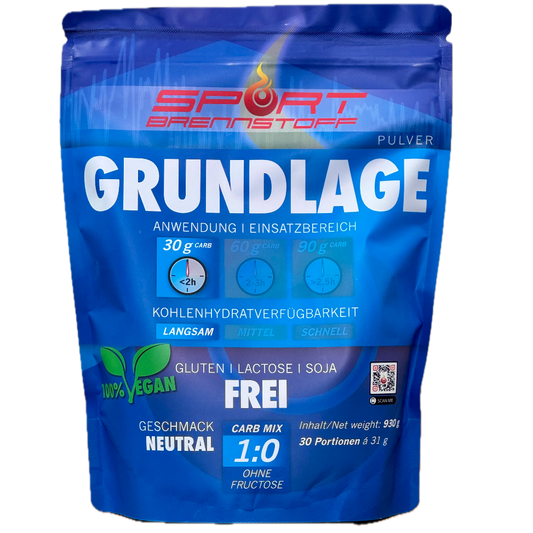
Isomaltulose (Palatinose™): A disaccharide that is digested more slowly than glucose. Ideal for steady base workouts because energy is released more evenly and blood sugar does not spike.
Glucose: The standard for intense workouts. Quickly available, with high stomach tolerance in moderate amounts.
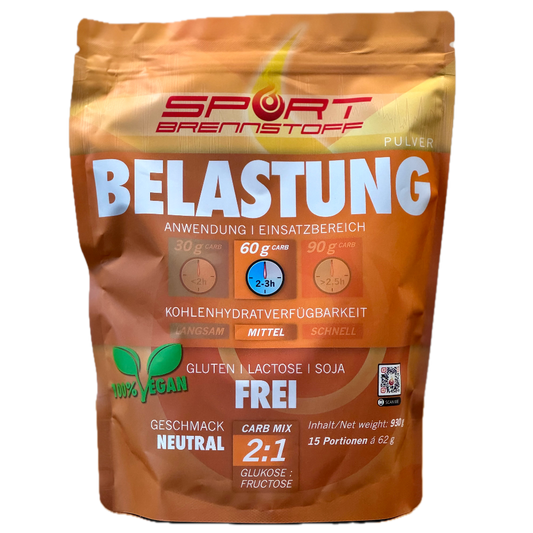
Fructose: Often combined with glucose (2:1 ratio). Fructose uses a different transport pathway in the intestine—this allows for higher carbohydrate amounts per hour without stomach discomfort.
Natural Sources: Bananas, dates, honey. Practical for short workouts, but harder to dose than powder.
SportBrennstoff BASE uses isomaltulose for steady workouts, while BELASTUNG combines glucose and fructose—scientifically designed.
SportBrennstoff BASE – Sports Drink for Zone 2 Training
Dosing According to Training Intensity and Duration
The right dose depends on what you are training:
Base Training (Zone 2): Up to 30 g of carbohydrates per hour. Your body can still mobilize a lot from glycogen stores here. Less is more.
Moderate to high intensity: 60-90 g of carbohydrates per hour. You need external energy here. A glucose-fructose mix allows for higher amounts.
Very long sessions (over 2.5 hours): 90+ g of carbohydrates per hour. Only possible with an optimized carbohydrate mix and good training adaptation.
The common mistake: too much at once. Many athletes dump a whole serving of powder into their stomach and wonder why they get cramps. Better: smaller amounts spread throughout the hour - a sip every 15-20 minutes.
Test your dosage during training, not in competition. Every body is different - what works for your training partner might cause stomach problems for you.
Pro-tipWrite down your training sessions - including what and how much you drank, and how you felt. After 4-6 weeks you will see patterns. That is your personal dosage formula.
Regeneration with natural sports nutrition
Regeneration is no less important than the training itself - natural sports nutrition belongs in your plan as a central part, not as an addition.
After intense sessions, your body needs carbohydrates (to replenish glycogen stores) and protein (for muscle repair). The first half to an hour after training is ideal - then your body is most receptive.
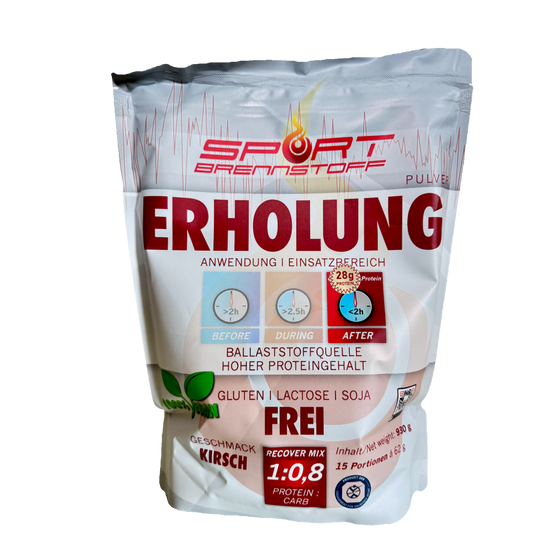
A vegan recovery shake like SportBrennstoff ERHOLUNG combines both: protein from peas and rice, carbohydrates, and minerals (important after sweating). This is practical and gentle on the stomach because the ingredients are natural.
The alternative: A real meal 1-2 hours later. Rice with lentils, potatoes with tofu, pasta with vegetables. Everything works as long as the nutrient balance is right.
This is where the difference between natural and conventional sports nutrition becomes clear: Natural products allow for regular regeneration without your body feeling overwhelmed. Fewer stomach problems, better sleep, faster recovery.
Practical tips for tolerance and testing
Before you use a product in competition, you must test it - that is the basic rule of endurance sports.
Endurance athlete during running training with a water bottle in a natural environment, training on a forest path in daylight
Step 1: Small amounts during easy training
Start with half a serving during easy base training. Observe how your stomach reacts. No discomfort? Good. Then you can try the full serving in the next session.
Step 2: Test different conditions
Don't just test during training, but also under competition conditions: heat, nervousness, higher intensity affect tolerance.
Step 3: Keep a diary
Note: What did you drink? When? How much? What was the intensity? How did you feel afterwards?
Step 4: Combine with other products
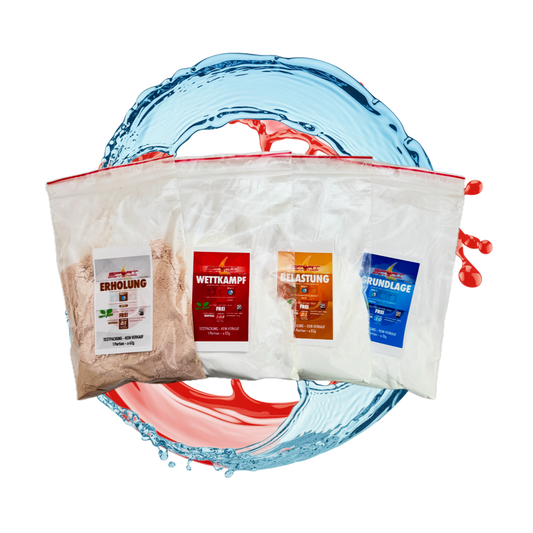
If you use several products (sports drink during training, recovery shake afterwards), test the combination. The SportBrennstoff Sample Pack is designed exactly for this - you can try all four products before deciding on larger bags.
SportBrennstoff Sample Pack – 4 powder samples for €5
Step 5: Check allergens and intolerances
Read the ingredients list carefully. If you have known intolerances (lactose, gluten, soy), pay attention. Many natural products are automatically free of these substances, but not all.
Digestion is individual. What works for your triathlete colleague might cause problems for you - you have to find your own formula.
Training Phase
Recommended Product
Dosage
Special Feature
Base training (Zone 2)
BASE
Up to 30 g CHO/h
Isomaltulose, steady energy supply
Moderate to high intensity
EXERTION
60-90 g CHO/h
Glucose-fructose 2:1, higher amounts possible
Intense competition
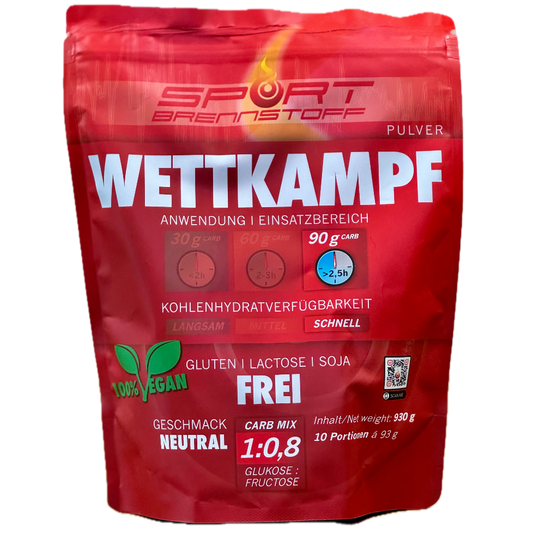
COMPETITION
As needed
Optimized for maximum performance
After training
RECOVERY
1 serving
Protein + carbohydrates, gentle on the stomach
Conclusion: Customize your sports nutrition
Natural sports nutrition without artificial additives is not a trend, but a conscious decision for better tolerance, more transparency, and better long-term performance. The path there is individual - what works depends on your body, your training, and your goals.
The most important points: Read ingredient lists carefully. Trust products with independent laboratory testing. Test everything during training before using it in competition. And: Regeneration is just as important as energy supply during training.
SportBrennstoff offers you a complete concept for exactly this approach. Scientifically sound, vegan, and gentle on the stomach. With the SportBrennstoff Sample Pack for €5, you can try all four products before deciding on larger bags. This is the practical solution for athletes who want to optimize their nutrition without taking risks.
Frequently Asked Questions
How can I tell if a sports nutrition product is really free of artificial additives?
Check the ingredient list for artificial sweeteners (aspartame, sucralose), artificial colors, and preservatives. Look for terms like "natural flavors" instead of "flavor". Certifications like the Cologne List® confirm that a product has been tested for contamination. Transparent manufacturers list all ingredients in detail and explain their origin.
How much protein powder without additives do I need per day?
The requirement depends on your training intensity. Endurance athletes need about 1.2 to 1.6 g of protein per kilogram of body weight daily. A protein-carbohydrate shake after training (about 20-30 g of protein) supports regeneration. Test your tolerance during training before using a product in competition. The SportBrennstoff Sample Pack allows you to get to know the products first.
Which natural alternatives to protein powder are suitable for longer training sessions?
Whole meals with legumes, tofu, tempeh, or quinoa offer protein with additional nutrients. For on the go, nuts, seeds, and dried fruits are practical. During intense endurance sessions, natural sports drinks (without artificial sweeteners) provide quickly available carbohydrates and electrolytes. Combine several sources to ensure your energy supply during training.
How do I test if a sports nutrition product is tolerated by my stomach?
Start with small portions during easy training sessions, not in competition. Pay attention to reactions such as stomach cramps, nausea, or digestive problems. Test a product multiple times under similar conditions to check reliability. Stomach-friendly products with simple carbohydrate sources (like isomaltulose) and well-tolerated proteins (pea, rice) are often better tolerated than highly processed alternatives.
Your sports nutrition is as individual as your training. The right combination of natural carbohydrate sources, high-quality protein, and stomach-friendly ingredients makes the difference. With SportBrennstoff, you have a system that is precisely tailored to the different exertion phases - from the base session to competition. Try the pack and find your personal formula for better performance and faster recovery.
Hat einen angenehmen neutralen Geschmack und geht direkt in die Beine! Nutze es in fast jedem Training für meinen Ironman 👍
Hallo Melanie, vielen Dank für deine tolle Rückmeldung! Schön, dass dir der neutrale Geschmack gefällt und dich unser Sportgetränk bei deinen Ironman-Trainings unterstützt. Wir wünschen dir weiterhin viel Erfolg und starke Beine! :-)
Das Wettkampf-Sportgetränk hat meine Erwartungen voll erfüllt
Das Wettkampf-Sportgetränk hat meine Erwartungen voll erfüllt. Über die gesamte Zeit des Radfahrens (Langdistanz) konnte ich das Getränk zuführen und kam ohne spürbares Energiedefizit in T2 an.
Angenehmer, nicht aufdringlicher oder vordergründiger Geschmack.
Hallo Jens, vielen Dank für deine tolle Rückmeldung! Schön, dass dich das Sportgetränk auf deiner Langdistanz zuverlässig versorgt hat und dir der angenehme, dezente Geschmack gefällt. Wir wünschen dir weiterhin viel Erfolg bei deinen Wettkämpfen! Ingolf
Mit diesen beiden Produkten kommt man wirklich in der Aufbauphase sehr gut klar
Mit diesen beiden Produkten kommt man wirklich in der Aufbauphase sehr gut klar.
Hallo Daniel, danke für dein tolles Feedback! Es freut uns sehr, dass das Basispaket dir in der Aufbauphase so gut hilft. Viel Erfolg weiterhin beim Training!
Tatsächlich ist das 6 Tage in der Woche beim Frühstück dabei
Tatsächlich ist das 6 Tage in der Woche beim Frühstück dabei. Innerhalb von einer halben Stunde ist meine Energie geladen und kann direkt ins Training einsteigen. Noch nie Probleme beide Verdauung
Hallo Daniel, vielen Dank für deine tolle Rückmeldung! Es freut uns sehr, dass das Sportgetränk dich so zuverlässig beim Frühstück und beim Start ins Training unterstützt – und du es gut verträgst. Weiterhin viel Freude beim Training! Ingolf
Super Preis Leistungsverhältnis, wir setzen es zum Muskelaufbau und zur Regeneration ein . Wir sind seit vier Monaten sehr erfolgreich mit diesem Produkten.
Hallo Daniel, vielen Dank für deine positive Rückmeldung! Es freut uns sehr zu hören, dass du mit unserem Recovery Shake so erfolgreich bist. Viel Erfolg weiterhin beim Muskelaufbau und der Regeneration! Dein Team von Sportbrennstoff