Strength Endurance Training for Cyclists: How to Build Your Plan
Last updated: November 15, 2026
Quick overview
Strength endurance training for cyclists with a training plan means combining heavy gears on climbs with easy base rides and strength exercises off the bike. The 6-week plan includes two strength sessions on the bike and two to three easy rides per week. You control the intervals at 85 to 95 percent of your FTP at 50 to 65 revolutions per minute.
Leave at least 48 hours between two strength sessions; one rest day per week is mandatory.
Week 4 is designed as a recovery week with half the volume and the same technique.
If you are short on time, cut the easy rides first, not the strength sessions.
Keep the 3 to 5-minute breaks at 90 revolutions and below 60 percent FTP.
A rider with a 280-watt FTP rides at around 252 to 266 watts at 50 revolutions in week 5.
Which nutrition is right for your plan?SportBrennstoff offers vegan sports drinks and recovery shakes tailored to your training intensity.
Strength endurance training for cyclists: How to build your plan
Strength endurance training for cyclists with a training plan means: You combine heavy gears on climbs with easy base rides and strength exercises off the bike. The effect is more pressure on the pedal at the same heart rate. Many ambitious amateur riders plan too little here. This guide provides you with a 6-week plan with watt, cadence, and break specifications.
What strength endurance training for cyclists really means
Strength endurance is the ability to pedal with high force at a low cadence for a long time without losing watts or technique. It differs clearly from base endurance.
Base training: easy, Zone 2, high cadence of 85 to 95 revolutions per minute.
Strength endurance: 50 to 65 revolutions per minute, high resistance, controlled seated position.
Pure strength training in the gym: maximum strength with few repetitions, short duration.
Both complement each other. Those who only ride base lose pressure on the climbs. Those who only pedal heavy lose endurance. If you want to deepen the base, read our post on Zone 2 training with isomaltulose.
The strength endurance training plan for cyclists: 6 weeks to your goal
The plan runs over six weeks with two strength sessions on the bike and two to three easy rides per week. It is suitable for beginners and advanced riders; you scale the repetitions and the watt specifications. The following table shows you the concrete intervals, cadence, break duration, and total volume per week. Your FTP, i.e., the power at the threshold, serves as the reference.
Week
Strength session on the bike
Cadence
Break
Watts (percentage of FTP)
Core or gym
Total volume
1
4 × 3 min
55 rpm
4 min easy
85-90 %
2 exercises, 2 sets
6 hrs
2
5 × 3 min
55 rpm
4 min easy
85-90 %
3 exercises, 2 sets
7 hrs
3
4 × 5 min
55 rpm
4 min easy
88-92 %
3 exercises, 3 sets
8 hrs
4
Recovery: 3 × 4 min
60 rpm
5 min easy
80-85 %
2 exercises, 2 sets
5 hrs
5
5 × 5 min
50 rpm
3 min easy
90-95 %
4 exercises, 3 sets
9 hrs
6
3 × 8 min
50 rpm
5 min easy
90-95 %
3 exercises, 2 sets
8 hrs
The progression follows a clear pattern: First you increase the number of repetitions (Week 1 to 2), then the duration per repetition (Week 3), then you lower the cadence and increase the watts (Week 5). Week 4 is deliberately designed as a recovery week so that the adaptation can take hold. Leave at least 48 hours between two strength sessions; one rest day per week is mandatory.
How to adapt the plan to your time budget
Not everyone has nine hours per week. If you only have four to five hours, cut the volume of the easy rides first, not the strength sessions. The quality of the intervals remains, the base becomes narrower.
Little time (4-5 hrs): two strength sessions on the bike, one easy ride, core at home.
Medium (6-8 hrs): as in the table, core and gym alternately.
Lots of time (9+ hrs): additional third easy ride in Zone 2, strength sessions unchanged.
Adaptation to road bike, mountain bike, and performance level
On the road bike, you control cadence and watts via the gears and a power meter. On the mountain bike, traction limits the cadence on the climb, so you preferably ride the intervals seated on even forest roads. Beginners start with the lower watt limit and check after Week 2 whether the technique remains stable. Advanced riders orient themselves by the upper limit and shift the focus to longer repetitions earlier.
Watch out: If you lower the cadence to 50 rpm in Week 5 and increase the watts at the same time, the load on the knees and tendons increases significantly. Check the saddle height and knee angle beforehand, otherwise the pressure will move into the joint instead of the musculature.
Strength endurance intervals on the bike: Watts, cadence, and breaks
In strength endurance training for cyclists, you control the intervals using three metrics: watts, cadence, and break duration. As a guideline, use a resistance at which you pedal at 50 to 65 revolutions per minute while still being able to stay seated in a controlled manner. You orient the watts to your FTP, the cadence to a fixed target value, and the break to the quality of the next repetition.
Watts: about 85 to 95 percent of your FTP, i.e., the power at the threshold.
Cadence: 50 to 65 revolutions per minute, seated.
Break: pedal easy for 3 to 5 minutes, 90 revolutions, below 60 percent FTP.
RPE: The effort should settle at 7 to 8 out of 10. If a repetition feels like a 9, the resistance is too high.
The breaks are not a luxury. They keep the quality of each repetition high. Those who break too short produce only fatigue instead of stimulus. A common mistake is to sprint the break or stand still completely. Both change the stimulus and make the session difficult to compare.
Example calculation for a specific rider
A rider with 75 kg and an FTP of 280 watts rides five repetitions of 5 minutes in Week 5. The target watts are 90 to 95 percent of the FTP, i.e., around 252 to 266 watts. The cadence is 50 revolutions per minute. The break is 3 minutes easy at around 90 revolutions. The session lasts about 75 minutes including warm-up and cool-down.
How to distinguish strength endurance from other intervals
Strength endurance intervals are not the same as threshold intervals or VO2max intervals. The distinction helps you to set the stimulus specifically.
Advanced, late in the build-up phase: 3 × 8 minutes at 50 revolutions, 5 minutes break.
Watch out: If you do not hold the target watts and instead compensate with cadence, you lose the strength endurance stimulus. Better break the repetition and extend the break instead of pedaling faster.
Cadence in strength endurance training: Why slow makes you strong
A low cadence in strength endurance training increases the force requirement per pedal stroke. At the same time, the load on the knees and tendons increases, so clean technique is more important than load.
A common mistake: You pedal too heavy and too slowly without checking the seated position. A saddle that is too low or too high shifts the load into the knee. Briefly check the height and knee angle before each session.
Climbing intervals in cycling training: Strength endurance on the ascent
Climbing intervals in cycling training are the natural form of strength endurance. You ride an ascent seated with a heavy gear and keep the cadence low. A 3 to 5-minute ascent is enough for a clean stimulus.
Ride the climb twice easy before you start the intervals.
Keep the cadence on the climb at 55 to 65 revolutions.
Use the descent as an active break, not a sprint.
The same values apply on the mountain bike, only that traction limits the cadence. On the road bike, you control the cadence more easily via the gears.
Strength training in the gym vs. on the bike: What you really need
Strength training in the gym and strength endurance on the bike pursue two goals. The gym builds maximum strength and stability. The bike trains the ability to call upon this strength over time. You need both, but not equally much.
Squats and variants: 3 sets, 6 to 8 repetitions, for leg strength.
Deadlifts and hip extension: 3 sets, 6 to 8 repetitions, for the gluteal muscles.
Bulgarian split squats and step-ups: 3 sets, 8 to 10 repetitions per leg.
Planks and core stability: 3 sets, 30 to 45 seconds.
If you're short on time, combine two studio sessions with two cycling sessions. You can find a good seasonal approach in our magazine on science-based nutrition for endurance.
Nutrition and recovery for your strength endurance training
Strength endurance sessions deplete carbohydrates and fluids. For shorter sessions, a steady supply is often sufficient. As they become longer or more intense, your requirements per hour increase.
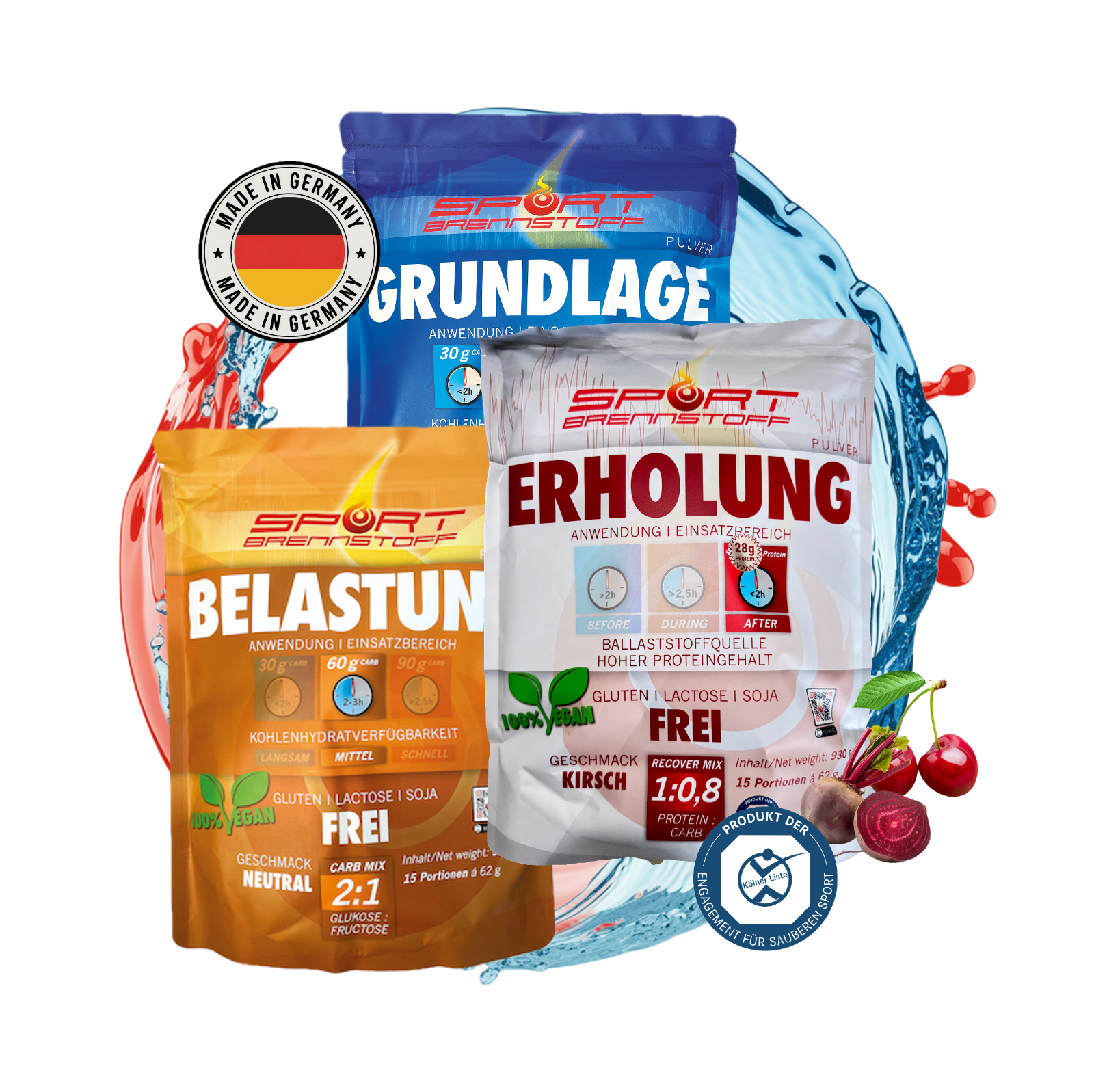
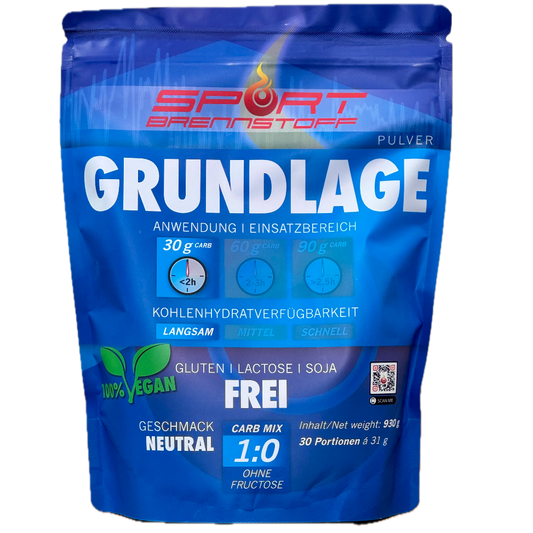
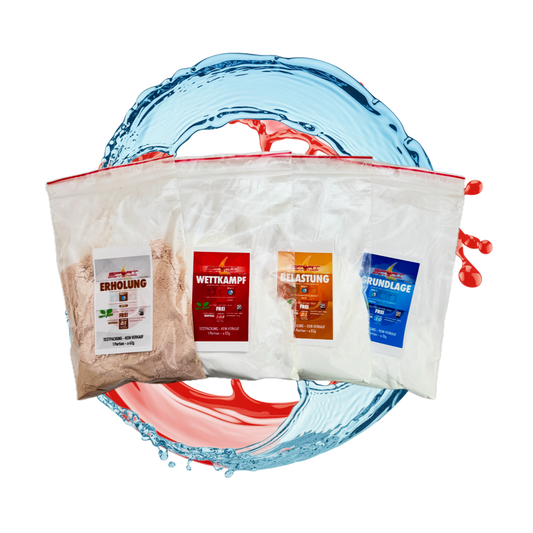
Short sessions up to 75 minutes: up to about 30 g of carbohydrates per hour, for example with GRUNDLAGE, which is based on isomaltulose.
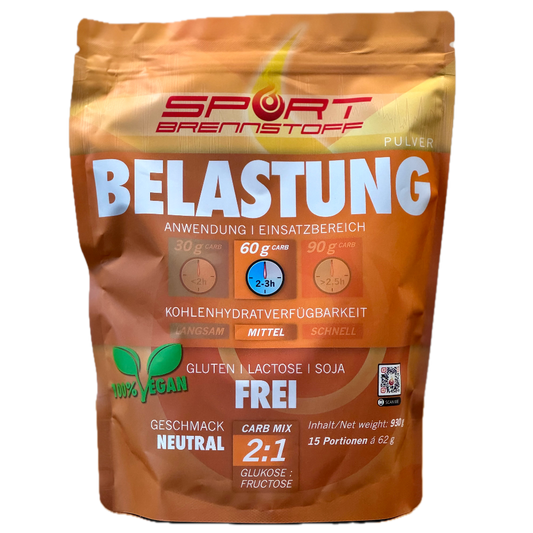
Longer, intense sessions: 60 to 90 g of carbohydrates per hour; for this, BELASTUNG is designed with a 2:1 glucose-fructose ratio.
Fluids: around 500 to 750 ml per hour, depending on temperature and sweat rate.
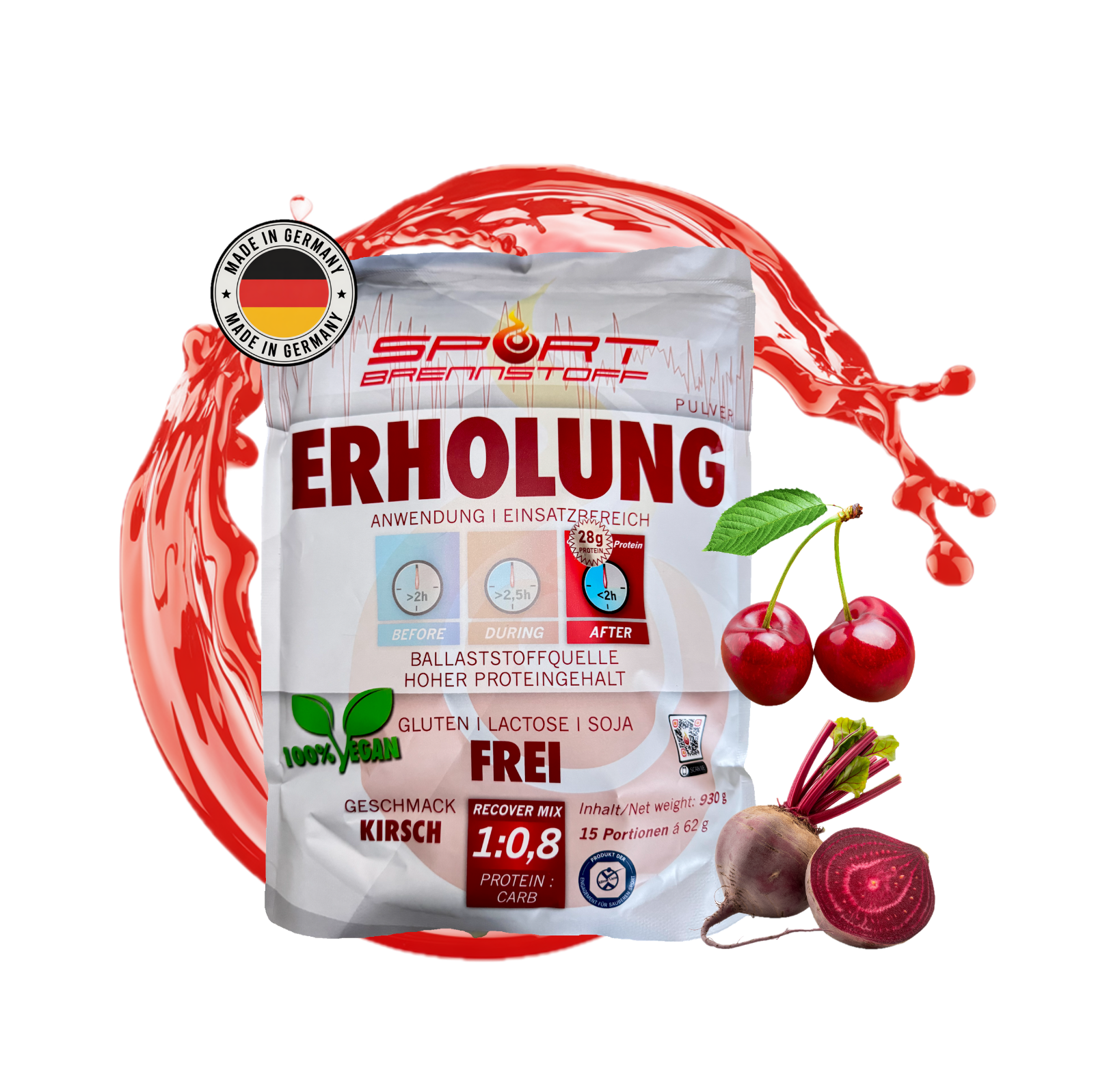
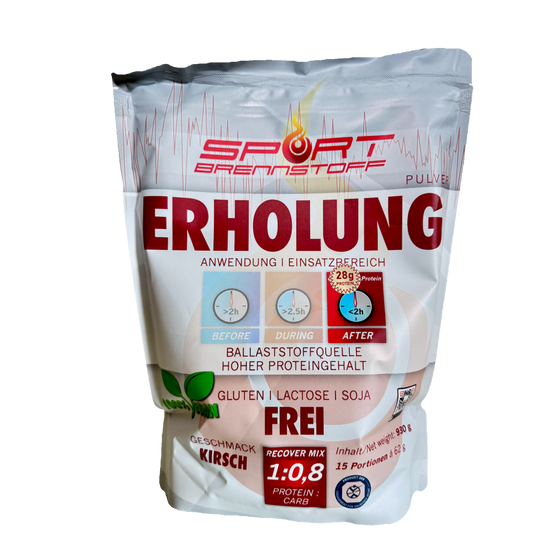
After hard sessions, a shake with protein and carbohydrates helps. Our vegan recovery shake ERHOLUNG, with 28 g of protein from peas and rice, is designed for exactly this purpose. Important: Test every nutrition plan during training, never wait until race day.
SportBrennstoff Training Package – Sports Drinks & Recovery
For performance management, the following applies: FTP, heart rate, RPE, and cadence complement each other. No single value can tell you whether the session was successful. According to the American College of Sports Medicine, a progressive increase in intensity is part of every solid training plan. The German Federal Centre for Health Education also describes how to balance intensity and recovery in its exercise recommendations.
A strength endurance training plan depends on recovery. If you structure your sessions and plan the nutrition accordingly, you will get more out of every week. SportBrennstoff offers you a coordinated system of sports drinks with carbohydrates per hour, vegan and without artificial additives. Start with the training package and adapt the products to your intensity. Get started with SportBrennstoff and put more power into the pedals.
Frequently Asked Questions
What is strength endurance training on the bike?
Strength endurance training on the bike combines high resistance with a low cadence, usually 50 to 60 revolutions per minute. You ride intervals in the range of 85 to 95 percent of your FTP, just below threshold. The goal is for your leg muscles to generate a lot of power per pedal stroke over a longer period without your endurance breaking down. Unlike pure strength training in the gym, you are specifically training the muscles you actually need on the bike.
How often should cyclists do strength endurance training?
Two sessions per week are usually enough to make progress. One can be a strength endurance interval session on the bike, the other a longer session with hill intervals. It is important that you schedule at least 48 hours of rest between sessions and that the intensity does not conflict with your base training. During the competition phase, you reduce to one session per week or replace it with race-pace intervals.
What cadence is suitable for strength endurance training on the bike?
For strength endurance intervals, you ride at a cadence between 50 and 60 revolutions per minute. For hill intervals, you can also go up to 60 to 70 revolutions if the gradient allows it. It is important that you keep the cadence deliberately low and do not fall into a rocking motion that shifts the load to your arms. A cadence sensor on the bike helps you stick to the guidelines and keep the intensity consistent.
Can you combine strength endurance training and base training?
Yes, and it is actually beneficial. Do not schedule your strength endurance intervals the day after a long base session, but with at least one rest day in between. A typical week could look like this: Monday rest day, Tuesday strength endurance intervals, Wednesday easy base, Thursday rest day, Friday hill intervals, Saturday long base session, Sunday rest day. This way, your base training is maintained and you also apply targeted stimuli for leg strength.
Hat einen angenehmen neutralen Geschmack und geht direkt in die Beine! Nutze es in fast jedem Training für meinen Ironman 👍
Hallo Melanie, vielen Dank für deine tolle Rückmeldung! Schön, dass dir der neutrale Geschmack gefällt und dich unser Sportgetränk bei deinen Ironman-Trainings unterstützt. Wir wünschen dir weiterhin viel Erfolg und starke Beine! :-)
Das Wettkampf-Sportgetränk hat meine Erwartungen voll erfüllt
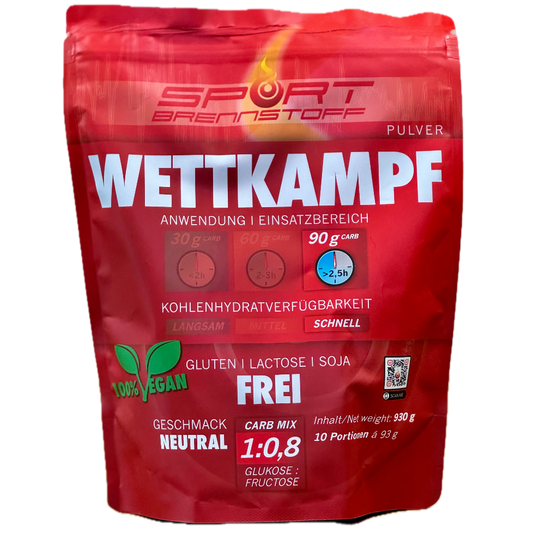
Das Wettkampf-Sportgetränk hat meine Erwartungen voll erfüllt. Über die gesamte Zeit des Radfahrens (Langdistanz) konnte ich das Getränk zuführen und kam ohne spürbares Energiedefizit in T2 an.
Angenehmer, nicht aufdringlicher oder vordergründiger Geschmack.
Hallo Jens, vielen Dank für deine tolle Rückmeldung! Schön, dass dich das Sportgetränk auf deiner Langdistanz zuverlässig versorgt hat und dir der angenehme, dezente Geschmack gefällt. Wir wünschen dir weiterhin viel Erfolg bei deinen Wettkämpfen! Ingolf
Mit diesen beiden Produkten kommt man wirklich in der Aufbauphase sehr gut klar
Mit diesen beiden Produkten kommt man wirklich in der Aufbauphase sehr gut klar.
Hallo Daniel, danke für dein tolles Feedback! Es freut uns sehr, dass das Basispaket dir in der Aufbauphase so gut hilft. Viel Erfolg weiterhin beim Training!
Tatsächlich ist das 6 Tage in der Woche beim Frühstück dabei
Tatsächlich ist das 6 Tage in der Woche beim Frühstück dabei. Innerhalb von einer halben Stunde ist meine Energie geladen und kann direkt ins Training einsteigen. Noch nie Probleme beide Verdauung
Hallo Daniel, vielen Dank für deine tolle Rückmeldung! Es freut uns sehr, dass das Sportgetränk dich so zuverlässig beim Frühstück und beim Start ins Training unterstützt – und du es gut verträgst. Weiterhin viel Freude beim Training! Ingolf
Super Preis Leistungsverhältnis, wir setzen es zum Muskelaufbau und zur Regeneration ein . Wir sind seit vier Monaten sehr erfolgreich mit diesem Produkten.
Hallo Daniel, vielen Dank für deine positive Rückmeldung! Es freut uns sehr zu hören, dass du mit unserem Recovery Shake so erfolgreich bist. Viel Erfolg weiterhin beim Muskelaufbau und der Regeneration! Dein Team von Sportbrennstoff