Foundations of Evidence-Based Nutrition for Endurance
Evidence-based nutrition for endurance is the systematic coordination of carbohydrate intake, hydration, and macronutrients to match the specific intensity and duration of exercise. It follows physiological mechanisms rather than trends. At SportBrennstoff, we use this exact approach: energy delivery is planned for each training phase, not applied as a one-size-fits-all solution.
Anyone who wants to improve endurance performance must understand how the body provides energy. Muscle glycogen is the limiting factor during exercise lasting over 90 minutes. Fat metabolism provides most of the energy at low intensity but cannot sustain high intensity on its own. Endurance nutrition determines which energy source is used when.
Three basic principles apply regardless of the training goal:
Energy Balance: Without sufficient total energy, all training adaptation stops.
Timing: When you consume carbohydrates and proteins affects how they are utilized.
Tolerability: A plan that your stomach cannot tolerate is worthless.
Optimal Nutrition Before Training: What Matters Before Exercise
Optimal nutrition before training determines how much glycogen is available at the start of exercise. A carbohydrate-rich meal two to three hours before the start fills the stores. Immediately before training, fast-acting carbohydrates are useful, provided the stomach tolerates them.
What matters before exercise:
Two to three hours before: complex carbohydrates plus a moderate amount of protein, low in fat and fiber
60 to 90 minutes before: a light carbohydrate source, such as a drink or a small snack
Immediately before: small amounts of fast-acting carbohydrates for long sessions
A common mistake is eating a meal that is too high in fat shortly before the start. It delays gastric emptying and negatively affects blood sugar levels.
Carbohydrate Intake and Carboloading Before Competition
Carboloading is the targeted replenishment of glycogen stores in the days before a competition. It only works if training is simultaneously reduced. The combination of high carbohydrate intake and tapering maximizes the stores. Without reducing training, increased intake has little effect.
In practice, this means:
Three days before the competition: significantly reduce training volume
Increase carbohydrate intake: beyond normal requirements, spread throughout the day
Reduce fiber and fat: to avoid stomach problems on competition day
Test tolerability: use only foods you know
CautionCarboloading with unfamiliar foods is a classic mistake. The gastrointestinal tract often reacts to new combinations with cramps. Test the planned competition meal at least twice in training competitions.
Carbohydrates for Endurance Athletes: Energy Delivery During Exercise
Carbohydrate intake during exercise is the most powerful lever for performance during long sessions. The body can only absorb carbohydrates to a limited extent. Trained athletes can utilize more if they gradually increase their intake during training.
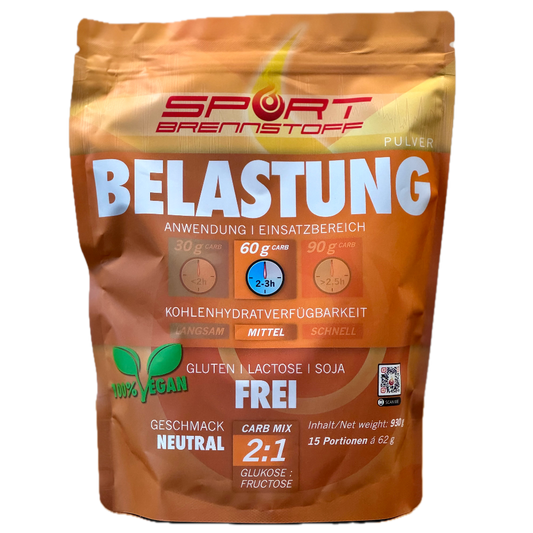
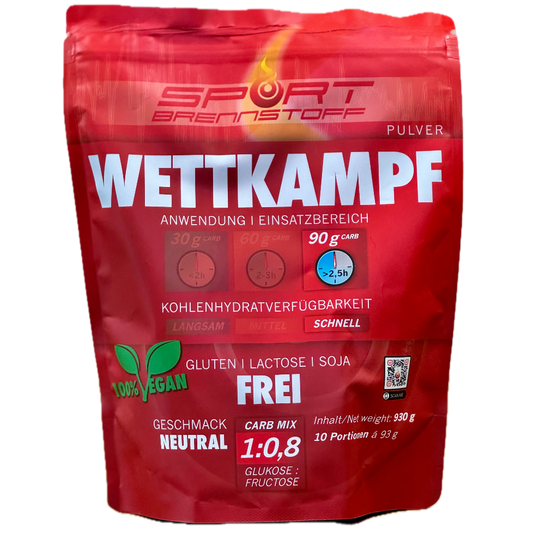
The ratio of glucose to fructose determines how much is possible per hour. Both sugars use different transport pathways in the intestine. A ratio of 1:0.8 allows for a higher total absorption than pure glucose. SportBrennstoff WETTKAMPF uses exactly this ratio, with 90 g of carbs per standard serving, scalable up to 120 g per hour.
SportBrennstoff WETTKAMPF * 90g Carbs Drink Mix
A long-distance cyclist drinks from a sports drink bottle during an intense training session, with a rural road at sunrise in the background
The position papers of the Sports Nutrition Working Group describe carbohydrate intake as a central element of competition nutrition. For sessions under 60 minutes, additional intake is usually not necessary.
Hydration and Electrolyte Balance During Long-Distance Exercise
Electrolyte balance determines whether you can absorb the planned amount of carbohydrates at all. Sodium is the most important electrolyte because it controls fluid distribution. Pure water without sodium dilutes the sodium level and can impair absorption.
In practice:
Supplement sodium: especially during high sweat rates and long sessions
Plan fluid intake: not based on thirst alone, but on sweat loss
Rehydrate after exercise: with sodium and fluids, not just water
One mistake is drinking too much water without electrolytes. The result is stomach discomfort and a drop in performance.
Sports Supplements in Endurance Sports: Useful or Unnecessary?
Sports supplements in endurance sports are only useful if there is a specific gap in nutrient requirements. Most supplements bring no measurable advantage if the basic nutrition is correct. The market is large, the evidence often thin.
Pro TipTest every supplement at least twice in training before using it in competition. Reactions to contaminants or unknown ingredients rarely show up on the first try.
Post-Exercise Recovery: Replenishing Muscle Glycogen and Promoting Training Adaptation
Post-exercise recovery determines how quickly you can complete the next session with high quality. The crucial mechanism is glycogen synthesis: After exercise, the activity of the enzyme glycogen synthase increases, and muscle cells absorb glucose more readily without insulin. This window is largest in the first 30 to 60 minutes and flattens out afterward. Anyone who does not consume carbohydrates within two hours after exercise loses part of this advantage.
The specific intake depends on the time until the next exercise:
Under 8 hours until the next session: 1.0 to 1.2 g of carbohydrates per kilogram of body weight per hour, spread over several meals
12 to 24 hours until the next session: 0.8 to 1.0 g per kilogram per hour is sufficient, provided the total amount over the day is correct
After very long or very intense sessions: an additional 0.3 g of protein per kilogram immediately after exercise to stimulate protein synthesis
A common mistake is assuming that a single shake is enough.
What promotes recovery:
Combine carbohydrates with protein: to replenish stores and for protein biosynthesis
Fluids and sodium: for rehydration, as sodium is also lost with sweat
Sleep: the most important factor that no product can replace; most adaptation processes occur during deep sleep
Pro TipPlan the first recovery meal so that it is available within 60 minutes after the end of training. Anyone who eats only after getting home misses the fastest part of glycogen synthesis.
Phase
Goal
Measure
Base training
Train fat metabolism
slow carbohydrates, stable energy
Exercise
Energy during the session
60-90 g carbs per hour
Competition
maximum availability
up to 120 g carbs per hour
Recovery
Replenish stores
1.0-1.2 g carbs per kg plus 0.3 g protein per kg
Gut Health During Prolonged Exercise: The Underrated Factor
Gut health during prolonged exercise is the factor that most guides skip. During exercise lasting over two hours, blood flow to the gastrointestinal tract decreases. The absorption of carbohydrates and fluids becomes worse. This is exactly where the stomach cramps that many athletes know occur.
Increase gradually: increase the amount of carbohydrates per hour over weeks
Maintain consistency: use the same source in training and competition
Reduce fiber before competition: to lower the risk
Important InsightStomach-friendly products are only half the solution. Without acclimating the gut to high amounts of carbohydrates, the risk of cramps remains.
Nutritional Periodization and Female-Specific Sports Nutrition
In practice, this means:
Base phase: low to moderate carbohydrate intake in daily life, targeted intake only around intense sessions
Build-up phase: adjust carbohydrates to the increasing training load, ensure recovery
Competition phase: maintain high carbohydrate intake, carboloading in the final days
Tapering: maintain intake, reduce training to maximize the stores
CautionLow-carb training is not a permanent state. Anyone who completes too many sessions with low carbohydrate availability risks performance losses during intense sessions and impaired recovery. Periodization requires clear rules for when which strategy applies.
Female-specific sports nutrition takes into account that the female metabolism reacts differently to energy deficiency. A chronic deficit can disrupt the cycle and slow down training adaptation. The menstrual cycle also influences nutrient requirements: in the second half of the cycle, energy requirements increase slightly, and the body uses carbohydrates differently. Nutrition should therefore not be planned based on male reference values.
Specifically, this means:
Energy requirements in the second half of the cycle: slightly increased, especially in the luteal phase
Iron requirements: increased due to menstrual bleeding, ensure adequate intake
Carbohydrate availability: in the luteal phase, the body may be less efficient at using carbohydrates, intake around workouts becomes more important
Energy availability: a chronic deficit is the biggest risk factor for cycle disorders and should be avoided
Conclusion: Your individual nutrition strategy for more endurance performance
Two athletes of the same body weight can utilize different amounts of carbohydrates per hour. The right amount lies between what your gut tolerates and what your intensity requires.
Frequently Asked Questions
What role do carbohydrates play in endurance performance?
Carbohydrates are the most important energy source for endurance exercise. Glycogen stores in the muscles and liver are limited and are depleted after 60 to 90 minutes of intense exercise. A targeted carbohydrate intake of 60 to 90 grams per hour, up to 120 grams for trained athletes, keeps blood sugar levels stable and delays fatigue. The combination of glucose and fructose in a ratio of 1:0.8 or 2:1 improves absorption and tolerance, especially during long-distance exercise.
When is it useful to take dietary supplements in endurance sports?
Dietary supplements in endurance sports are useful when nutrition from solid foods is not sufficient to meet the requirements for carbohydrates, electrolytes, or proteins. Sports drinks with carbohydrate-electrolyte solutions support hydration and energy supply during long workouts. A recovery shake with plant-based protein and carbohydrates promotes muscle recovery after intense exercise. It is especially useful before competitions and training sessions over 90 minutes, provided that gastrointestinal tolerance and dosage have been tested beforehand.
How does nutrition affect recovery after long endurance workouts?
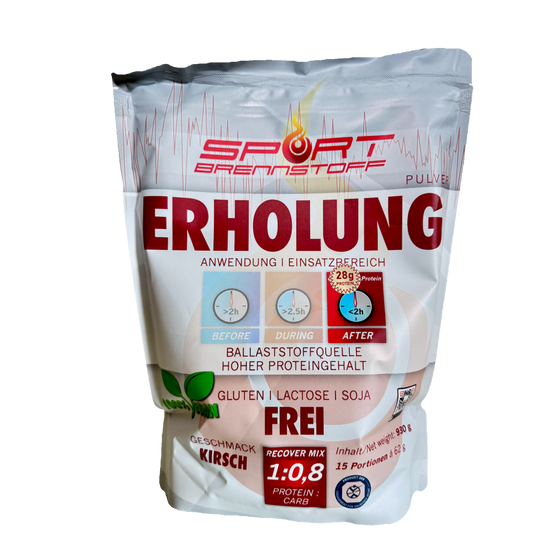
After long endurance workouts, glycogen stores are depleted and the muscles need protein for repair. A combination of carbohydrates and high-quality protein in a ratio of 3:1 to 4:1 within 30 to 60 minutes after exercise accelerates glycogen replenishment and supports protein biosynthesis. Plant-based protein sources such as pea and rice protein provide all essential amino acids and are easily digestible. Fluids and electrolytes compensate for losses through sweat and promote rehydration.
What are the most important scientific findings on hydration in endurance sports?
Hydration directly affects performance: A fluid loss of just two percent of body weight measurably reduces endurance performance. During long exercise, fluid intake should be adjusted to sweat loss, which ranges from 500 to 1500 milliliters per hour depending on intensity and temperature. Sodium chloride supports electrolyte balance and prevents hyponatremia. A carbohydrate-electrolyte solution with 60 to 90 grams of carbohydrates per hour simultaneously covers energy and fluid requirements.
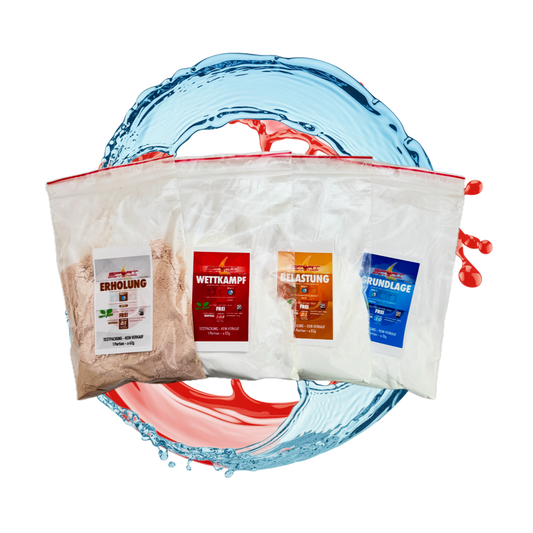
The biggest hurdle remains adjusting to your own body. No plan can replace testing during training. SportBrennstoff supports you with vegan, stomach-friendly products for every phase, from the base workout to the competition. Start with the 5 € trial package and find out which combination suits your training.
Hat einen angenehmen neutralen Geschmack und geht direkt in die Beine! Nutze es in fast jedem Training für meinen Ironman 👍
Hallo Melanie, vielen Dank für deine tolle Rückmeldung! Schön, dass dir der neutrale Geschmack gefällt und dich unser Sportgetränk bei deinen Ironman-Trainings unterstützt. Wir wünschen dir weiterhin viel Erfolg und starke Beine! :-)
Das Wettkampf-Sportgetränk hat meine Erwartungen voll erfüllt
Das Wettkampf-Sportgetränk hat meine Erwartungen voll erfüllt. Über die gesamte Zeit des Radfahrens (Langdistanz) konnte ich das Getränk zuführen und kam ohne spürbares Energiedefizit in T2 an.
Angenehmer, nicht aufdringlicher oder vordergründiger Geschmack.
Hallo Jens, vielen Dank für deine tolle Rückmeldung! Schön, dass dich das Sportgetränk auf deiner Langdistanz zuverlässig versorgt hat und dir der angenehme, dezente Geschmack gefällt. Wir wünschen dir weiterhin viel Erfolg bei deinen Wettkämpfen! Ingolf
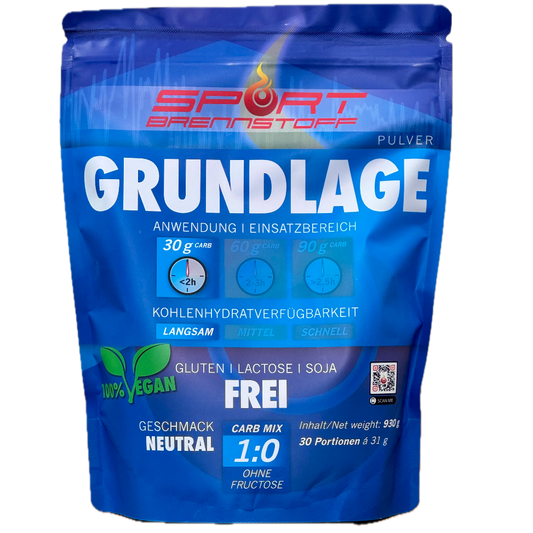
Mit diesen beiden Produkten kommt man wirklich in der Aufbauphase sehr gut klar
Mit diesen beiden Produkten kommt man wirklich in der Aufbauphase sehr gut klar.
Hallo Daniel, danke für dein tolles Feedback! Es freut uns sehr, dass das Basispaket dir in der Aufbauphase so gut hilft. Viel Erfolg weiterhin beim Training!
Tatsächlich ist das 6 Tage in der Woche beim Frühstück dabei
Tatsächlich ist das 6 Tage in der Woche beim Frühstück dabei. Innerhalb von einer halben Stunde ist meine Energie geladen und kann direkt ins Training einsteigen. Noch nie Probleme beide Verdauung
Hallo Daniel, vielen Dank für deine tolle Rückmeldung! Es freut uns sehr, dass das Sportgetränk dich so zuverlässig beim Frühstück und beim Start ins Training unterstützt – und du es gut verträgst. Weiterhin viel Freude beim Training! Ingolf
Super Preis Leistungsverhältnis, wir setzen es zum Muskelaufbau und zur Regeneration ein . Wir sind seit vier Monaten sehr erfolgreich mit diesem Produkten.
Hallo Daniel, vielen Dank für deine positive Rückmeldung! Es freut uns sehr zu hören, dass du mit unserem Recovery Shake so erfolgreich bist. Viel Erfolg weiterhin beim Muskelaufbau und der Regeneration! Dein Team von Sportbrennstoff