Why the Right Sports Nutrition Can Make or Break You in Long Cycling Races
The best sports nutrition for long cycling races is the kind that doesn't upset your stomach while providing a steady supply of energy. Sounds simple. It isn't.
In a race lasting four, five, or six hours, your result depends not just on your training but on whether you replenish your glycogen stores before they run out. If you react too late, you'll know the sudden drop in performance. Your legs get heavy, your concentration wanes, and suddenly you can't keep up with the main pack.
That's exactly where SportBrennstoff comes in: a systematic approach that builds your energy supply around your actual exercise intensity, rather than leaving you to rely on individual products alone.
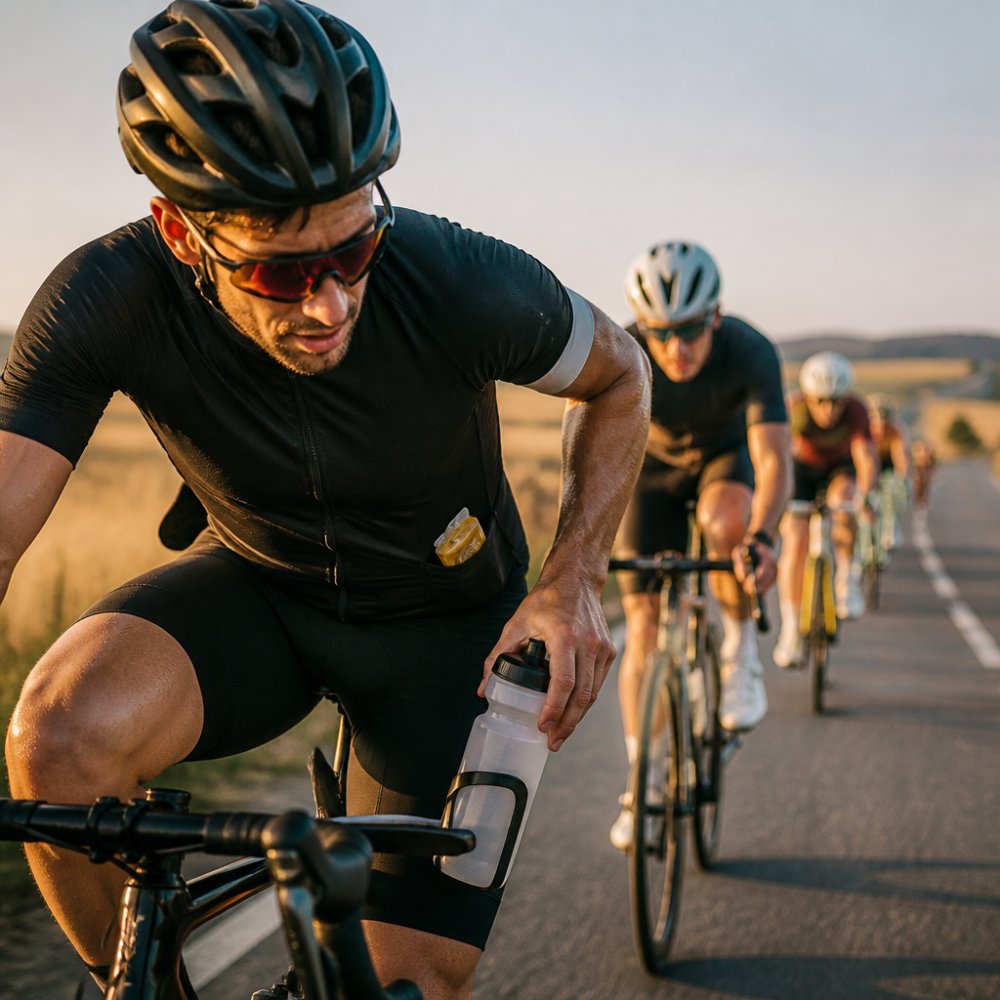
Road cyclist reaching for their water bottle during a long cycling race in the warm afternoon light.
Image: AI-generated
Key TakeawayThe most common mistake isn't eating too little—it's fueling too late. Start your eating and drinking routine from the first hour of the race.
Carbohydrates per Hour for Cycling: The Optimal Amount to Fuel Your Ride
For long cycling races, a sensible carbohydrate intake is 60 to 90 grams per hour, or even more for trained athletes with a gut adapted to it. The exact amount depends on intensity, duration, and individual tolerance.
Consistency matters more than peak intake. A steady rhythm of drinking and energy gels keeps blood sugar stable and prevents the insulin response that can occur with large, isolated doses.
The Glucose-Fructose Ratio and Why It Matters
Carbohydrates are absorbed through two separate transport pathways in the gut: glucose via the SGLT1 transporter and fructose via the GLUT5 transporter. A 1:0.8 ratio uses both pathways in parallel and significantly increases absorption compared with glucose alone.
This exact ratio is used in SportBrennstoff's WETTKAMPF and INTENSIV products. Trained endurance athletes can use this to process up to 120 grams of carbohydrates per hour, provided their gut is prepared for it.
Gut-Friendly Sports Nutrition: How to Avoid Stomach Problems at High Intensity
Stomach problems are the most common cause of performance drops and quitting in long cycling races—and they affect almost exclusively athletes who haven't adjusted their intake to their exercise intensity. The reason is physiological: at high intensity, blood is preferentially redirected to working muscles, reducing blood flow to the gastrointestinal tract by up to 80 percent compared with rest. Gastric emptying and intestinal absorption slow down, while the largest amount of carbohydrates has to pass through the stomach. What digests easily during a leisurely ride sits undigested in the stomach at race intensity—and causes nausea, bloating, or cramps.
Four specific factors determine whether your stomach can handle the strain:
1. Keep osmolality low. Concentrated gels and powders draw water into the gut and delay gastric emptying. Dilute gels with water from your bottle or use liquid nutrition with a defined osmolality. A hypertonic solution is virtually impossible to empty from the stomach at race intensity.
2. Use multiple transport pathways in parallel. Glucose alone saturates the SGLT1 transporter at around 60 grams per hour. Only a glucose-to-fructose ratio of 1:0.8 also activates the GLUT5 transporter, increasing the amount that can be absorbed to as much as 90–120 grams per hour without causing stomach contents to build up.
3. Avoid fat, fiber, and protein during the race. These macronutrients significantly slow gastric emptying. During the race, only a rapidly available carbohydrate mix matters; protein and fat belong in recovery.
4. Alternate solid and liquid intake. Taking gels alone without enough fluid is one of the most common causes of stomach discomfort. Plan a set amount of water for every gel.
Train the Gut: Prepare Your Digestive System for Race Conditions
You can train your digestive system—but only at the intensity you'll ride at in the race. An easy base ride with 90 grams of carbohydrates per hour won't prepare your gut for race conditions, because splanchnic blood flow is completely different at that intensity.
Here's how: Start at 60 grams per hour and increase over several weeks during the exact intervals and at the intensity you'll ride in your target race. Repeat your highest intake several times to let gastric emptying and absorption adapt. Only include a combination in your race plan after it has worked smoothly multiple times at race intensity.
Pro TipPlan your highest carbohydrate intake at exactly the intensity you'll ride at in the race. An easy base ride won't prepare your gut for race conditions.
WarningSwitching to unfamiliar products on race day is the biggest avoidable risk. What works in training at race intensity will work in the race. Anything else is an experiment at the expense of your result.
Electrolytes and Individual Sweat Rate: Replacing Sodium Losses Properly
Sodium is the electrolyte most likely to become a limiting factor in long cycling races—and losses vary so much from person to person that general recommendations are useless. Sweat rates range from around 0.5 to 2.0 liters per hour, while sodium concentrations in sweat range from about 200 to over 1,500 milligrams per liter. So two athletes taking in the same amount of fluid can have completely different sodium balances.
How to Determine Your Individual Sodium Needs
A practical estimate in three steps:
Step 1—Measure your sweat rate. Weigh yourself immediately before and after a one-hour session at race intensity, without drinking during the session. The difference in kilograms roughly equals fluid loss in liters. A loss of 1.2 kilograms means about 1.2 liters of sweat per hour.
Step 2—Estimate sodium concentration. A useful field indicator: sweat that leaves clearly salty white residue on your skin and clothes, or stings your lips, indicates a high sodium concentration. If you see hardly any residue, your sweat is more likely to be low in sodium. For a reliable measurement, sweat testing is available at sports medicine clinics and performance centers.
Step 3—Calculate your needs. Multiply your sweat rate by the estimated sodium concentration. An athlete losing 1.2 liters per hour with a high sodium concentration will lose several grams of sodium over a four-hour race—an amount that can't be replaced with plain water alone.
The first signs are nonspecific: declining performance, headaches, nausea, and a “wobbly” feeling in the legs. Muscle cramps appear later and aren't always caused by low sodium. If you wait for cramps, you'll react too late. Drinking only water without electrolytes can also lead to dilutional hyponatremia—the sodium level in your blood drops because you're taking in too much fluid without salt. This is a medical emergency, not a performance issue.
Build Sodium into Your Race Routine
Isotonic sports drinks with a defined sodium content make replenishment predictable: you know how much sodium you're taking in per serving and can adjust the amount to your calculated sweat rate. If your sodium losses are very high, a standard drink alone often isn't enough—in that case, targeted supplementation with capsules or higher-dose electrolyte drinks makes sense. Test every combination beforehand in training at race intensity.
Cycling Race Nutrition Plan: Timing Before, During, and After the Race
A cycling race nutrition plan has three phases: topping up before the start, maintaining a steady intake during the race, and targeted recovery afterward. Planning starts not on race day, but during race week.
Competition day itself leaves no room for experimentation. You should have tested what you drink and eat during the race beforehand in training.
SportBrennstoff Products at a Glance: Which Sports Nutrition Is Right for Your Intensity?
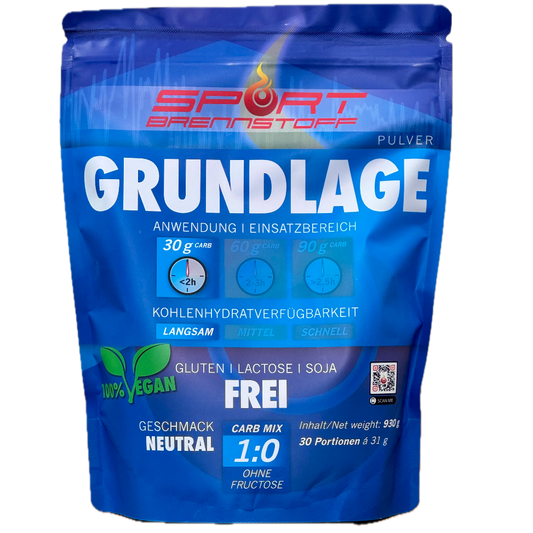
The right sports nutrition depends on the intensity of your session, not your calendar. SportBrennstoff organizes its product range according to this principle.
COMPETITION and INTENSIV: For Races Over 2.5 Hours
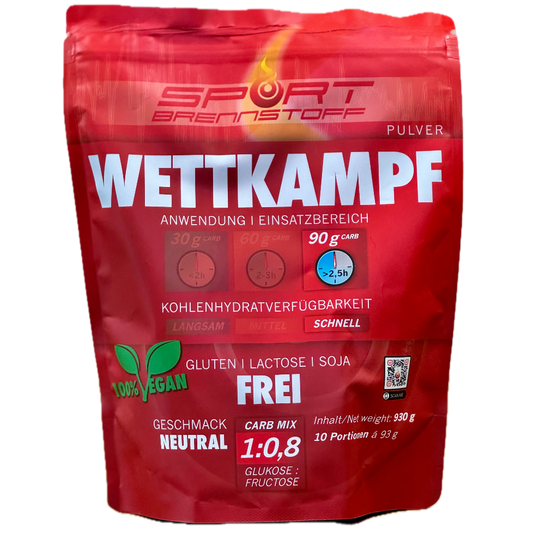
The COMPETITION powder provides 90 grams of carbs per standard serving, scalable to 120 grams per hour, in a 1:0.8 ratio. Vegan, gluten-free, and free from artificial flavors. The bag of ten servings costs 30.00 euros.
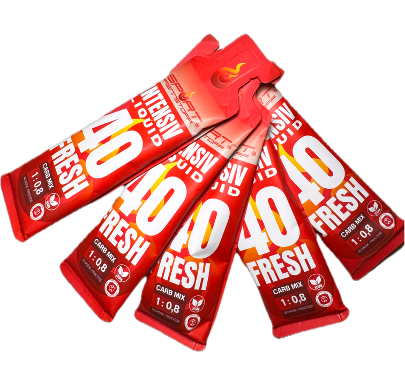
For on the go, the INTENSIV Race Liquid complements it with 40 grams of fast carbohydrates per serving. It costs 2.99 euros per serving.
SportBrennstoff INTENSIV * Race Liquid without Gel
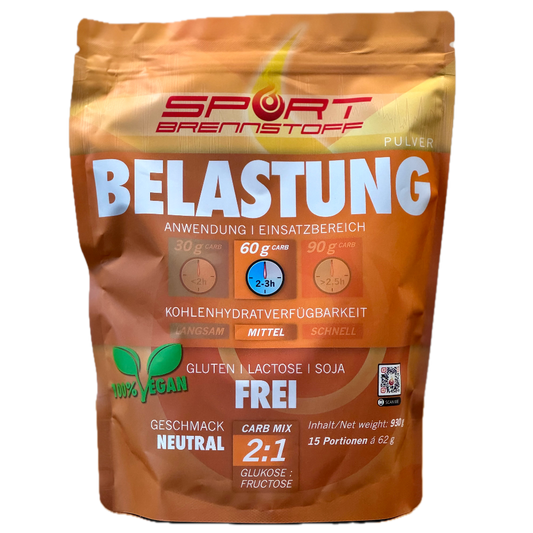
The EXERCISE sports drink covers sessions between 60 and 80 percent of VO2max, with 60 grams of carbs per serving in a 2:1 ratio. 30.00 euros.
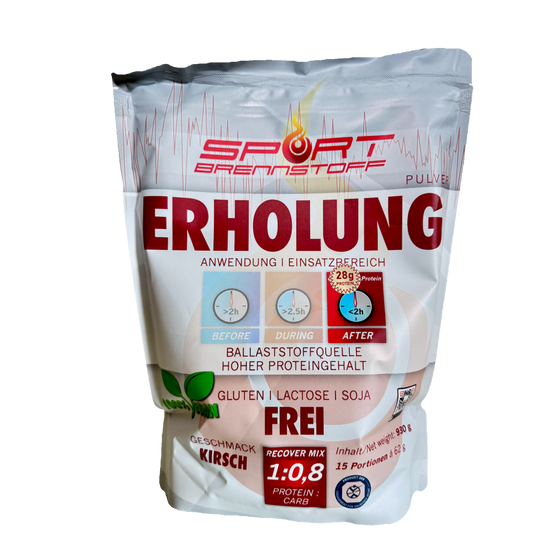
After the session, the vegan RECOVERY Recovery Shake with a plant-based protein matrix supports regeneration. It costs 39.90 euros.
WarningIf you use your products for the first time on race day, you risk stomach problems at exactly the crucial phase. Test every combination beforehand.
Periodization of Nutrition: From Base Training to Competition
Periodization of nutrition means adapting your intake to the training phase. During base training, the focus is on fat metabolism; during competition preparation, it is on carbohydrate utilization.
This is where the biggest difference from conventional providers lies: Instead of a single product for everything, you need a system that grows with your training intensity. This is exactly what the SportBrennstoff Complete Package offers, with all products for every intensity level for 120.00 euros.
SportBrennstoff Complete Package
Overview from the German Federal Institute for Sports Science on sports nutrition and performance diagnostics
Conclusion: The Best Sports Nutrition for Your Next Long-Distance Bike Race
The best sports nutrition for long-distance bike races is not a single product, but a system tailored to your intensity. Those who have tested carbohydrate intake, electrolytes, and stomach tolerance in training before race day start with a real advantage.
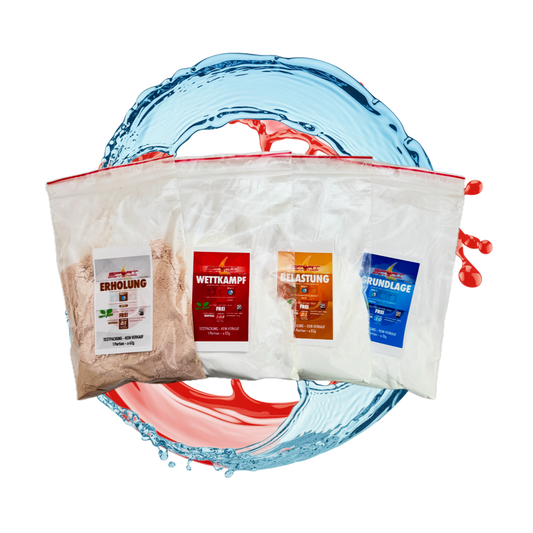
This is exactly why SportBrennstoff developed its concept: scientifically sound, vegan, gentle on the stomach, and Kölner Liste® certified. With the sample pack for 5.00 euros, you can test all four products risk-free before committing. Start with SportBrennstoff and bring your energy supply up to the level of your training.
Frequently Asked Questions
How many carbohydrates per hour are ideal for long-distance bike races?
For long-distance bike races, 60 to 90 grams of carbohydrates per hour are recommended, depending on intensity and fitness level. Trained endurance athletes can utilize up to 120 grams per hour with an optimized glucose-fructose ratio of 1:0.8. It is important to test the amount in training and increase it gradually so that the stomach can adapt to the intake. An increase that is too rapid often leads to digestive problems.
Why is stomach-friendly sports nutrition crucial at high intensity?
At high intensity, blood flow to the digestive tract is reduced, making nutrient absorption more difficult. Stomach-friendly sports nutrition with natural ingredients puts less strain on the stomach. An optimized carbohydrate ratio and sufficient fluids support absorption. Those who react sensitively should opt for products that have been tested in training and do not overwhelm the stomach.
What role do electrolytes play in long-distance endurance rides?
Electrolytes such as sodium, potassium, and magnesium are crucial for replacing losses through sweat and maintaining fluid balance. Sodium is particularly important because it is lost in large quantities through sweat. Individual sweat rates vary greatly, so knowing your own sodium loss is helpful. Sports drinks with sufficient sodium support performance and help prevent muscle cramps.
When should you eat solid food during a race?
Solid food is particularly suitable at lower intensities and in the early stages of long races, when digestion still works well. At high intensity, liquid energy such as sports drinks or liquids is better tolerated. From the second half of the race, the intensity often increases, so easily digestible carbohydrates in liquid form are the safer choice. Test solid food in training to see what your stomach can handle.
Are vegan sports nutrition products suitable for competition?
Vegan sports nutrition is well-suited for competition if it is scientifically formulated and provides all the important nutrients. Plant-based protein sources such as pea and rice protein offer a complete amino acid profile for recovery. Carbohydrate sources can also be vegan and provide high energy density. Look for certifications such as the Kölner Liste®, which identifies products tested for doping.
Hat einen angenehmen neutralen Geschmack und geht direkt in die Beine! Nutze es in fast jedem Training für meinen Ironman 👍
Hallo Melanie, vielen Dank für deine tolle Rückmeldung! Schön, dass dir der neutrale Geschmack gefällt und dich unser Sportgetränk bei deinen Ironman-Trainings unterstützt. Wir wünschen dir weiterhin viel Erfolg und starke Beine! :-)
Das Wettkampf-Sportgetränk hat meine Erwartungen voll erfüllt
Das Wettkampf-Sportgetränk hat meine Erwartungen voll erfüllt. Über die gesamte Zeit des Radfahrens (Langdistanz) konnte ich das Getränk zuführen und kam ohne spürbares Energiedefizit in T2 an.
Angenehmer, nicht aufdringlicher oder vordergründiger Geschmack.
Hallo Jens, vielen Dank für deine tolle Rückmeldung! Schön, dass dich das Sportgetränk auf deiner Langdistanz zuverlässig versorgt hat und dir der angenehme, dezente Geschmack gefällt. Wir wünschen dir weiterhin viel Erfolg bei deinen Wettkämpfen! Ingolf
Mit diesen beiden Produkten kommt man wirklich in der Aufbauphase sehr gut klar
Mit diesen beiden Produkten kommt man wirklich in der Aufbauphase sehr gut klar.
Hallo Daniel, danke für dein tolles Feedback! Es freut uns sehr, dass das Basispaket dir in der Aufbauphase so gut hilft. Viel Erfolg weiterhin beim Training!
Tatsächlich ist das 6 Tage in der Woche beim Frühstück dabei
Tatsächlich ist das 6 Tage in der Woche beim Frühstück dabei. Innerhalb von einer halben Stunde ist meine Energie geladen und kann direkt ins Training einsteigen. Noch nie Probleme beide Verdauung
Hallo Daniel, vielen Dank für deine tolle Rückmeldung! Es freut uns sehr, dass das Sportgetränk dich so zuverlässig beim Frühstück und beim Start ins Training unterstützt – und du es gut verträgst. Weiterhin viel Freude beim Training! Ingolf
Super Preis Leistungsverhältnis, wir setzen es zum Muskelaufbau und zur Regeneration ein . Wir sind seit vier Monaten sehr erfolgreich mit diesem Produkten.
Hallo Daniel, vielen Dank für deine positive Rückmeldung! Es freut uns sehr zu hören, dass du mit unserem Recovery Shake so erfolgreich bist. Viel Erfolg weiterhin beim Muskelaufbau und der Regeneration! Dein Team von Sportbrennstoff