Sports Nutrition for Basic Training: Proper Dosing
Practical Dosing Plans for Your Base Training
Theory is good. But what does that look like in practice? The key lies not only in the training time, but in your training intensity, measured by heart rate or power.
Focused athlete drinks a sports drink during base training for optimal sports nutrition.
Dosing by Intensity Zones Instead of Just Time
Your base training is typically divided into two zones:
Zone 2 (Aerobic Base): 60-75% of maximum heart rate
Lactate production is minimal. Your body primarily uses fats as an energy source. Dosing: 15-25g of carbohydrates per hour (or 0.3-0.5g per kg of body weight per hour). A 70kg athlete needs 21-35g of carbohydrates per hour.
Practical Scenarios with Intensity Zones
Scenario 1: 60-Minute Zone 2 Training
Before training: light meal with 80-120g of carbohydrates, 1-2 hours before
During training: water or unsweetened tea, no additional carbohydrate intake needed
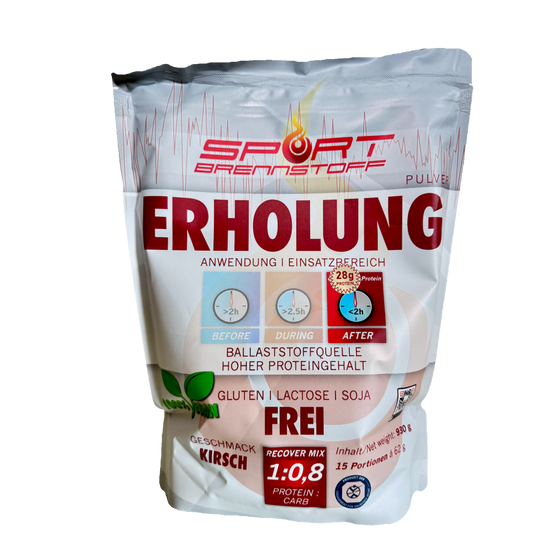
After training: SportBrennstoff ERHOLUNG with 500ml of water or a light snack with 30-40g of carbohydrates and 15-20g of protein
Scenario 2: 90-Minute Zone 2 Training
Before training: 120-150g of carbohydrates, 2-3 hours before
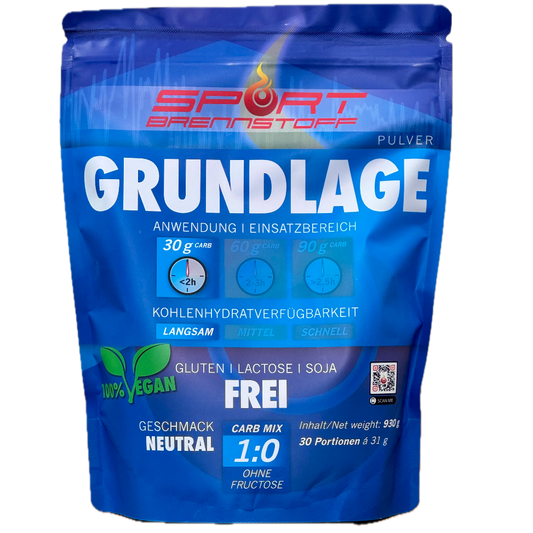
During training: SportBrennstoff GRUNDLAGE (20-25g of carbohydrates per serving), start from minute 45-60, total 20-25g per hour
After training: SportBrennstoff ERHOLUNG plus additional carbohydrates, total 70-85g of carbohydrates plus 20-30g of protein
Scenario 3: 90-Minute Tempo Base (Lower Zone 3)
Before training: 150-180g of carbohydrates, 2-3 hours before
During training: SportBrennstoff GRUNDLAGE (30g of carbohydrates per serving), start from minute 30-45, total 30-40g per hour
After training: SportBrennstoff ERHOLUNG plus full meal with 80-100g of carbohydrates and 25-35g of protein within 2 hours
Scenario 4: 120-Minute Zone 2 Training
Before training: 150-180g carbohydrates, 2-3 hours beforehand
During training: SportBrennstoff GRUNDLAGE (20g carbohydrates per serving), start at minute 45, then one serving every 30-45 minutes, for a total of 40-50g carbohydrates over the entire session
After training: SportBrennstoff ERHOLUNG plus additional carbohydrates, for a total of 85-100g carbohydrates plus 25-35g protein
How to determine your heart rate zones
You can estimate your maximum heart rate using this rule of thumb: 220 minus your age. A field test is more accurate: warm up for 10 minutes, then ride or run at maximum intensity for 3-5 minutes and record your highest heart rate.
Alternatively: If you have a power meter, you can also dose by watts:
Zone 2: 55-75 % of FTP (Functional Threshold Power)
Lower Zone 3: 75-90 % of FTP
Adjustment based on stomach issues
If you experience stomach cramps or nausea during training, reduce the carbohydrate amount by 5-10g per hour and test again.
Pro tipPractical tip: Write down your training sessions, duration, heart rate (or watts), carbohydrate amount, and how you felt. After 4-6 weeks, you will recognize a pattern that is perfectly suited to your body.
For vegan athletes
All dosage recommendations apply equally. SportBrennstoff products are completely vegan and offer the same energy supply as non-vegan alternatives. The Kölner Liste® certification additionally guarantees that all products are tested for doping substances.
Avoid common mistakes: What you should not do
Mistake 1: Too many carbohydrates during base training
Many athletes dose as they do in competition, even when training casually. This is counterproductive.
Frequently Asked Questions
How many carbohydrates should I consume per hour during base training?
In base training (Zone 2), the carbohydrate requirement is significantly lower than in intense sessions. For training sessions up to 90 minutes, you often need no additional carbohydrate intake at all. For longer sessions (over 90 minutes), 20-30 g of carbohydrates per hour are sufficient to spare glycogen stores and train fat metabolism. SportBrennstoff GRUNDLAGE provides exactly this amount with 30 g of carbohydrates per serving - developed specifically for this intensity zone.
Does sports nutrition differ in base training compared to competition?
Yes, significantly. Base training is about fat metabolism training and energy efficiency - you need fewer carbohydrates and should opt for slowly available sources (such as isomaltulose). In competition or during intense training sessions, you need 60-90 g of carbohydrates per hour with fast availability. Endurance sports nutrient timing is based on the duration and intensity of the exercise: base training = economical, competition = maximum supply.
How do I avoid gastrointestinal problems with sports nutrition?
Stomach-friendly sports nutrition is based on three principles: Choose slowly available carbohydrates (no fructose), keep the concentration isotonic (not too sweet), and test everything in training, not in competition. SportBrennstoff GRUNDLAGE is fructose-free and uses isomaltulose - both are rated as well tolerated by our customers. Start with smaller amounts and increase gradually. Many problems arise from too high dosages or unfamiliar products under load.
When should I start carbohydrate intake during long training sessions?
The rule: For training sessions up to 90 minutes, additional carbohydrate intake is optional - your body has stored enough glycogen. From 90-120 minutes, it starts to make sense to maintain performance and support the recovery phase. In base training, you can also dose sparingly (20-30 g/hour) even during longer sessions. Important: Do not wait until you are tired, but start regularly and early - this way you avoid blood sugar fluctuations and digestive problems.
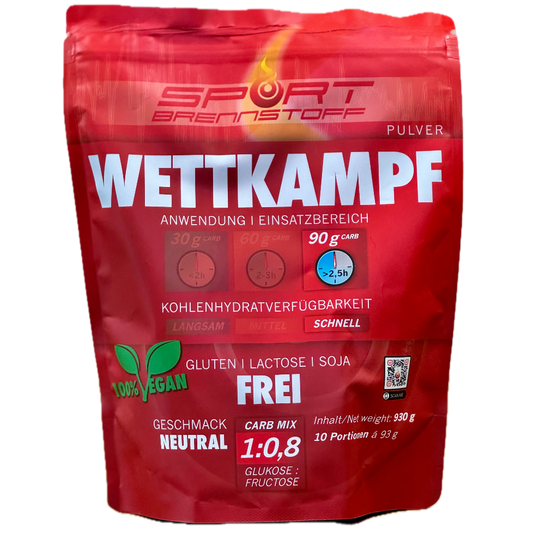
Hat einen angenehmen neutralen Geschmack und geht direkt in die Beine! Nutze es in fast jedem Training für meinen Ironman 👍
Hallo Melanie, vielen Dank für deine tolle Rückmeldung! Schön, dass dir der neutrale Geschmack gefällt und dich unser Sportgetränk bei deinen Ironman-Trainings unterstützt. Wir wünschen dir weiterhin viel Erfolg und starke Beine! :-)
Das Wettkampf-Sportgetränk hat meine Erwartungen voll erfüllt
Das Wettkampf-Sportgetränk hat meine Erwartungen voll erfüllt. Über die gesamte Zeit des Radfahrens (Langdistanz) konnte ich das Getränk zuführen und kam ohne spürbares Energiedefizit in T2 an.
Angenehmer, nicht aufdringlicher oder vordergründiger Geschmack.
Hallo Jens, vielen Dank für deine tolle Rückmeldung! Schön, dass dich das Sportgetränk auf deiner Langdistanz zuverlässig versorgt hat und dir der angenehme, dezente Geschmack gefällt. Wir wünschen dir weiterhin viel Erfolg bei deinen Wettkämpfen! Ingolf
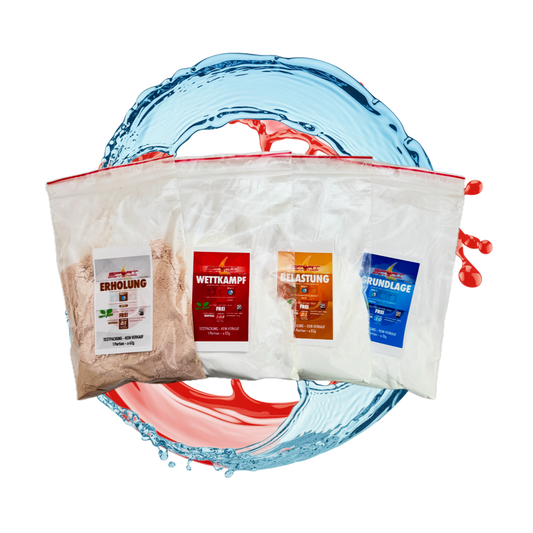
Mit diesen beiden Produkten kommt man wirklich in der Aufbauphase sehr gut klar
Mit diesen beiden Produkten kommt man wirklich in der Aufbauphase sehr gut klar.
Hallo Daniel, danke für dein tolles Feedback! Es freut uns sehr, dass das Basispaket dir in der Aufbauphase so gut hilft. Viel Erfolg weiterhin beim Training!
Tatsächlich ist das 6 Tage in der Woche beim Frühstück dabei
Tatsächlich ist das 6 Tage in der Woche beim Frühstück dabei. Innerhalb von einer halben Stunde ist meine Energie geladen und kann direkt ins Training einsteigen. Noch nie Probleme beide Verdauung
Hallo Daniel, vielen Dank für deine tolle Rückmeldung! Es freut uns sehr, dass das Sportgetränk dich so zuverlässig beim Frühstück und beim Start ins Training unterstützt – und du es gut verträgst. Weiterhin viel Freude beim Training! Ingolf
Super Preis Leistungsverhältnis, wir setzen es zum Muskelaufbau und zur Regeneration ein . Wir sind seit vier Monaten sehr erfolgreich mit diesem Produkten.
Hallo Daniel, vielen Dank für deine positive Rückmeldung! Es freut uns sehr zu hören, dass du mit unserem Recovery Shake so erfolgreich bist. Viel Erfolg weiterhin beim Muskelaufbau und der Regeneration! Dein Team von Sportbrennstoff