What to look for when buying sports nutrition for intense training
Anyone looking to buy sports nutrition for intense training faces an overwhelming selection. That is why everything at SportBrennstoff revolves around one question: Does the product suit the actual exertion?
SportBrennstoff EXERTION * 60g Carbs Drink Mix
Calculate first, then buy: Determine your own requirements
Most shops sell products without explaining how much an athlete needs. Requirements can be narrowed down using three metrics: training duration, intensity, and body weight.
Step 1, classify duration and intensity:
Session
Duration
Intensity
Carbohydrates per hour
Recovery
up to 60 min
easy
0-30 g
Base
1-2 h
60-70 % VO2max
30-60 g
Exertion
2-4 h
70-80 % VO2max
60-90 g
Competition
over 3 h
over 80 % VO2max
90-120 g
Pro tipAlways plan with a buffer: Take one more serving than the calculation suggests. Catching up is hardly possible in competition, but topping up is no problem.
The three purchasing criteria in detail
Carbohydrate amount per hour, tailored to intensity and duration, not the serving size on the package.
Ratio of glucose to fructose, because it determines how much the intestine can actually absorb. 2:1 for most sessions, 1:0.8 for peak exertion.
Certification, so you don't accidentally end up on a doping list.
The National Anti Doping Agency for supplement advice recommends relying on independently tested products when it comes to dietary supplements. This exact testing is the point where many offers differ.
Scientific evidence vs. marketing promises
Not every ingredient on a package has proven benefits for intense training. A sober assessment helps more than any advertising message:
Carbohydrates and electrolytes: The benefits for endurance performance and hydration are well documented. This investment is worth it.
Protein in recovery: Makes sense when combined with carbohydrates. The 1:5 ratio of protein to carbohydrates is an established approach.
Caffeine: Can reduce perceived exertion, but its effects vary greatly from person to person and should be tested before competition.
BCAAs as a standalone product: The additional benefit compared to complete protein is scientifically controversial. Those who consume enough protein throughout the day generally do not need them.
"Fat burners" and similar promises: The evidence here is thin. Anyone looking to lose fat cannot avoid calorie balance and training volume.
Carbohydrate ratio: Why 2:1 and 1:0.8 make the difference
The ratio of glucose to fructose is the most important lever for high carbohydrate intake: Both use different transport pathways in the intestine, which is why the absorption rate can be significantly increased with the right combination.
CautionIf you increase the carbohydrate amount too quickly, you risk stomach problems. The intestine must first be accustomed to high intake. Increase the amount gradually over several weeks, not on race day.
Kölner Liste® vs. standard doping tests: What the certification really means
The Kölner Liste® lists dietary supplements that have been tested for banned substances. The difference from in-house manufacturer controls: The testing is carried out independently, and the product is listed by name in a publicly accessible list.
Product comparison: SportBrennstoff for every training intensity
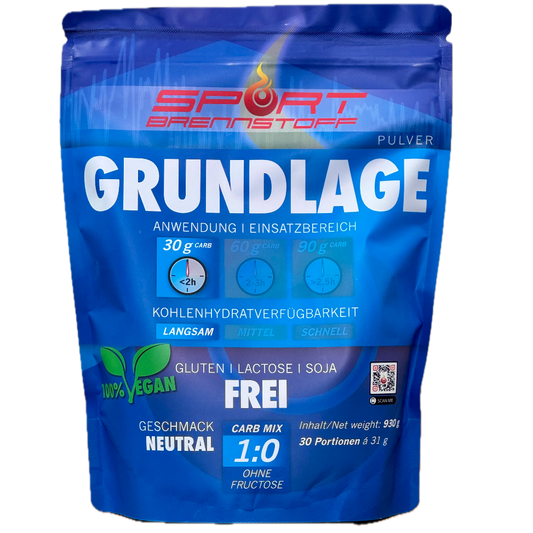
SportBrennstoff organizes its range by exertion levels instead of flavors—unusual, but much easier once you know your training intensity.
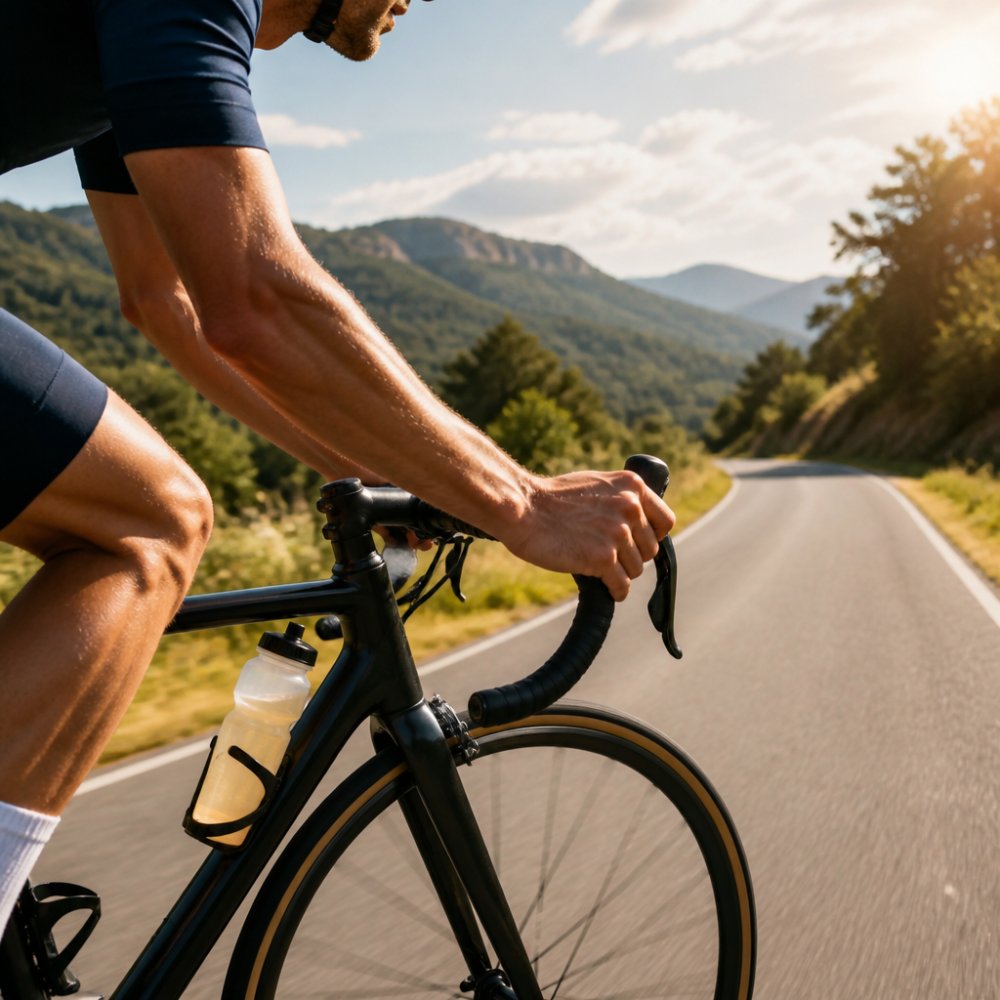
Endurance athlete reaches for the water bottle on the frame of their road bike during a sunny bike ride
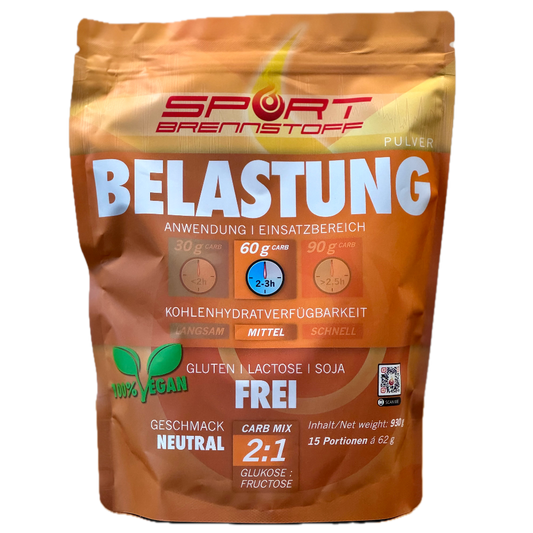
SportBrennstoff EXERTION is the sports drink for training sessions of moderate to high intensity. The 2:1 carb mix of dextrose, glucose, and fructose delivers 60 g of carbohydrates per standard serving, mixed with 62 g of powder in 750 ml.
SportBrennstoff COMPETITION * 90g Carbs Drink Mix
COMPETITION: 90g carbs for race days and peak exertion
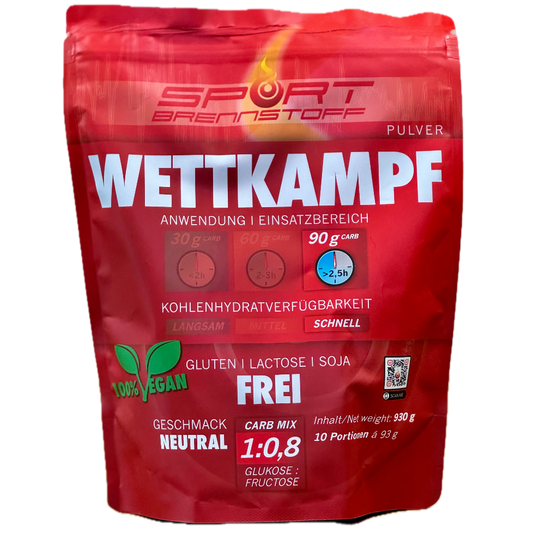
SportBrennstoff COMPETITION is designed for intensities over 80% VO2max: 90 g of carbohydrates per serving, scalable to 120 g per hour, in a 1:0.8 ratio of glucose and fructose.
INTENSE: 40g carbs as a liquid for quick energy in between
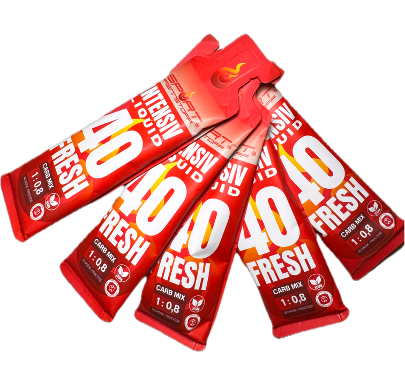
SportBrennstoff INTENSE is an energy liquid without a gel consistency. One serving with 61 g delivers 40 g of ultra-fast carbohydrates in a 1:0.8 ratio, plus 400 mg of sodium.
Stomach-friendly supplements for intense training: What really relieves the stomach
Stomach problems are the most common reason for an early race finish in endurance sports, and the cause is almost always not the product, but the application. Stomach-friendly supplements for intense training address four areas: carbohydrate source, concentration, fluid volume, and sodium content.
Why the stomach strikes out at high exertion in the first place
At intensities over about 70% of maximum oxygen uptake, blood flow to the gastrointestinal tract decreases by up to half because the blood is diverted to the muscles. Stomach emptying and intestinal passage slow down, while carbohydrate intake increases.
Too high a solution osmolality: The more concentrated a drink is, the slower it leaves the stomach. A solution with more than about 8% carbohydrate content measurably delays emptying.
Single carbohydrate source: Glucose alone saturates the SGLT1 transporter at around 60 g per hour. Anything above that remains in the intestine and draws water in, which is the classic trigger for bloating and cramps.
Too little sodium: Sodium is the driver of water absorption in the small intestine. If it is lacking, fluid is not absorbed but remains in the lumen.
The concrete calculation: Concentration instead of quantity
A common mistake is too little fluid with too high a concentration. The solution is usually not fewer carbohydrates, but the right dilution.
What additionally relieves the stomach
Multiple carbohydrate sources instead of a single one; glucose and fructose use separate transporters and bypass saturation at 60 g.
Sodium in sufficient quantities to maintain fluid balance. Rule of thumb: 300 to 600 mg of sodium per 500 ml during intense exercise.
Avoidance of artificial flavors and preservatives; they are rarely the main cause, but individual intolerances do occur.
Liquids instead of bars at high intensity. Solid food requires digestive work that is no longer possible above 80% VO2max.
No fructose excess for a sensitive stomach. A 1:0.8 ratio is more effective but less tolerable than 2:1. Those who react sensitively should stick to 2:1 for now.
Practical protocol: Systematically training the stomach
Tolerability can be trained if you treat it like a form of training. A proven approach:
Weeks 1-2: During every session over 90 minutes, drink the planned competition concentration, but only 60 g of carbohydrates per hour.
Weeks 3-4: Increase to 80 g per hour, still using the same concentration.
Weeks 5-6: Increase to the target amount (90 or 120 g), divided into several small portions.
Before every competition: Test the exact combination of product, concentration, and drinking volume at least three times in a session over 2 hours.
Pro tipKeep a simple nutrition diary for long sessions: drinking volume, carbohydrates per hour, sodium, outdoor temperature, and stomach findings. After three to four sessions, the individual pattern becomes clearer than any general recommendation.
When a product change makes sense
If problems persist despite correct dilution and gradual increase, it is often due to too much fructose, too little sodium, or too large a single serving. Switching from 1:0.8 to 2:1 solves most cases in practice, at the expense of the maximum absorption rate, but usually without problems for sessions under three hours.
Accelerate recovery after training: The right post-workout strategy
Accelerating recovery after training means above all: replenishing glycogen stores and supplying the muscle with protein. The time window immediately after the session is crucial for this.
Vegan sports nutrition for endurance athletes: Plant-based proteins and their benefits
Vegan sports nutrition for endurance athletes works if the protein sources complement each other: Individual plant proteins often have an incomplete amino acid profile, and the combination balances this out.
Prices and packages: Buying sports nutrition for intense training
Anyone who wants to buy sports nutrition for intense training can order individual products or packages from SportBrennstoff. The packages are tailored to specific training situations and are cheaper than buying individually.
Package
Contents
Price
For whom
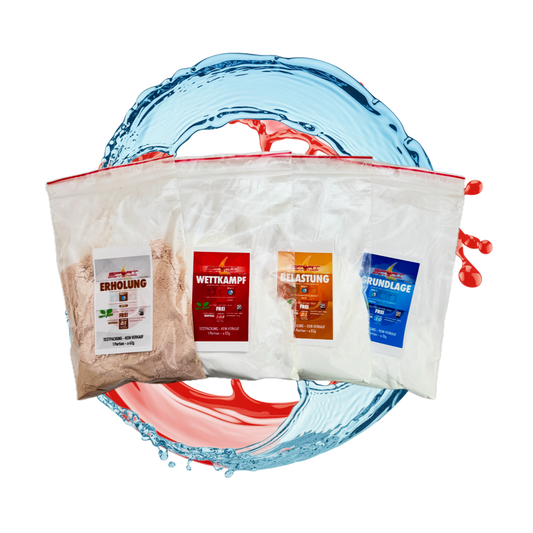
Trial package
One serving of all products
€5.00
Initial test
Exercise package
EXERCISE plus RECOVERY
€65.00
Intense training
Training package
BASE, EXERCISE, RECOVERY
€95.00
Structured training
Complete package
All four products
€120.00
All training phases
Important insightThe cheapest way to test the system is the €5 trial package. This allows you to test all four exercise levels before committing to a package.
Conclusion
The biggest challenge when buying sports nutrition is not the price, but matching it to your own training. Those who cannot combine the product and the exercise pay twice: at the checkout and with stomach problems during competition.
Frequently Asked Questions
What is the best sports nutrition for high-intensity exercise?
For high-intensity exercise above 80% VO2max, sports drinks with a glucose-fructose ratio of 1:0.8 and 90 g of carbohydrates per serving are suitable. SportBrennstoff WETTKAMPF provides this composition and is Kölner Liste® certified. For moderate intensity between 60 and 80% VO2max, BELASTUNG with 60 g of carbs per serving is sufficient. It is important to test the dosage during training to accustom the stomach to the amount of carbohydrates.
What should you look for when buying sports nutrition for intense training?
Look for three factors: the carbohydrate ratio (2:1 or 1:0.8 for optimal absorption), certification (Kölner Liste® offers independent testing for banned substances), and stomach tolerability. Vegan products without artificial flavors are often better tolerated. Also check whether the electrolyte content matches the sweat loss. SportBrennstoff products meet these criteria and are Made in Germany.
Are stomach-friendly supplements useful during high-intensity exercise?
Yes, especially during intense sessions over two hours. The gastrointestinal tract reacts sensitively to high intensity because blood is diverted to the muscles. Stomach-friendly supplements for intense training avoid artificial additives and rely on natural ingredients. SportBrennstoff BELASTUNG contains sodium chloride for electrolyte balance and citric acid for better tolerability, without artificial flavors or preservatives.
How does vegan sports nutrition support recovery after training?
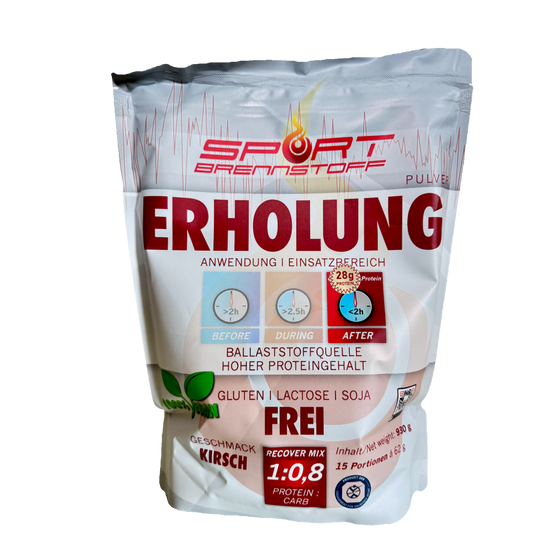
Vegan sports nutrition for endurance athletes provides plant-based proteins with a complete amino acid profile. SportBrennstoff ERHOLUNG combines pea and rice protein with cherry juice, beetroot powder, and a mineral complex. This combination supports muscle recovery and replenishes glycogen stores. The included carbohydrates accelerate the recovery process.
How do individual dosage recommendations work in sports nutrition?
The dosage depends on training intensity and duration. For sessions between 60 and 80% VO2max, 60 g of carbohydrates per hour are sufficient, approximately with BELASTUNG. For competitions over 80% VO2max, up to 120 g per hour are possible, approximately with WETTKAMPF. A €5 trial package allows you to try different products. The adjustment is done gradually during training to accustom the stomach to higher amounts of carbohydrates.
Hat einen angenehmen neutralen Geschmack und geht direkt in die Beine! Nutze es in fast jedem Training für meinen Ironman 👍
Hallo Melanie, vielen Dank für deine tolle Rückmeldung! Schön, dass dir der neutrale Geschmack gefällt und dich unser Sportgetränk bei deinen Ironman-Trainings unterstützt. Wir wünschen dir weiterhin viel Erfolg und starke Beine! :-)
Das Wettkampf-Sportgetränk hat meine Erwartungen voll erfüllt
Das Wettkampf-Sportgetränk hat meine Erwartungen voll erfüllt. Über die gesamte Zeit des Radfahrens (Langdistanz) konnte ich das Getränk zuführen und kam ohne spürbares Energiedefizit in T2 an.
Angenehmer, nicht aufdringlicher oder vordergründiger Geschmack.
Hallo Jens, vielen Dank für deine tolle Rückmeldung! Schön, dass dich das Sportgetränk auf deiner Langdistanz zuverlässig versorgt hat und dir der angenehme, dezente Geschmack gefällt. Wir wünschen dir weiterhin viel Erfolg bei deinen Wettkämpfen! Ingolf
Mit diesen beiden Produkten kommt man wirklich in der Aufbauphase sehr gut klar
Mit diesen beiden Produkten kommt man wirklich in der Aufbauphase sehr gut klar.
Hallo Daniel, danke für dein tolles Feedback! Es freut uns sehr, dass das Basispaket dir in der Aufbauphase so gut hilft. Viel Erfolg weiterhin beim Training!
Tatsächlich ist das 6 Tage in der Woche beim Frühstück dabei
Tatsächlich ist das 6 Tage in der Woche beim Frühstück dabei. Innerhalb von einer halben Stunde ist meine Energie geladen und kann direkt ins Training einsteigen. Noch nie Probleme beide Verdauung
Hallo Daniel, vielen Dank für deine tolle Rückmeldung! Es freut uns sehr, dass das Sportgetränk dich so zuverlässig beim Frühstück und beim Start ins Training unterstützt – und du es gut verträgst. Weiterhin viel Freude beim Training! Ingolf
Super Preis Leistungsverhältnis, wir setzen es zum Muskelaufbau und zur Regeneration ein . Wir sind seit vier Monaten sehr erfolgreich mit diesem Produkten.
Hallo Daniel, vielen Dank für deine positive Rückmeldung! Es freut uns sehr zu hören, dass du mit unserem Recovery Shake so erfolgreich bist. Viel Erfolg weiterhin beim Muskelaufbau und der Regeneration! Dein Team von Sportbrennstoff