Why stomach-friendly sports nutrition is crucial for triathletes
Stomach cramps during competition cost time, rankings, and personal bests - but stomach-friendly sports nutrition for triathletes can solve this problem. Many triathletes struggle with gastrointestinal issues, even though their training performance is perfect. The problem lies in the digestive tract.
Finding stomach-friendly sports nutrition for triathletes means striking the right balance between energy delivery and tolerance. At SportBrennstoff, we realized that high-intensity exercise and aggressive carbohydrate intake do not necessarily go together. The key lies in individual adjustment.
During intense exercise, blood flow concentrates on the working muscles. Your digestion takes a backseat. Poorly chosen sports nutrition leads to gastrointestinal problems that sabotage your performance.
This is why stomach-friendly sports nutrition for triathletes is central to your competition strategy. Below, we show you exactly how to find the right nutrition for your training phase.
Pro tipMost triathletes test their nutrition only on race day. This is the biggest mistake. Your digestive tract needs time to get used to new carbohydrate sources and sugar ratios.
Avoiding gastrointestinal problems in triathlon: The basics
Gastrointestinal issues are caused by three interacting factors: high exercise intensity, unsuitable nutrient composition, and a lack of adaptation of the digestive tract.
At over 80 percent of exercise intensity, blood flow to the stomach drops dramatically. Your body diverts blood to the muscles. At the same time, you need massive amounts of carbohydrates to fill your glycogen stores and keep your blood sugar level stable.
Intolerance does not occur because you eat too much. It occurs because your digestive tract cannot process what it can easily handle under normal conditions when under stress.
The solution consists of three components:
Choose easily digestible carbohydrate sources - not every sugar ratio works for every athlete
Stabilize electrolyte balance - Sodium and minerals support nutrient absorption
Train the digestive tract - systematic gut training makes the difference
Important insightGastrointestinal problems are not a sign of weakness. They are a signal that your nutrition strategy does not fit your current exercise intensity.
Gut training for athletes: Your digestive tract as a training partner
Your digestive tract is a muscle that can be trained. Just like your legs and cardiovascular system, your gastrointestinal tract adapts to repeated stimuli.
The concept is called "Train the Gut". It means that you systematically accustom your digestive tract to higher carbohydrate intake - not through pain, but through progressive increases over 8 to 12 weeks.
A trained digestive tract can absorb more carbohydrates. This means more energy delivery and better performance. A trained digestive tract can absorb more carbohydrates. This means more energy delivery and better performance.
The 8-week gut training protocol
Weeks 1-2: Base phase (30 g of carbohydrates per hour)
Perform two to three long, slow training sessions per week (Zone 1-2, under 60% VO₂max). Consume 30 grams of carbohydrates per hour in the form of easily digestible sources (isomaltulose, maltodextrin). Monitor stomach discomfort, nausea, and energy drops. Goal: No symptoms at this low amount.
Weeks 3-4: Increase phase (45 g of carbohydrates per hour)
Increase carbohydrate intake to 45 grams per hour. Test different sugar ratios: pure glucose vs. 2:1 glucose-fructose. Pay attention to differences in tolerance and energy delivery. Goal: Identify which ratio your body prefers.
Weeks 5-6: Intensity phase (60 g of carbohydrates per hour)
Increase to 60 grams per hour. Now also perform one moderate training session per week (Zone 2-3, 60-75% VO₂max). Test your preferred sugar ratio under increased exercise intensity. Pay attention to how your stomach reacts at higher intensity.
Specific symptom checklist for your test protocol
After each training session, rate on a scale of 0 (no symptoms) to 10 (unbearable):
Stomach fullness: How heavy does your stomach feel?
Nausea: Does nausea occur? When?
Stomach cramps: Pain or cramps in the stomach area?
Bloating: Gas formation or feeling full?
Diarrhea or constipation: Digestive problems after training?
Energy level: Did you feel energized or weak?
Performance: Were you able to maintain your planned training pace?
Determining individual tolerance limits
After 8 weeks, you will recognize a clear pattern: At what carbohydrate amount per hour do no symptoms occur? Which sugar ratio does your body tolerate best? How does your digestive tract react to different intensities?
Pro tipMany athletes make the mistake of immediately training with high carbohydrate amounts. This leads to stomach cramps and nausea. Start low. Increase slowly over 8 weeks. Your digestive tract will get stronger, not weaker.
Maintenance and periodization
Gut training requires maintenance. In the base phase, maintain your gut training with 30-45 g of carbohydrates per hour. In the build-up phase, progressively increase to 60-75 g per hour. In the competition phase, train with your maximum tolerance (75-90 g per hour). During recovery, reduce again to 30-45 g per hour.
Correctly dosing carbohydrate intake per hour in triathlon
The question is not: How many carbohydrates do I need? The question is: How much can my digestive tract process at this exercise intensity?
Natural sports nutrition for triathletes: Ingredients your stomach can tolerate
Natural sports nutrition means: Carbohydrates from pure sources, electrolytes from sodium chloride, and nothing else. The simpler the composition, the easier the processing under extreme exercise.
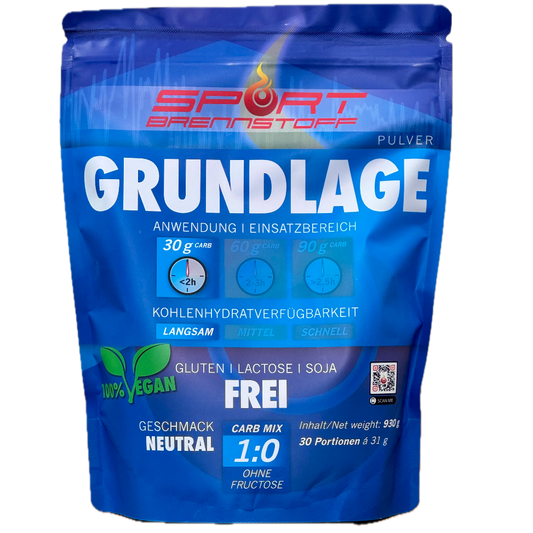
SportBrennstoff GRUNDLAGE * 30g Carbs Drink Mix
Low-FODMAP sports nutrition for athletes with a sensitive gut
Not all carbohydrate sources are equally tolerated, especially if you are prone to irritable bowel syndrome, fructose intolerance, or other functional gastrointestinal disorders.
Low-FODMAP carbohydrate sources for athletes:
Glucose (grape sugar): Very low in FODMAP, absorbed directly, ideal for athletes with irritable bowel syndrome
Isomaltulose: A disaccharide with slower absorption - less fermentation
Maltodextrin: A polysaccharide from corn or potatoes, practically FODMAP-free
Sucrose (table sugar): Moderate in FODMAP, but usually tolerated in moderate amounts
Fructose in high amounts: Particularly problematic with fructose intolerance
Sorbitol and xylitol: Artificial sweeteners that cause bloating
Lactose: If you have lactose intolerance, avoid milk-based sports nutrition
Fiber: Great for the daily diet, but counterproductive during competition
Glucose vs. fructose: Why the ratio is crucial
Glucose and fructose use different transport mechanisms in the small intestine. Glucose is absorbed via the SGLT1 transporter, which has a capacity of about 60 grams per hour. Fructose is absorbed via the GLUT5 transporter, which processes about 30 grams per hour.
Electrolytes and stomach protection
Sodium is essential. It helps your body retain fluid, supports glucose absorption, and protects your stomach. An isotonic solution (about 6-8% carbohydrates + 500-700 mg sodium per liter) is emptied from the stomach faster than a hypertonic solution.
The optimal electrolyte composition for a sensitive stomach:
Sodium: 500-700 mg per liter
Potassium: 100-200 mg per liter
Magnesium: 50-100 mg per liter
Chloride: Naturally present with sodium chloride
Probiotics and the gut microbiome: When they help, when they don't
Probiotics are useless to you during competition. Your gut is in survival mode. In the recovery phase (24-48 hours after competition), probiotics can help restore your gut microbiome. In base training, they can improve your gut health in the long term.
Practical checklist for stomach-friendly sports nutrition
When you evaluate a new sports nutrition product, ask these questions:
Carbohydrate source: Is it glucose, fructose, isomaltulose, or maltodextrin?
Sugar ratio: Is it 1:0 (pure glucose), 2:1 (glucose-fructose), or something else?
Sodium: Does it contain at least 500 mg of sodium per liter?
Additives: Does it contain artificial sweeteners, emulsifiers, or preservatives?
Osmolality: Is it isotonic (about 280-300 mOsm/kg)?
Tolerance in training: Have you tested this product at least three times in training?
SportBrennstoff products are vegan, gluten-free, and lactose-free. This means fewer potential irritants for a sensitive digestive tract. For athletes with irritable bowel syndrome or fructose intolerance: Test the GRUNDLAGE variant, which is fructose-free.
Step-by-Step: Your Stomach-Friendly Nutrition Strategy for Competition and Training
A successful strategy is created through systematic testing and adjustment.
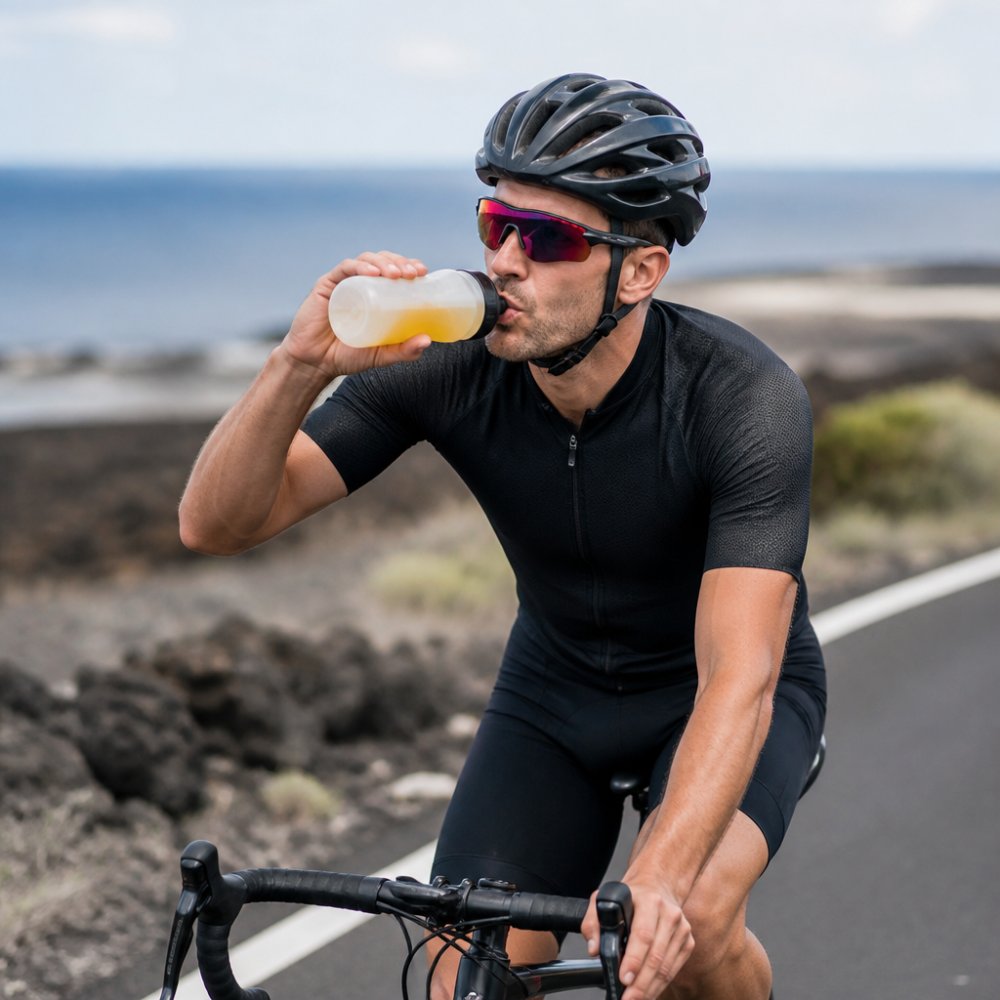
Triathlete during training with a sports drink in hand, focused on fluid intake during exertion
Step 1: Conduct a testing phase during training
Start in a controlled environment—not in competition. Use a regular training session to test different products. Observe how your body reacts and record your observations.
Step 2: Determine individual tolerance limits
After three to four weeks of testing, you will begin to see a pattern. What carbohydrate amounts can your stomach tolerate? Which sugar ratio works? What electrolyte concentration is optimal?
Step 3: Coordinate race-day nutrition
Calculate the duration of your competition. Multiply it by your individual carbohydrate tolerance per hour. That is your total amount.
Pro TipMany athletes drink too much too quickly. This leads to nausea and stomach cramps. Consistent, moderate intake is more reliable than aggressive amounts.
Common mistakes when choosing sports nutrition and how to avoid them
Mistake 1: Too much too soon
Many triathletes start with high carbohydrate amounts because they think that more energy automatically means better performance. An overloaded stomach is a slow stomach. Start conservatively and increase progressively.
Mistake 2: Switching products during competition
Mistake 3: Ignoring electrolytes
Mistake 4: Not distinguishing by exercise intensity
Mistake 5: Not testing before competition
Conclusion: Find your stomach-friendly sports nutrition
Finding stomach-friendly sports nutrition for triathletes is a process, not an event. It requires systematic planning, patience, and a willingness to test.
Your stomach will get stronger. Your performance will improve.
Frequently Asked Questions
Why do triathletes frequently experience gastrointestinal problems?
During intense endurance exercise, your body reduces blood flow to the digestive tract to direct more blood to the working muscles. This leads to delayed digestion and can cause stomach cramps, nausea, or diarrhea. In addition, the high intensity of the exercise increases the stress on your gastrointestinal tract. The right choice of stomach-friendly sports nutrition with an optimized fructose-glucose ratio and reduced fats can significantly minimize these problems.
How many carbohydrates should I consume per hour during a triathlon?
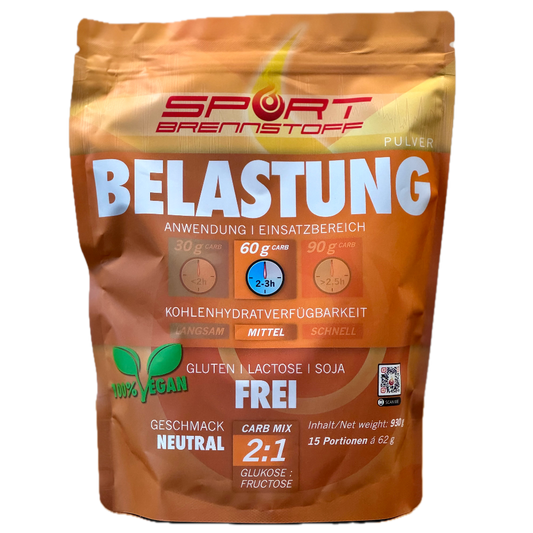
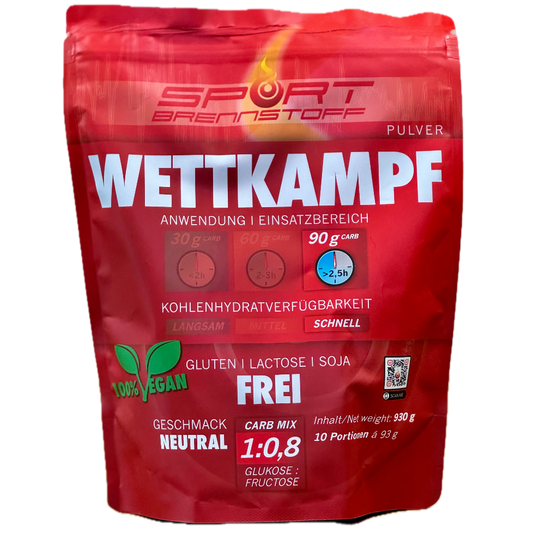
The optimal carbohydrate intake per hour in triathlon depends on your training intensity. In the base endurance zone (below 60% VO2max), you need about 30g of carbohydrates per hour. At moderate to high intensity (60-80% VO2max), 60-90g per hour is ideal. At maximum competition intensity, trained athletes can utilize up to 120g per hour—provided you have completed your gut training. SportBrennstoff BELASTUNG offers 60g per serving and is scalable to 90g, while WETTKAMPF allows up to 120g.
How can I safely test new sports nutrition before competition?
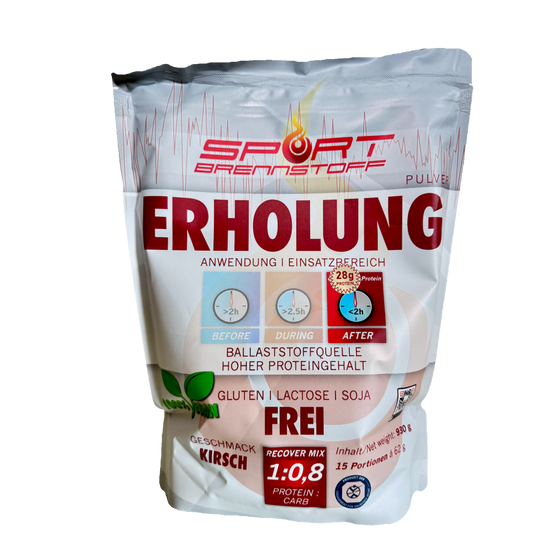
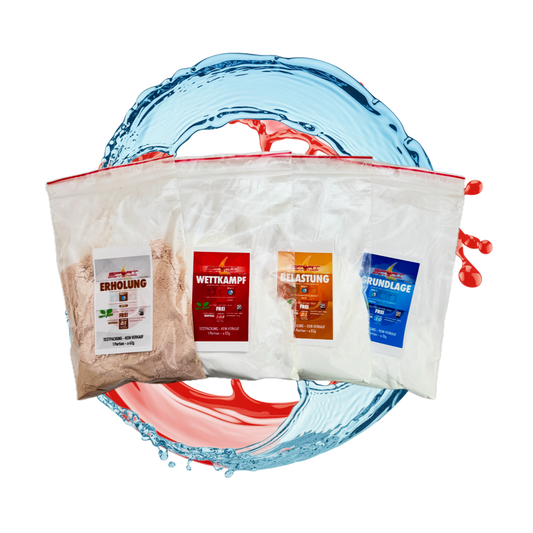
Start with a test package like the SportBrennstoff Probierpaket for €5, which contains all four product lines. First, test each product in short, easy training sessions of 30-45 minutes. Gradually increase the duration and intensity over several weeks. Pay attention to your tolerance and record any reactions. Do not switch to new nutrition shortly before competition—your gut training should be completed at least 4-6 weeks before competition. This minimizes the risk of surprises on race day.
Which ingredients in sports nutrition are difficult to digest?
High fructose content without a glucose balance, artificial sweeteners, sorbitol, and complex fibers can cause gastrointestinal problems. Excessively high fat and fiber content also strains your digestive tract during exertion. Natural sports nutrition like SportBrennstoff uses optimized carbohydrate mixtures: GRUNDLAGE with isomaltulose for gentle energy supply, BELASTUNG with a 2:1 glucose-fructose ratio, and WETTKAMPF with a 1:0.8 ratio. These formulations are specifically designed for stomach friendliness and contain no artificial additives.
Hat einen angenehmen neutralen Geschmack und geht direkt in die Beine! Nutze es in fast jedem Training für meinen Ironman 👍
Hallo Melanie, vielen Dank für deine tolle Rückmeldung! Schön, dass dir der neutrale Geschmack gefällt und dich unser Sportgetränk bei deinen Ironman-Trainings unterstützt. Wir wünschen dir weiterhin viel Erfolg und starke Beine! :-)
Das Wettkampf-Sportgetränk hat meine Erwartungen voll erfüllt
Das Wettkampf-Sportgetränk hat meine Erwartungen voll erfüllt. Über die gesamte Zeit des Radfahrens (Langdistanz) konnte ich das Getränk zuführen und kam ohne spürbares Energiedefizit in T2 an.
Angenehmer, nicht aufdringlicher oder vordergründiger Geschmack.
Hallo Jens, vielen Dank für deine tolle Rückmeldung! Schön, dass dich das Sportgetränk auf deiner Langdistanz zuverlässig versorgt hat und dir der angenehme, dezente Geschmack gefällt. Wir wünschen dir weiterhin viel Erfolg bei deinen Wettkämpfen! Ingolf
Mit diesen beiden Produkten kommt man wirklich in der Aufbauphase sehr gut klar
Mit diesen beiden Produkten kommt man wirklich in der Aufbauphase sehr gut klar.
Hallo Daniel, danke für dein tolles Feedback! Es freut uns sehr, dass das Basispaket dir in der Aufbauphase so gut hilft. Viel Erfolg weiterhin beim Training!
Tatsächlich ist das 6 Tage in der Woche beim Frühstück dabei
Tatsächlich ist das 6 Tage in der Woche beim Frühstück dabei. Innerhalb von einer halben Stunde ist meine Energie geladen und kann direkt ins Training einsteigen. Noch nie Probleme beide Verdauung
Hallo Daniel, vielen Dank für deine tolle Rückmeldung! Es freut uns sehr, dass das Sportgetränk dich so zuverlässig beim Frühstück und beim Start ins Training unterstützt – und du es gut verträgst. Weiterhin viel Freude beim Training! Ingolf
Super Preis Leistungsverhältnis, wir setzen es zum Muskelaufbau und zur Regeneration ein . Wir sind seit vier Monaten sehr erfolgreich mit diesem Produkten.
Hallo Daniel, vielen Dank für deine positive Rückmeldung! Es freut uns sehr zu hören, dass du mit unserem Recovery Shake so erfolgreich bist. Viel Erfolg weiterhin beim Muskelaufbau und der Regeneration! Dein Team von Sportbrennstoff