The science behind your taste perception under physical exertion – and what that means for your nutrition.
You know the feeling: In the middle of a tough interval workout, you reach for a gel or sports drink – and suddenly it tastes completely different than it does at home on the couch. Too sweet. Not salty enough. Or that metallic tingle on your tongue just before the finish line. Just imagination? Not at all. Your body actively changes its taste perception – and for good reason.
Your body tastes what it needs
The human sense of taste is not a passive measuring instrument. It is a highly dynamic warning system that reacts in real time to your physiological state. During intense exertion, a series of processes occur in the background that directly influence what you perceive and how intensely:
- The composition of your saliva changes – volume, electrolyte content, and pH level shift as intensity increases.
-
Inflammatory mediators such as TNF-α and IL-6 also increase slightly even during moderate exertion (so-called low-grade inflammation) and modulate receptor sensitivity.
-
Dopamine and reward systems in the brain are activated by taste stimuli – which has a direct impact on motivation and perceived exertion.
A systematic review evaluating data from six scientific databases was able to show: All five basic tastes – sweet, salty, sour, umami, and bitter – are measurably altered by physical exertion. The direction of these changes is often surprising.
The five tastes under exertion
🍬 Sweet – you need it, and you love it right now
During acute exertion, both the intensity and sensitivity to sweetness increase. Your body signals to you: Fuel up. At the same time, the preference for sweet products increases – you are more likely to reach for a gel than a bar.
Interestingly: Those who train regularly and in the long term develop an overall lower preference for sweets at rest. The brain learns to manage energy more efficiently.
For you as an athlete: An isotonic drink that tastes "pleasantly sweet" at rest may be perfectly dosed during training – always test your products under exertion as well.
🧂 Salty – you lose it, but notice it less
Here lies one of the most fascinating paradoxes in sports physiology: The more sodium you lose through sweat, the more salt you prefer – but the less intensely you perceive it. Sensitivity to saltiness decreases, while the craving for it increases.
The background: Your sense of salt works relatively – you perceive salt when the sodium content of a substance exceeds the concentration of your saliva. During dehydration, this reference changes.
For you as an athlete: Salty products can be dosed significantly stronger during training than you would tolerate at rest. Those who skip electrolytes because "it doesn't taste salty enough" are acting against their own physiology.
🥩 Umami – perceived more intensely, but loved less
Active athletes generally perceive umami taste (savory, spicy, protein-rich) more intensely than inactive people – but paradoxically like it less under exertion. This could explain why solid, savory foods often appear unattractive during sports, even though the body does utilize protein.
🍋 Sour – less intense, but welcome
The perceived intensity of sour flavors decreases under exertion, while the preference increases. Many endurance athletes report reaching for sour, fruity flavors during long sessions – this is no coincidence.
☕ Bitter – the exception
So far, studies have not been able to prove any significant changes in bitterness due to exertion. However, it is interesting: Bitter taste (e.g., caffeine) seems to have performance-enhancing effects through other mechanisms – independent of pure taste perception.
The taste of blood: when you really give it your all
Almost every endurance athlete knows it – the metallic-iron tingle in the mouth just before or after the finish line. No injury, no danger. At maximum intensity, the pressure in the lungs increases so much that minimal microbleeding occurs in the alveoli. The blood reaches the mouth through the respiratory tract – and you taste iron. A sign that you have really given it your all. With increasing endurance adaptation, this happens less often.
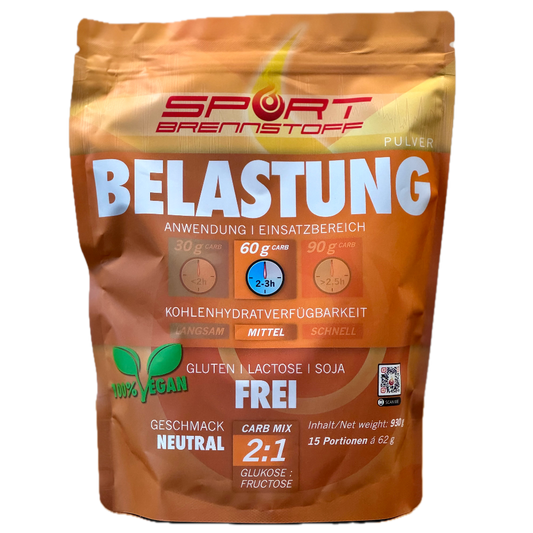
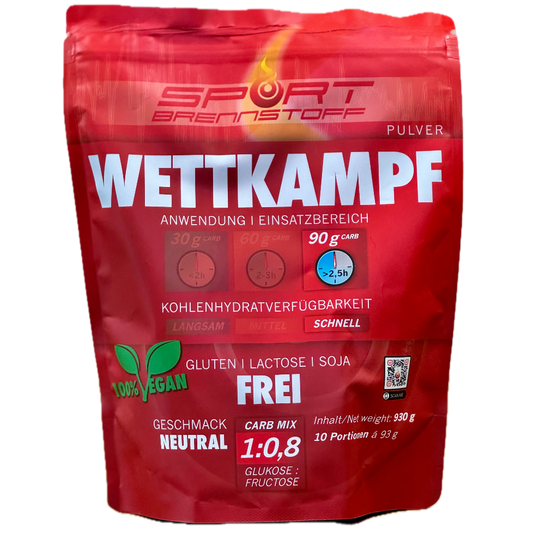
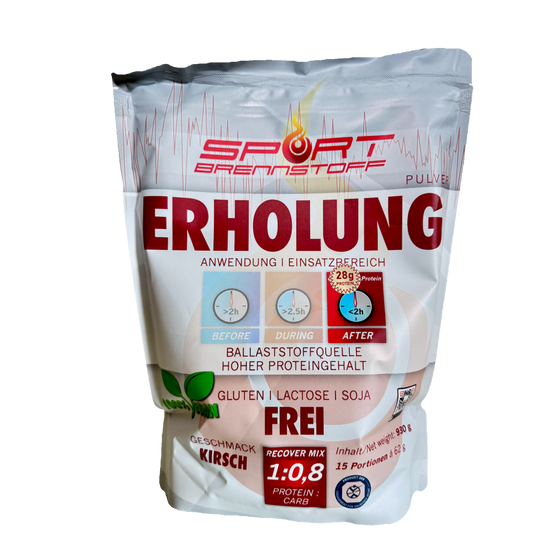
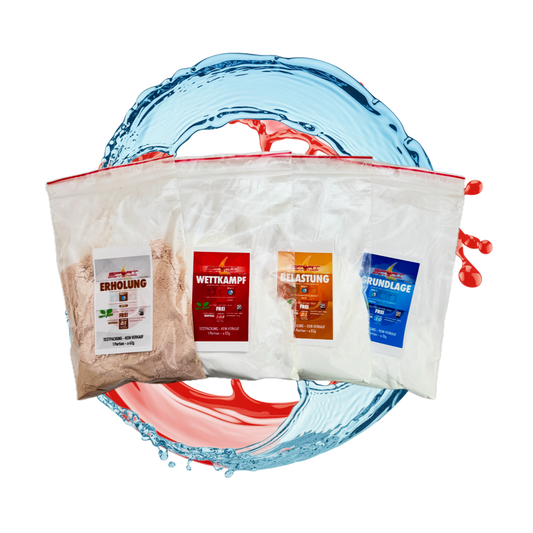
What this means for SportBrennstoff
We do not develop our products only in the lab – but consistently for the moment when you really need them: under exertion.
Because what tastes too sweet, too salty, or too intense on the couch can be just right during training. Taste is not a fixed value – it is a reflection of your physiological state.
Therefore:
- Test your products during your next workout, not in the supermarket.
- Trust your cravings under exertion – your body knows what it needs.
- Pay special attention to electrolytes, even if you do not feel an intense craving for salt.
SportBrennstoff. Developed for real exertion.
Sources: Systematic review "Effect of Physical Exercise on Taste Perceptions" (Nutrients, 2020); "Sweet and Umami Taste Perception Differs with Habitual Exercise in Males" (MDPI, 2019); "Decoding the Effect of Running on Flavor Perception Changes" (Foods, 2024); University of Vienna, Clinical Study NCT06384365 (2024).